Hawksby | John Victor


Biography
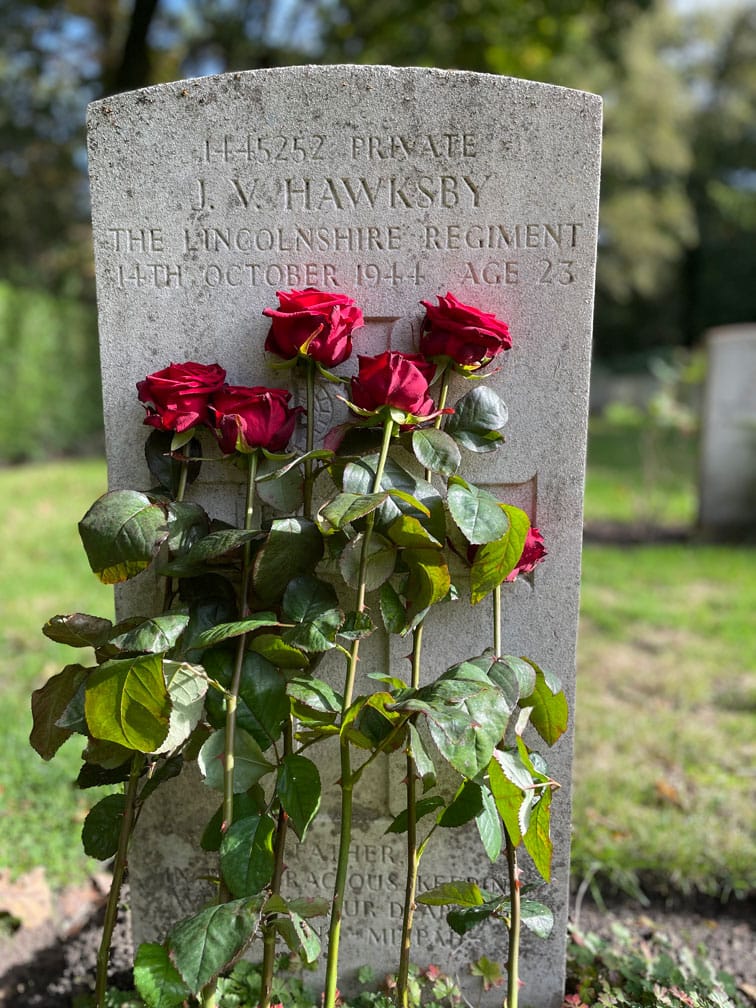
John Victor Hawksby died of his injuries on 14 October 1944 in Overloon, aged 23. He was a soldier in the Lincolnshire Regiment, 2nd Battalion (service number 1445252). John was initially buried at the farm of Vogelsangs in Overloon and reburied on 15 July 1946 at the Overloon war cemetery in grave I. D.1. The inscription on his grave reads: ‘Father, In Thy gracious keeping We leave our dear one Sleeping. -Mizpah-
Family background
John Victor was born in 1920 and was the son of John Edward Hawksby (1892–1958) and Elizabeth Thompson Evers (1898–1984). He was the brother of Eric Hawksby (1926–1976).
They lived in West Hartlepool, Durham, England.
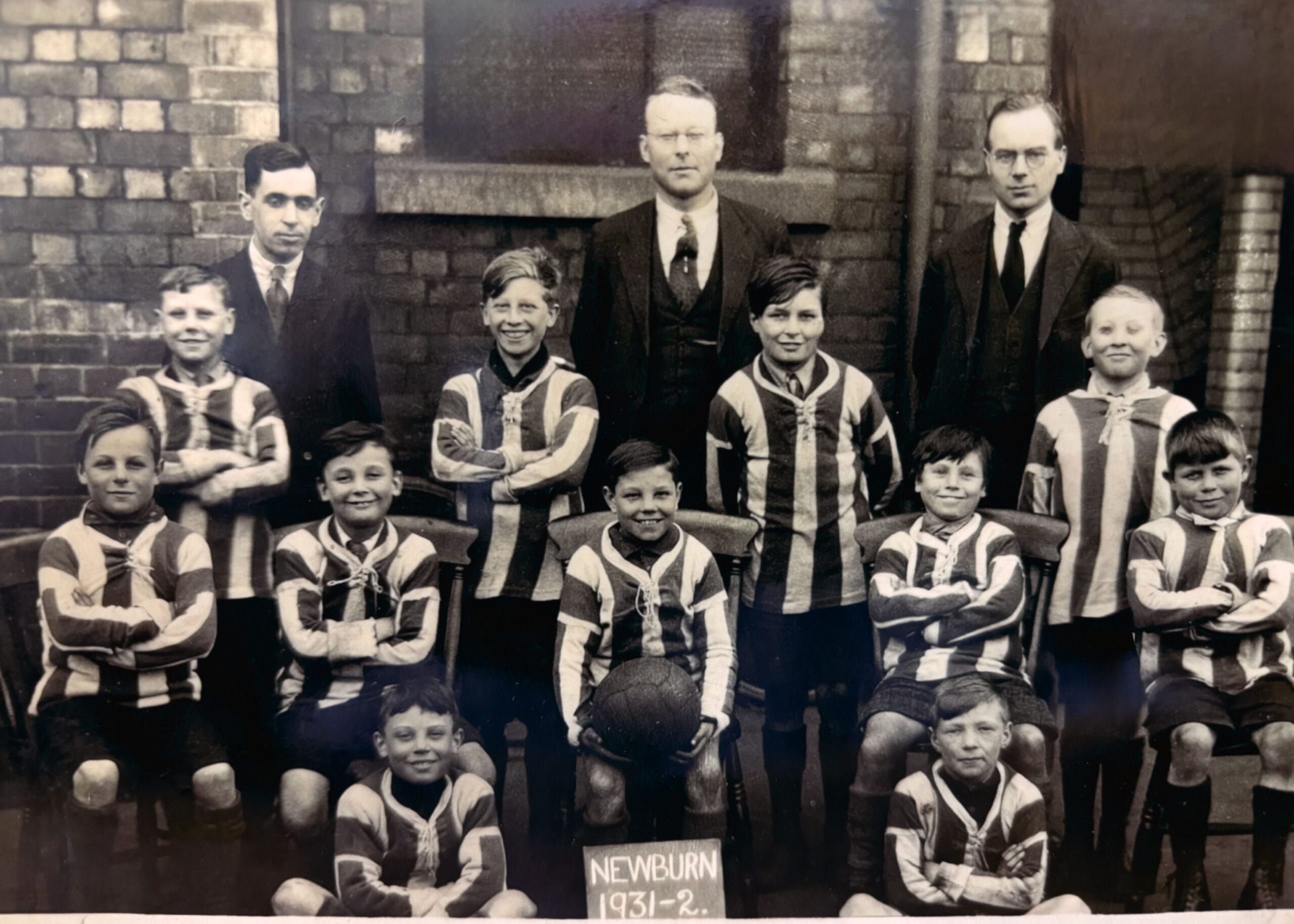
John (named Vic by his family) attended Newburn School in West Hartlepool and then worked in the construction industry. He was a member of the St John Ambulance Brigade and the Durham Heavy Brigade T.A. (Territorial Army) in Hartlepool, through which he was called up for service at the outbreak of war. He was subsequently transferred to the infantry, the North Staffordshire Regiment, most probably the 6th battallion which was the only Staffordshire battalion which landed in Normandy.
With this battalion he landed in Normandy in June 1944 and was wounded in August 1944.
The 6th Battalion had been in France for less than two months when, in August 1944, along with other infantry units of 59th Division, it was broken up to supply replacements to other British units, due to a severe shortage of infantry replacements throughout the Army at the time. It is likely that because of that John Victor was assigned to the Lincolnshire Regiment 2nd Bn after he recovered from his wounds.
Lincolnshire Regiment 2nd bn
The 2nd Bn Lincolnshires took part in the D-Day landings in June 1944 and was then engaged throughout the Normandy Campaign, taking part in Operation Charnwood and Operation Goodwood.
They remained in Normandy until 15 September. They then took part in the push up through Belgium and the Netherlands with the aim of supporting the airborne troops engaged in Operation Market Garden which ultimately did not fully succeed following the failure to take the bridge at Arnhem in late September.
Following the failure to take the bridge at Arnhem in Operation Market Garden in late September 1944, the Allied Forces were left in a very precarious narrow salient through the Netherlands. It was the aim of Operation Aintree to widen this salient by heading south from Nijmegen to take Overloon and then Venray before finally eliminating a German bridgehead on the River Maas near Venlo.
On 16 and 17 September the Battalion moved into Belgium near Mons. They found that the civil population were very enthusiastic, particularly in the area of the Belgian frontier. They then joined in the effort to cross the Escaut Canal where all the bridges had been blown by the enemy. They succeeded with other regiments in this difficult task in the face of opposition and a bridge was complete by 19 September. The Battalion moved on to Achel on 20 September where all ranks were able to get a night’s sleep under cover and then Hamont the following day where they remained until 25 September while the 11 Armoured Division took Deurne in the Netherlands. The Battalion moved to Deurne that day and took over from the 11 Armoured Division with the 2nd Battalion Royal Ulster Rifles. They remained in this area, sometimes engaging with the enemy who were on the east side of a canal. On 29 September they moved north to Milheeze and then Haps on 1 October.
The base of the 2nd Lincolnshire Regiment stayed in Haps from the 1st till the 12th of October. From there, attempts were made to clear the west side of the Meuse between Cuijk and Oeffelt. This was done together with 2nd Bn Royal Ulster Rifles, the 1st Bn King’s Own Scottish Borderers and 3rd Reconnaisance Regiment (9th Brigade 3rd Infantry Division).
On the east side of the Meuse, resistance remained strong, particularly in Middelaar, Milsbeek, and Gennep. The stone factory in Milsbeek served as the main center of opposition, as its tall chimney functioned as an observation post from which German artillery coordinated the defense. On the east side of the river, the enemy was also attacked from Plasmolen.
Between 1 and 7 October, the Ferry House in Oeffelt — Het Veerhuis — was repeatedly occupied by the enemy and then retaken by British forces. Patrols of the 2nd Lincolnshire Regiment discovered that the Ferry House had once again fallen into German hands. Despite heavy British artillery bombardments, German troops continued to appear around the stone factory in Milsbeek.
On 4 and 5 October, the chimney of the Milsbeek factory was finally brought down, and the church in Middelaar was reduced to rubble. On 6 October, the 2nd Lincolnshire Regiment launched another attack on the Ferry House — this time successfully. This first week of October the Batallion lost three comrades, who were temporarily buried at the village square in Haps and later in 1946 reburied at Overloon War Cemetery.
On 9 October 1944 the Battalion were ordered to move south to St Anthonis on 11 October, but this was postponed to the following day due to bad weather. The move was completed on 12 October.
They were kept in reserve for the battle that was being fought around Overloon. The 8th Infantry Brigade was tasked with capturing Overloon and advancing to Venray. Shortly before nightfall, they heard that Overloon had fallen and that the battalions of the 8th Division were struggling to hold their ground.
On Friday, 13 October the aim was for the Royal Ulster Rifles, followed by the King’s Own Scottish Borderers and then the Lincolnshires to clear wooded areas just west and south of Overloon in which the Germans had entrenched themselves, then cross a stream called the Molenbeek between Overloon and Venray. They would be supported by Churchill Tanks of the 4th Tank Grenadier Guards. The Lincolnshires therefore moved down to a position just north west of Overloon that day.
In addition to the difficult terrain, two other factors played a crucial role – the Germans had dotted the entire area with their dreaded “Shuhminen.” These wooden mines were difficult to detect. They didn’t tend to kill but inflicted severe injury to the victim’s legs. In addition, the German troops had a strategic observation point from Venray’s church tower. Any Allied troop movement would be watched and relayed to their artillery which would result in a barrage of shells.
The Royal Ulster Rifles and the King’s Own Scottish Borderers began the attack on the forests. However, it soon became apparent that they were barely making any progress, leaving the Lincolnshires out of the battle all day. Nevertheless, the Lincolnshires suffered one man killed and 3 wounded.
On the 14 October, the plan was for B Company to be guided through a wood held by the Royal Ulster Rifles to its front edge from where they would carry out a recce (reconnaissance) to check if a stream was passable and if the north eastern corner of a wood to the south was held by the enemy. However, the guides were late and the move through the wood was slower than expected, so the recce did not take place. At 7.30 am the Company began to advance south out of the wood. Before the Company had advanced 100 yds the enemy opened fire from a track about another 100 yds ahead. The advance continued but came under such heavy fire with so many casualties that the Company Commander, Anthony Frith Smith, issued an order to retreat back to the Royal Ulster Rifles’ position. By this point one Lieutenant and 34 other ranks had been killed or wounded.
Following a reconnaisance by the Company Commanders, it was decided to launch a full battalion attack at 15.30 hours with the support of the whole of the Divisional Artillery and an additional tank division on the right flank. The enemy had been seen moving in the area of the stream in front of the wood. It was thought that the enemy holding the Battalion objective were probably a Company strong. Immediately the attacking force came into the open they were subjected to intense artillery and mortar fire which was just as bad as in the early morning but this time they pressed steadily on to reach their objective. During this action the Battalion suffered very heavy casualties including four officers killed and another four wounded.
It was on this day that sadly, John was wounded and died of his wounds.
The fallen soldiers were buried the following day at noon on the Vogelsangs family farm on Helderseweg in Overloon.
On 15 July 1946, a total of 27 men from the 2nd Battalion of the Lincolnshire Regiment who had died on 14 October 1944 were reburied side by side at the Overloon war cemetery. John is buried in grave I. D. 1.
Letters from Vic to home
Dear mum,
I am answering your letter written last week, the 27th and as today is Wednesday 2nd and I got yours on Monday. You can see it’s not taking long for them to get here now, but I still haven’t got the papers (newspapers) so that’s two lost by now. I think I’ve seen all I’m going to of them.
I’m glad the bairns (children) got the cards, I’ve sent one to Gran, one to Aunt Mary and one to Aunt Nell as well, they and the writing paper I found in the same Bosch kit in a village we took a fortnight ago last Sunday.
I’ve been busy but I’ve managed to pull through ok as yet.
The only thing I don’t like is this mortars. By the way, you remember my saying about the Major, well sorry to say he’s not with us anymore, mortar shrapnel got him so I’ve lost at least one good friend.
You people at home seem to be busy. Lately seeing relations. I have been away from the family for donkey’s ages (a long time), still I suppose everybody likes a visit West (West Hartlepool) now and then.
I bet Bills Nell will be cut up a lot over Bill but she will have to keep her chin up the same as the rest of us and hope for the best, anyway if she is in West she may cheer up a little.
I wish I was at home now. I would certainly change with anyone as doesn’t like the idea of buzz bomb repairs (John Victor was a bricklayer before the war), anything would do instead of this, I could certainly do with a rest. I’ve not had my boots or my slacks (trousers) off since I joined the battalion.
I’m making up for the time I spent in England with the RA (Royal Artillery). I’ve seen enough Jerrys lately to last me a lifetime, a lot of them are only 15 or 16 years old so that’s one thing that the papers are telling you that I can definitely vouch for as I’ve seen their paybooks and dates of birth. This calling up at such an age has been going on for a while. I saw a pay book the other day, a lad only 18 now who’s date of enlistment was may 1942. They are from the Hitler Youth movements and regular fanatics.
The weather here is much the same as at home, you know, one day boiling hot and next dull and foggy so we can’t really grumble.
Well folks I shall close down once more with love to all at home, remember me to all and thank them for remembering me,
Your loving son
Vic
Dear Mum, Dad and Eric,
I am well settled in now and have no grumbles except your cigs haven’t reached me yet but other lads say it usually takes a month for theirs so I am still hoping, my other crib (demand) is for writing arterial. I am now using some I’ve scrounged (found/borrowed) and we can’t get anymore. So if you can?
I hear the Pools (Hartlepool Utd. FC) beat the Quakers (Darlington FC) 4-2 but it wasn’t your shouting that let me know.
We heard the wireless, a civvy (civilian) set where we are now, the electricity came on yesterday and the householders who own the barn we are in treat us like their own family we have had a bit of a change just lately. She gives us all sorts of things such as apples and pears and peaches of course food as well but we refuse it as they don’t get so much themselves so I’m happy enough with this war as it stands.
The news is good lately and I don’t think it’ll be long before I’m giving my settee and the wireless at home a good bashing.
I am at present with the others of course doing bags of peace time soldiering in preparation for the victory march through the Unter den Linden or at least that is what I surmise it is for.
So you had best tell Jake to hang on a while and I shall be back for his wedding, not that I want to do Eric out of a job but I should like to be there all the same. While you are about it you can tell Gran to hurry up with her flags or else she will be too late and that would never do I suppose.
I hope dad is feeling fit for work now he’s had a good spell off now and I hope he feels the difference, it’s just what he wanted isn’t it.
I’m still looking forward to that drink with him even if he’s found a list of jobs for me as big as Sydenham Road ( John Victor’s home address) I suppose he’s been looking around taking notice of what needs doing while he’s been home, still I shall be only too glad to do them.
Well folks I’ve no more news so as usual I’ll sign off with love to Cheeky Charlie, gran, uncle Gus in fact all the family by and large
Your loving son
Vic
Aftermath

After the war, Toon and Dora Vloet from Overloon took care of John Victor Hawksby’s grave and welcomed John’s parents in 1948. Family members also visited Overloon in 1958, and their son Jan Vloet, who was born in 1945, visited John’s brother Eric Hawksby in England in the late 1960s. In 1975, Jan, his wife and children travelled to visit the family in England.
Eric’s widow, Muriel, and her children also visited Jan Vloet’s family and met Toon and Dora in Overloon.
Since then, contact has been maintained and John’s grave is still adopted by the Willems-Vloet family.
80th anniversary of the liberation of Overloon 2024
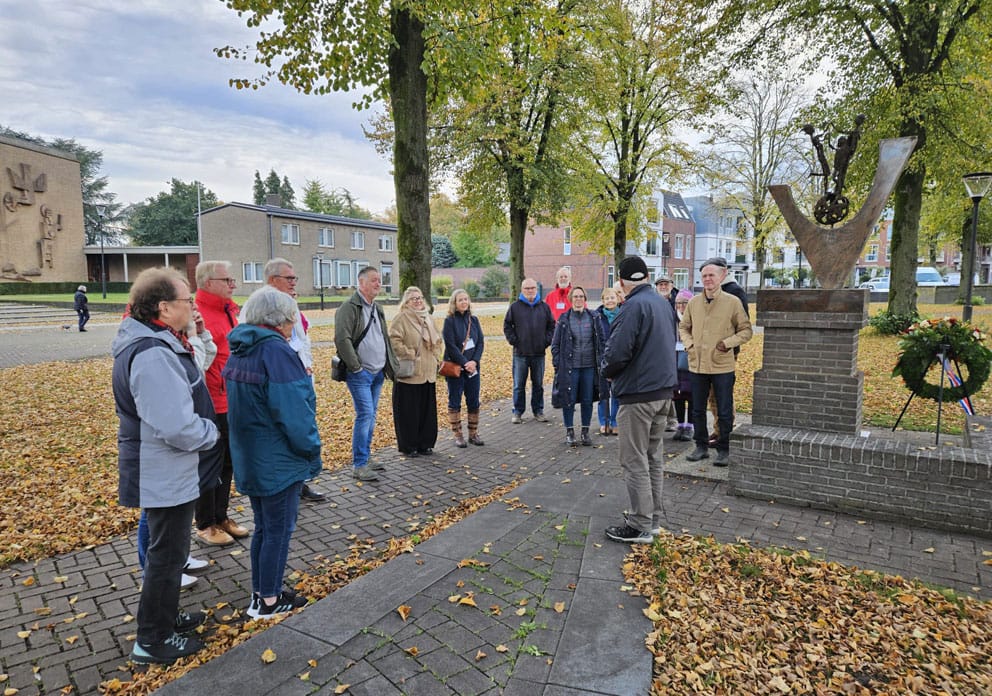
During this weekend, John Hawksby’s family and friends visited Overloon to take part in all the commemorative ceremonies. They also joined a battlefield tour that took them through the area where John fought and where he was buried until he finally found his final resting place at Overloon War Cemetery in 1946.


John Victor and his love for music
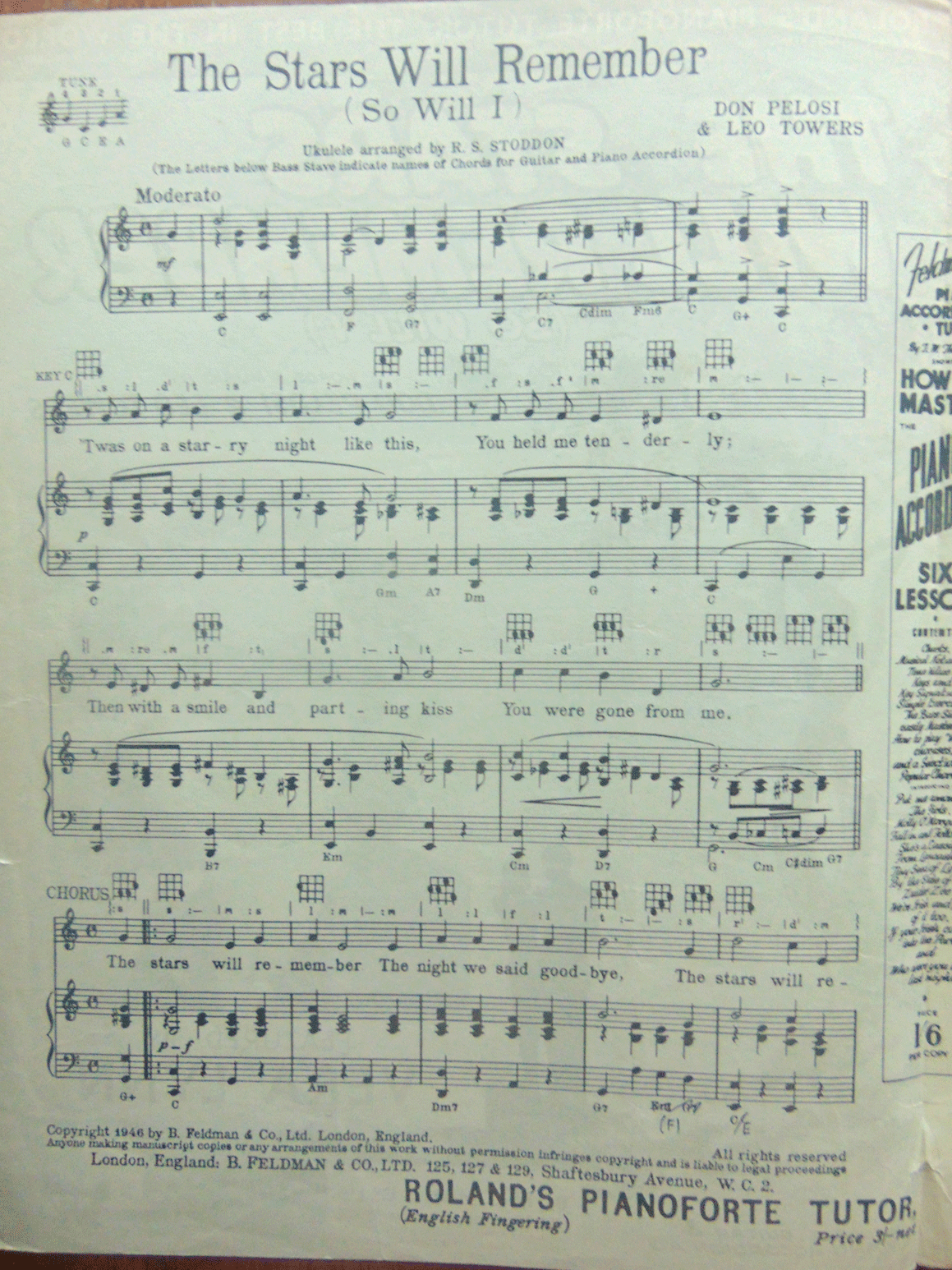
John loved music and had a beautiful singing voice himself. One day, he went with his brother Eric to a record shop in Hartlepool, where there was a recording booth. He loved the song “The Stars Will Remember” and decided to record it there. After the brothers had chatted for a while, John began to sing.
The recording was found many years after the war, when his brother Eric had passed away. Eric’s son Ian and his friend Clint Dougherty did their utmost to edit the recording and remove all unnecessary noise.
The song was written by Don Pelosi and Leo Towers and the lyrics are very poignant.
Don Pelosi was an Italian-born British songwriter who wrote many hits in the 1940s and 1950s. During the war, songs such as ‘The Stars Will Remember’, ‘Good Morning Sergeant Major’ and ‘When the Poppies Bloom Again’ were very popular and were covered by artists such as Vera Lynn and Frank Sinatra.
THE STARS WILL REMEMBER, SO WILL I
The stars will remember the night we said goodbye
The stars will remember, so will I
A rose as a token, a kiss that brought a sigh
The stars will remember, so will I
And now the stars and I, we share the lonely lane
But in my solitude, it seems I hear you call my name
The world may forget you as time goes passing by
But stars will remember, so will I
And now the stars and I, we share the lonely lane
But in my solitude, it seems I hear you call my name
The world may forget you as time goes passing by
But stars will remember, so will I.
Listen here to the recording
BATTLEFIELD TOUR TO HELDERSEWEG OVERLOON
During the commemorative weekend marking the 80th anniversary of the liberation of Overloon, on 14 October 2024, exactly eighty years after his death, his voice could be heard again during a battlefield tour. John’s song was played on Helderseweg in Overloon, at the place where he and many of his comrades were temporarily buried at the time. It was an impressive and moving moment, shared by all those present — including the other families of the soldiers who lost their lives in Overloon.
Watch the video of this beautiful moment on Helderseweg.
Sheet music The Stars Will Remember (So Will I)

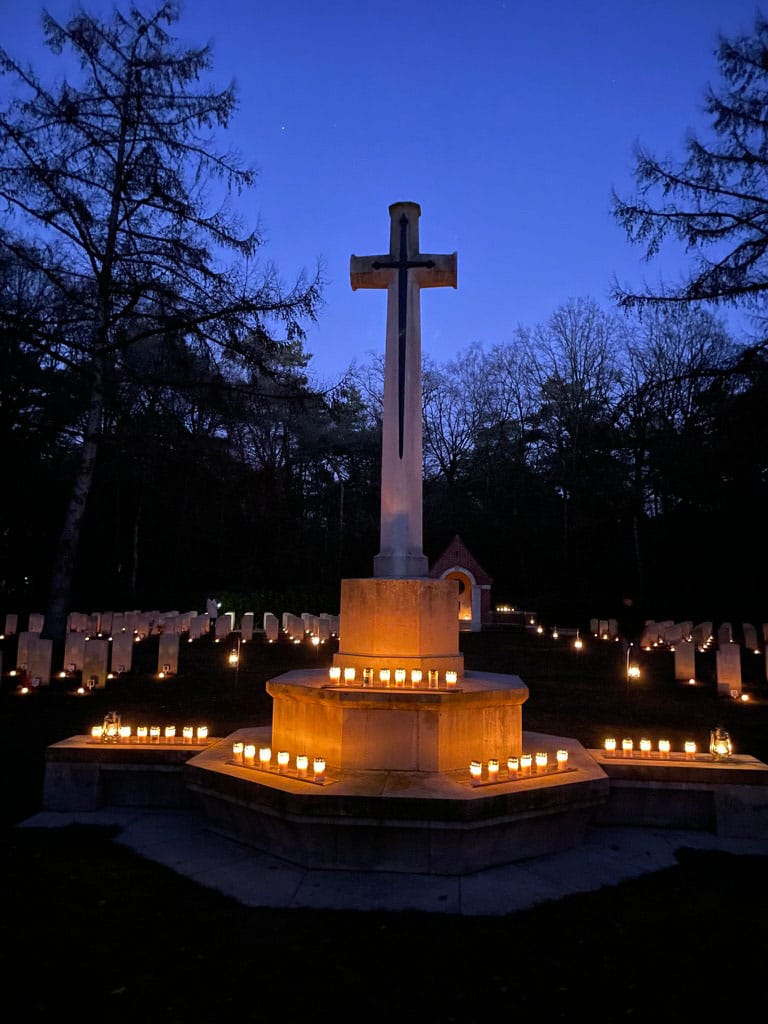
Christmas Eve 2025 Lights on War Graves Overloon
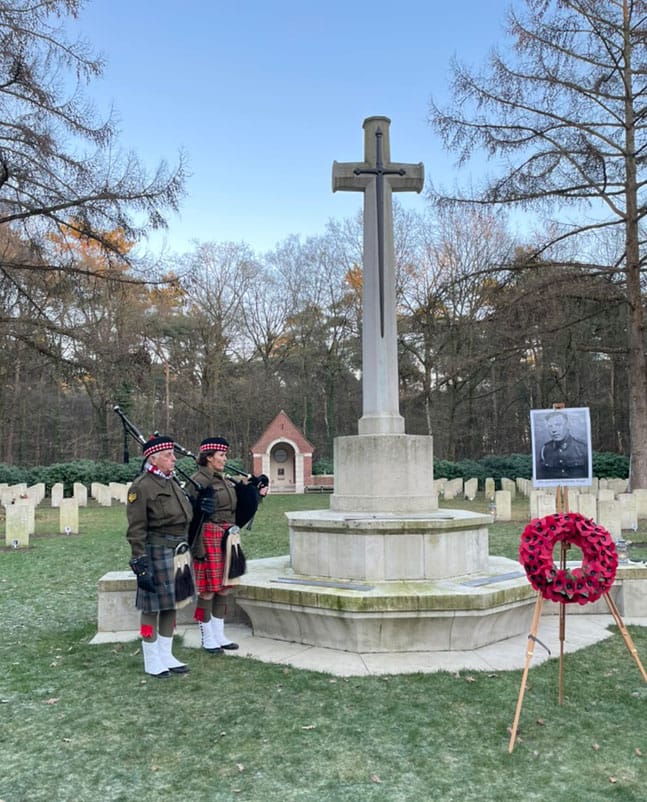
On Christmas Eve 2025, the story of John Hawksby’s life was told in a trilogy by Overloon War Chronicles and Jeanne Willems-Vloet, who adopted his grave. The unique audio recording of the song sung by John and recorded on tape before he went to war was also played.
It was an impressive ceremony attended by hundreds of interested parties, veterans, adopters and residents of Overloon.
The 281 candles placed at the graves on this occasion created an extra beautiful and emotional atmosphere, while Fanfare Vriendenkring played the song “The Stars Will Remember”, which they had rehearsed especially for this occasion.
For an extensive photo report, see our foundation’s Facebook post.
A number of recordings and compilations of the ceremony were made by local photographers and Omroep Land van Cuijk.
Photo reportage by Albert Hendriks of Overloon Nieuws
Reportage by Omroep Land van Cuijk
Compilation of Lights on War Graves by Geert Arts
A quote from the Christmas Eve speech by the foundation’s chairman, Hennie de Hoog:
‘The story of John Victor Hawksby shows who these men in the cemetery were before they became soldiers. Ordinary people with dreams and families, just like you and me. The photographs at the graves give them back their faces. The candles on Christmas Eve show that the connection between Overloon and these 281 men is still very much alive, even more than eighty years later.’