
Seymour | Kenneth


Biography
Kenneth Seymour (Service No. 14543121) was killed in action on 16 October 1944. He was aged just 19 and a Private in the 1st Battalion of the Royal Norfolk Regiment. He was initially buried at Cemetery Venrayseweg, Overloon and subsequently re-interred on 14 May 1947 in grave III. B. 8 at the Overloon Commonwealth War Graves Cemetery in Overloon. His inscription reads: “Dearest one, good night. Safe in God’s keeping till we meet again. Mum and Dad.”
Family Background
Kenneth was the son of Herbert Walter Seymour and Nellie James who had married in 1915. Herbert and Nellie spent their married life in Coleford, Somerset. Coleford is a village situated in the Mendip Hills five miles west of Frome and near Shepton Mallet and Midsommer Norton
Herbert Walter Seymour was born on 16/1/1891 to Walter Seymour and Susan Edgell who had married in the Wesleyan Chapel in Frome on 27 May 1890. Herbert was the eldest of seven children born between 1891 and 1905 in Coleford, though one died in infancy. Walter and Susan lived all their married life in Coleford, living at 1 Norton’s Hill, Coleford in 1901 and 1911. Walter was a Coal Miner, though seemed to have a more senior position as “Coal miner bailiff or underground examiner” in 1901 but was later described again as a Coal Miner Hewer. In 1911 Herbert was living at home and working as a Stationary Engine Driver at Newbury Colliery.
By June 1921, Walter and Susan Seymour, had moved to Glen View Cottage, Coleford where they lived until they died. Walter was described as a Miner (Hewer) at Newbury Collieries but was out of work due to a strike which affected most of the UK coal industry at that time. His youngest son Reginald and daughter Vera were still at home, but both were also out of work – Reginald as a Miner Newbury Collieries and Vera as a Milliner for Mrs WH Jones (Milliner).
Nellie James was born on 10/12/1893 in Holcombe to John James and Sarah Emma Padfield who had married in Shepton Mallet district in 1882. Holcombe is a village just north west of Coleford. Nellie was one of seven children, all born in Holcombe between 1882 and 1904, though four died in infancy. Nellie was the middle child of the three who survived. John and Sarah lived all their married life in Holcombe. John worked as a Plasterer. In 1911 Nellie and her sister were living at home and working as domestic servants. However, Nellie’s father, John, died later that year. By June 1921 widowed Sarah was still living at Holcombe with her youngest son Harold who was working as a Carpenter for F James & Sons, Builders, Holcombe Bath.
Meanwhile, Herbert Walter Seymour had married Nellie James in 1915 in the Frome district. Their first child, Bobbie Roland Edward Seymour, was born there in 1918. In June 1921, Herbert and Nellie were living at Hill House, Coleford. Herbert was working as a Winding Engine Driver at Newbury Colliery Co. With them was Bobbie, and also, living as Boarders, were his married sister Winifred Stedham, husband Alfred and baby daughter Eleanor. Alfred was working as a Miner at Kilmersdon Colliery Co.
Herbert and Nellie went on to have Kenneth H Seymour in 1925 and Clifford A Seymour on 20/9/1927.
Nellie’s mother, Sarah James, died in 1935.
In 1937, Herbert’s eldest son Bobbie married Nina Gwendoline Withers in the Norton Radstock district. Nina had been born in the Clutton district of Somerset in 1917 and was the daughter of Harry and Emma Withers. In June 1921 Nina had been living at Bence’s Lodge, Welton, Midsomer Norton, Somerset with her parents and eight of her brothers and sisters of whom she was the second youngest. It seems they had moved from Bristol to Midsomer Norton sometime between 1909 and 1911. Harry was a General Labourer. His two eldest sons were working at the Clandown Colliery but, like Herbert’s father and brother, were out of work.
Bobbie and Nina Seymour had three children: Malcolm R B in 1937, Michael Terry in 1939 and Glenis Brenda in 1944. Malcolm was born in the Norton Radstock district and the others in the Frome district.
By September 1939, Herbert and Nellie Seymour were now living at Glen View, Coleford. Herbert was working as a Collier and Motorman for a Road Stone Crushing Plant (Quarry). With them was an unnamed child, likely to have been Kenneth, and their youngest son, Clifford.
Herbert’s parents, Walter and Susan Seymour, were living next door, also at Glen View. Walter had now retired as a Colliery Hewer. Living with them was an unnamed child and also a young school girl called Patricia Elsie Pendrill (later Martin) born 18/1/1934. She was the daughter of either their daughter Vera or Lily.
Walter and Susan Seymour both died in 1940 and were buried at Holy Trinity Church, Coleford, within five days of each other in August that year. They had still been living at Glen View. Walter’s estate was administered by Herbert Walter Seymour, Engine Driver and his brother, Reginald Arthur Seymour, Plasterer.
World War II
Sadly, Kenneth’s brother, Bobbie Seymour, was killed in action in France on 29 June 1944. He was a Private in the 4thBattalion of the Somerset Light Infantry (Service No. 5682488).
The 4th Battalion, Somerset Light Infantry was a Territorial Battalion which served with the 129th Brigade alongside the 4th and 5th Wiltshire Regiment as part of the 43rd (Wessex) Infantry Division. It spent most of its existence in the United Kingdom in Kent under XII Corps of Southern Command. It then served in the North West Europe Campaign after the Normandy landings on D-Day, 6 June 1944. It fought very well in the Battle of Normandy, particularly so during the Battle for Caen in Operation Epsom in late June and at the Battle for Hill 112. During the battle, the 4th Somersets suffered 556 casualties out of a strength of 845. It will have been during Operation Epsom that Bobbie Seymour was killed.
An article in the Somerset Guardian of 28 July 1944 announced his death. It stated that he was the eldest son of Mr & Mrs H.W. Seymour of Glen View, Coleford and that he left a wife and two young children to mourn his loss. It noted that he had been a builder for Mr G Dowding of Coleford and was a well-known billiards and darts player. He is buried in grave X. A. 8 at the St. Manvieu War Cemetery, Cheux, France.
It was only four months later that Herbert and Nellie Seymour learned that their second son, Kenneth, had been killed in action on 16th October, 1944.
It was reported in the Somerset Guardian of 3 November 1944 as follows:
“Coleford – Another Son Killed – Mr & Mrs H Seymour Again Bereaved
The sad news has been received by Mr and Mrs H Seymour, of “Glen View House”, Coleford , that their second son, Kenneth, was killed in action on Oct 16th in Western Europe. Kenneth was only 19 and left England three months ago. He was well-known and will be sadly missed. Mr and Mrs Seymour have now been twice bereaved; their eldest son, Bob, was killed in action just four months ago in the Western theatre of war.”
This suggests that Kenneth was only posted to Europe around the end of July or early August 1944. He was a Private in the 1st Battalion of the Royal Norfolk Regiment. It had landed at Sword Beach on D-Day and played its part, too, in the Battles for Caen which succeeded on 9 July after which the Battalion had its first rest period since D-Day. It continued the fight in Normandy through mid July and early August and was involved with Operation Goodwood and then in the preparation for the break out from Normandy which succeeded in late August.
From 17 August until 3 September the Battalion had a rest period which also allowed them to take on reinforcements to replace the substantial number of men they had lost. It may have been at his point that Kenneth joined them. It then moved to Villers en Vexin until 17 September.
By this time, the Allied troops were making a fast advance through France and Belgium to the Escaut canal south of Eindhoven in readiness for Operation Market Garden. On 17 September, airborne troops landed in a corridor from the Belgian/Dutch border via Eindhoven and Nijmegen to Arnhem to secure bridges and allow ground forces to move forward with speed – then to reinforce and strike east into Germany.
The role of the Battalion along with others was to protect the main line of communications northwards along this corridor. It moved on from Villers en Vexin on 18 September and reached Peer on 19 September then Asten on 23 September. They entered Helmond, just east of Eindhoven, on 25 September. It had just been taken by another Battalion and they received an uproarious welcome from the Dutch people.
On 29 September, it moved out of Helmond and on over the River Maas at Grave through Heumen and on to Maldens Vlak. Here they spent time patrolling the area facing the Reichswald Forest in Germany not far to the east. On 9 October the Battalion retraced its steps to Grave, then south to dominate a stretch of the River Maas in the Cuijk area.
Problems with supply lines had resulted in the failure of the Allies to hold the bridge at Arnhem, so plans changed. The Allies found themselves in a narrow salient through the Netherlands and so it was decided to clear the enemy to the south in Overloon, Venray and Venlo while also securing Antwerp to help with supply issues. American troops initially attempted to take Overloon, but did not succeed so the British Army took on the task.
On 11 October, the Battalion therefore moved on foot from Cuijk through Haps and St Hubert and on again the next day to Wanroij, St Anthonis and Oploo, arriving north of Overloon on 13 October. At this time, other British Troops were engaged in capturing Overloon, using an artillery barrage which caused heavy damage to the village.
The Battalion spent the night of 13 October in the woods around Overloon. The ground forward of the woods was flat and featureless and about midway between Overloon and Venray ran a stream called the Molenbeek. From its far bank the enemy had a clear view over a distance of 1000 yards of the British Troops leaving the shelter of the woods.
At 0700 hrs on the morning of 14 October, two companies led the attack to the south with support from two troops of Churchill tanks. The advance was a difficult one, as once through the thick woods there was very little cover. Some tanks were hit and others retreated back into the woods, leaving the Infantry without support. The Battalion succeeded in reaching a point about 400 yds short of the Molenbeek that day, though were left in a very exposed position. They had to remain there the following day while other units reached their positions in order to carry out a co-ordinated attack on the Molenbeek the following day.
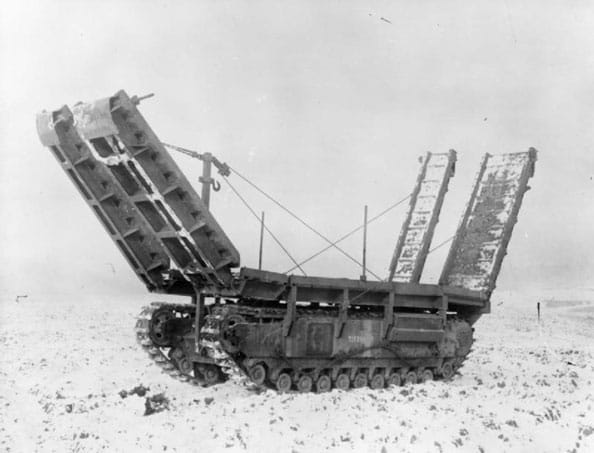
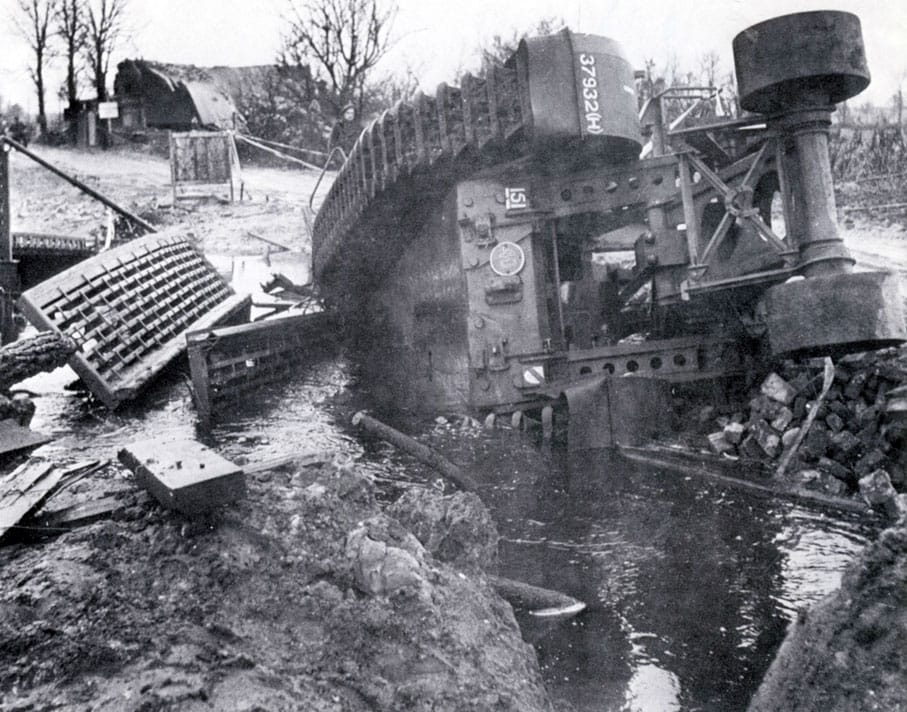
The Molenbeek was between 10 and 15 feet wide and had sloping banks about 5 feet high creating an effective gap of about 30 feet. The approaches were difficult with cratered tracks and waterlogged ground. The area was extensively mined. The success of the operation depended on crossing the beek silently by night. Any attempt by day would be suicidal as the road bridge was blown. It was therefore planned that the infantry would cross using floating pontoon bridges while a bridging tank would use a girder bridge for vehicles, including tanks.
The Royal Engineers successfully built the two pontoon bridges overnight – one on each side of the road. At 0500 hrs on 16 October B and D Companies crossed without incident – though it was later discovered that D Company had walked through a minefield of Schumines. Later A Coy did the same with no casualties. By 0600 hrs the leading Companies were keen to press on as they were lying in the open in full view of the enemy and getting casualties. However, other units hadn’t fared as well and so the Norfolks weren’t allowed to push on. The bridging tank failed to lay the bridge under intense fire. On the second attempt a flail tank was half way across when the whole lot toppled into the Molenbeek. The Battalion’s Churchill tanks had all been knocked out – but thankfully the enemy tanks had withdrawn. By 0700 hrs the leading companies were allowed to progress. Casualties mounted up. By the afternoon, A and C Companies were able to push on to about 1000 yds south of the Beek. The Battalion had succeeded in securing the crossing and forcing the enemy to withdraw. This was the day on which Kenneth Seymour and 16 other men of the Battalion were killed.
By 18 October Venray had been taken. Between 13 and 18 October, the Battalion incurred 43 fatal casualties and about 200 wounded.
The Aftermath
Bobbie Seymour’s wife, Nina G Seymour, married Wilfred G Horler in the Frome District in 1949. Sadly, she died while giving birth to their first child in 1950, just a year after her second marriage. The baby also died. She was buried on 16/3/1950 in Holy Trinity, Coleford. Her three children by Bobbie Seymour were brought up by Bobbie’s parents.
Bobbie’s son, Malcolm R B Seymour, married Kathleen P James in 1955 while his son Michael T Seymour, married Betty J Sainsbury in 1959 and his daughter Glenis Brenda Seymour married Brian D Harries in 1964 – all in the Frome District. All went on to have children.
Bobbie and Kenneth’s brother, Clifford Seymour, married Peggy C Ashman in Bridgend, Glamorganshire, in 1946. They, too had children.
Herbert Walter Seymour died on 4/7/1973 in Coleford aged 82. An obituary in the Somerset Standard on 20 July 1973 indicated that he was still living at Glen View, Coleford. His wife, Nellie, was unable to attend the cremation. Mourners at his cremation were his one remaining son, Mr C Seymour (though his wife Mrs P Seymour and daughter Miss Y Seymour were unable to attend) and his grandchildren Mr & Mrs G Harries, Mr & Mrs M Seymour and Mr & Mrs Michael Seymour. The Withers family were also represented.
Nellie Seymour died on 22/11/1977 at St Aldhems Hospital, Frome.
Bobbie and Kenneth’s brother, Clifford A Seymour, is thought to have died in 2005 in Rhondda, Glamorganshire.
The brothers are still remembered in the village. In 2020 Edwin Phillips recalled that he knew both Bob and Kenneth as a boy. He remembers that Kenneth was known as “Sharper”. Edwin writes that he visited Bob’s grave with his wife on fourteen consecutive years to place a cross. They have also visited Holland, but never Overloon.


