Milton Robert

Milton | Robert

  • First names

    Robert

  • Age

    19

  • Date of Birth

    24-08-1925

  • Date of death

    15-10-1944

  • Service number

    14709787

  • Rank

    Private

  • Regiment

    King’s Shropshire Light Infantry, 4th Bn.

  • Grave number

    IV. E. 10.

  • Robert Milton

    Robert Milton

    Robert Milton

  • Grave Robert Milton

    Grave Robert Milton

    Grave Robert Milton
Biography

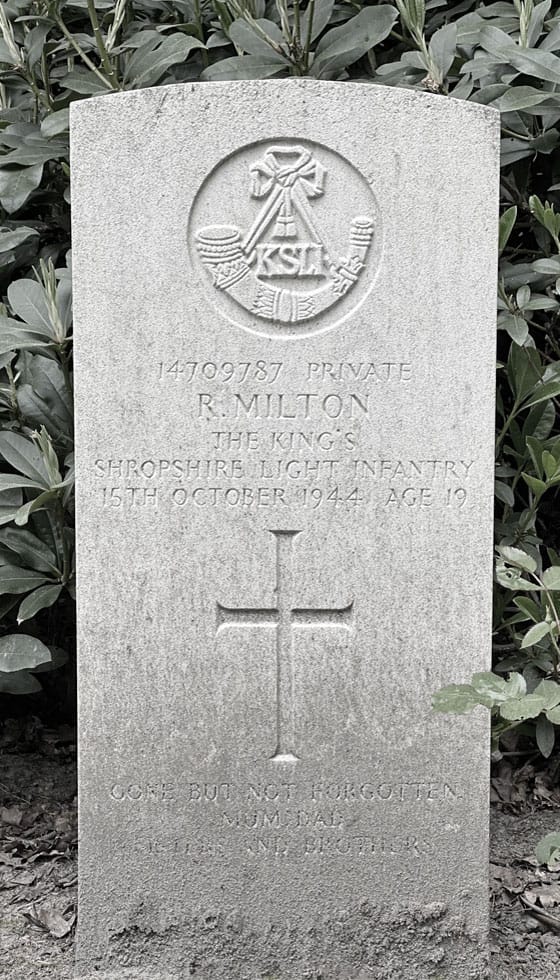
Robert Milton (service number 14709787) was killed in action on 15 October 1944 in the vicinity of Overloon. He was 19 years old and a private in the King’s Shropshire Light Infantry, 4th Battalion. He was buried in a field grave near a small farm in Holthees and reburied in 1947 at Overloon War Cemetery in grave IV.C.10. His gravestone reads: Gone but not forgotten, Father Mother Brothers and Sisters.

Family background

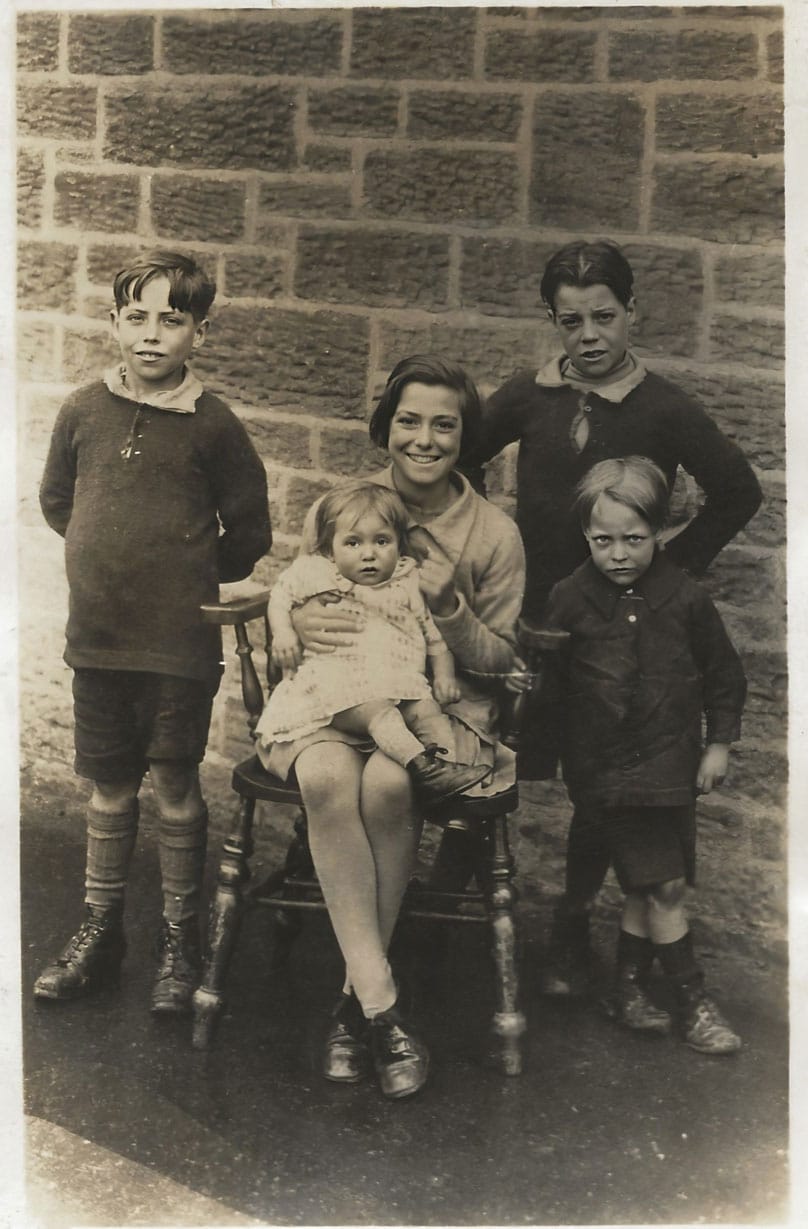
Robert Milton (known to his family as Bobby) was born on 24 August 1925 in Bermondsey, London. His parents were Henry Cecil Milton (1901-1963) and Jane Taylor (1901-1973).
He had two brothers, Henry (Harry) Milton (1919–2000) and Leonard Milton (1929–2023), and three sisters, Iris Milton (1934), Rose Milton (1936-2025) and Edna Milton (1932).
He attended Midway Place School in Rotherhithe, South East London.

His brother Leonard recalled that he last saw Bobby when he mistakenly went home an hour early for lunch. On his way home, he encountered Bobby, who had just left the house to go to war.
Henry (Harry) became a prisoner of war (POW) in Kalamarta, Greece. He was transferred to the notorious Stalag 306 prisoner of war camp in Germany. This extremely difficult journey to the camp has often been discussed. It involved being packed into a train and forced to march long distances. Many died along the way from exhaustion. Fortunately, Henry survived.

Military career

It is not yet known when Robert Milton enlisted in the army but according to one of his sisters he firstly joined the Royal West Kent Regiment. In his first letter to his parents, dated around 1 October 1944, he writes that he has changed regiments and been transferred to the 4th Battalion of the Kings Shropshire Light Infantry.

The 4th Batallion Kings Shropshire Light Infantry

The Territorial Battalion of the Kings Shropshire Light Infantry landed in Normandy on 14 June 1944 and fought its way through France, the Netherlands and Germany until May 1945.

On 3 September, the 4 KSLI reached Ninove in Belgium, south of Antwerp. Their destination for the next day was Antwerp. About four miles outside the city, the Fife and Forfar Yeomanry, who were ahead of the 4 KSLI, reported that the outer perimeter of the forts was not in enemy hands and that the city, held by about 2,000 enemies, had been taken by surprise by the speed of the advance. The battalion therefore continued its transport to the outskirts of the city. A dense crowd, cheering and embracing ‘their liberators,’ made military operations very complicated.

Their first objective was to occupy a park in the centre of the city. As they approached the park, they encountered no resistance and the crowds turned it into a triumphal procession. However, the enemy had strong defences at the park and the leading company came under heavy machine gun fire. After desperate hand-to-hand fighting, the enemy surrendered. A company was then sent to clear the mayor’s house. The garrison there held out until dark, when they finally surrendered. During the night, one company was sent to hold one of the bridges on the northern edge of the city.

The War Diary reports that all operations were carried out with the greatest effort due to the enthusiasm of the citizens, who literally carried entire platoons and companies on their shoulders. The battalion headquarters was established in the park behind the German barbed wire, and the guards were mainly concerned with keeping out the cheering population.

The four KSLI remained in and around Antwerp until 8 September, when they moved to Leuven, Heusden and then to Hecteren, which they reached on 11 September and where they remained until 21 September. By that time, they had taken on men from various regiments and it was said that they were becoming a mixed bunch. While they were here on 15 September, they heard about a planned major advance to Arnhem, and on 17 September they saw many fighter planes and heavy bombers flying overhead in support of the largest airborne operation ever. This would be the advance to Arnhem in Operation Market Garden.

On 18 September, they travelled to Bree and took part in a deception plan to conceal a bridge operation over the Escault Canal. On 20 September, they crossed this canal at Lille St Hubert and entered the Netherlands. They spent the night in Budel. The diary mentions that “everyone seemed very happy to see us and they waved orange flags with great enthusiasm”. On 21 September, they moved on to Vaarsel, where they waited for the Herefords to build a bridge over the Willemskanaal. The next day, they captured Asten with the Fife and Forfars. On 25 September, they moved on to Gemert, where they received an excellent welcome, and then to Sint Anthonis. The next day, they heard that the bridgehead at Arnhem had been evacuated. They remained in Sint Anthonis until 29 September, defending the village and patrolling the surrounding area, including Boxmeer.

Letters home from Robert

The family receives his first letter in early October, undated, followed by several more a few days later:

  • Sunday

    Sunday

    Dear Mum

    Just a quick note to let you know that I am well and that this is the first opportunity I have had to write. We have been here for ten days now and I have travelled through France and Belgium. As you can see, I have been transferred to another regiment, which suits me fine. I hope everything is well at home and that Edna, Iris and Rose are also well. I also hope you’ve heard from Harry. Don’t worry about me, because I’m fine and there’s no danger here. I hope Dad and Lennie are working and that everything is going well for you. I can’t think of much else to say right now.

    See you soon, all the best, your loving son Bob xxxxxxxxxx

    Harry was a brother who was a prisoner of war at the time.

  • 4 October 1944

    4 October 1944

    Dear Mum
    Just a line hoping you are all still ok as it leaves me at present. Well mum I am quite alright here and I hope you are the same, and I hope you have heard from Harry recently. Well mum I don’t suppose you get any doodle bug now at least, I hope you don’t mind anyway. Well mum I expect by the time you get this letter it will be near Edna’s birthday.Well mum I hope pop is at work and also Lennie, and I notice Millwall are at the bottom of the league thats because I am not there I expect. Well mum I can’t think of anything to say just now, but remember me to everyone at home. So I guess I will have to close now.
    So cheerio, all the best, your loving son Bob xxxxxxxxxxxxx

    Edna is his sister, Lennie a brother Millwall – local football team.

  • 8 October 1944

    8 October 1944

    Dear Mum
    Just a line hoping you are still ok as it leaves me at present. Well mum I am quite ok here and in the best of health and I hope you are all the same at home. Well mum I hope the three girls are ok and I hear the doodle bugs still drop on England. I hope you are not getting any round your way. And I hope you have heard from Harry, but anyway I dont think it will be long before we are all united all at home again. Well Mum I hope pop is still working and that his chest is ok and that Lennie and yourself are in good health, and does nan and uncle Ern still live opposite I hope they are all ok also, and Nan in 35 as well. Well mum its quite a job of thinking what to write about but I reckon you don’t mind as long as it’s a line or two. Well Mum i’m stuck for words now so I will have to close.
    So Cheerio, all the best
    Your loving son
    Bob xxxxxxxxxxx

    Harry – brother POW
    The mood was positive, thinking about all being home together soon

  • 10 October 1944

    10 October 1944

    Dear Mum
    Just a line to say I am well and happy hoping you are all the same at home. Well Mum its raining cats and dogs here so all we are doing is sitting in our little hut round the fire smoking and reading and living like lords. Well Mum I hope Edna, Iris and Rose are well also Lennie, Pop and yourself, and I hope once again you have heard from Harry.Well Mum this is not a bad country it’s summer here when it doesn’t rain, and plenty of beer not as good as London’s beer but not bad, so as you can see i’m not so bad considering I am in a foreign country, well Mum once again I am stuck for words and the boys are hurrying me up to go out. So I will have to close.
    So cheerio
    All the best
    Your loving son
    Bobxxxxxxx
    P.s. Just received a letter from you

    Edna, Iris Rose, his sisters
    Harry – POW brother
    Lennie – brother
    Raining cats and dogs – is a Londoner slang term for it’s raining very heavy

  • 13 October 1944

    13 October 1944

    Dear Pop
    Just a line in answer to your letters I received yesterday and am glad to hear you are all ok as it leaves me at present. Well Pop how are you doing over the dogs are you winning (or what)  and I noticed Millwall made a bad start this year but perhaps they will do better later  on (I hope) Well Pop how’s your old windbags, mines alright at present except when it rains but not to bad. Well Pop I heard a little joke here it’s not good but something to fill the page up.
    One bloke (to another) – my brother died with music on the brain.
    Second bloke – Hoes that
    One Bloke – Why a piano fell on his head
     
    Well anyway Pop so that’s is that and I can’t think of a lot to say just now so I will have to close so remember me to all at home.
    So cheerio
    All the best, Your loving son
    Bobxxxxxxx
    P.s. rum – have this one on me.

    Pop is father
    Windbags – Cockney for lungs
    Rum meaning drink

  • 14 October 1944

    14 October 1944

    Dear Mum, Dad
    Just a line hoping you are still all ok as it leaves me at present. Well Mum I am still quite happy here and in good health. Well Mum I hope the three girls are well and I will look forward to a letter from Edna, I can’t write to her yet as I forgot the address. Well Mum I hope you have heard from Harry again by now and I expect you will soon be seeing him the way the war is going, I hope pop is working and that his chest is ok and the terror getting on (Lennie) I hope  he’s ok and earning all the money. Well Mum as you can see there is not a lot of room left so I reckon I will have to close. Wishing you all the best.
    So cheerio, all the best, your loving son Bob xxxxxxxxxxxxxxxx

    Bobs last letter, he was killed the next day 15th October 1944
    Edna – sister, must be evacuated / living in another place (safer than London)
    Terror – lovable term referring to his brother Lennie

Overloon and the attack on Smakt

They were relieved of their duties in Sint Anthonis by American troops, allowing them to return to a rest area in Gemert, where they remained until 7 October. They had the pleasure of enjoying bathing and entertainment facilities there. On 7 October, they went to the area around Mullem to take over defensive positions from the US 7th Armoured Division.

The Peel region was a difficult area for warfare, which benefited the German defence. The regiment witnessed the failed attempt by the American 7th Armoured Division at close quarters and knew that they would soon need to make an attempt to cross the Meuse and enter German territory. When the 4th KSLI battalion is added to the 3rd Infantry Division, the time has indeed come for the British: 12 October, the Battle of Overloon.

On 15 October, the battalion was ordered to launch an attack from an area occupied by the 2 KSLI, targeting the village of Smakt, with the boundary of the operation being the railway line running north-south, a few hundred metres west of Smakt. They passed Overloon with some effort because heavy traffic had left the roads and paths in very poor condition. Overloon had only been captured the day before.

The attack included assistance from the Fife and Forfar Yeomanry and a rolling barrage of artillery that would move every 2 minutes at a speed of 100 metres. The barrage needed to remain at the opening line for 10 minutes. Unfortunately, some guns fired too short and fell into the KSLI’s area, causing some casualties.

The attack was difficult, chaotic and messy, because the troops not only had to attack the enemy, but also had to protect their own comrades who were in the front line. Providing cover was therefore risky: every shot fired at the enemy could also hit their own men, which made the battle even more tense and confusing.

The barrage eventually continued, but the momentum of the attack was halted until the attacking guns stopped firing. The attack continued and the barrage was called off, replaced by the firing of explosive charges. The ground over which the battalion was moving was a large sandy plain, marked by sand dunes – impassable for all vehicles except tanks and carriers (with effort). The commander’s reconnaissance vehicle was towed all the way by the tank of the regimental commander of Fife and Forfar to maintain communication with the rear radio link. Several companies encountered some resistance but reached the railway line.

When the battalion had taken up its position, the enemy began shelling the area and bombarding it with mortars, with the companies on the right being hit hard by 105 mm, 88 mm mortars and Nebelwerfer rockets. A considerable number of aerial bombs were also dropped. The attack that day cost the battalion 4 dead and 29 wounded.
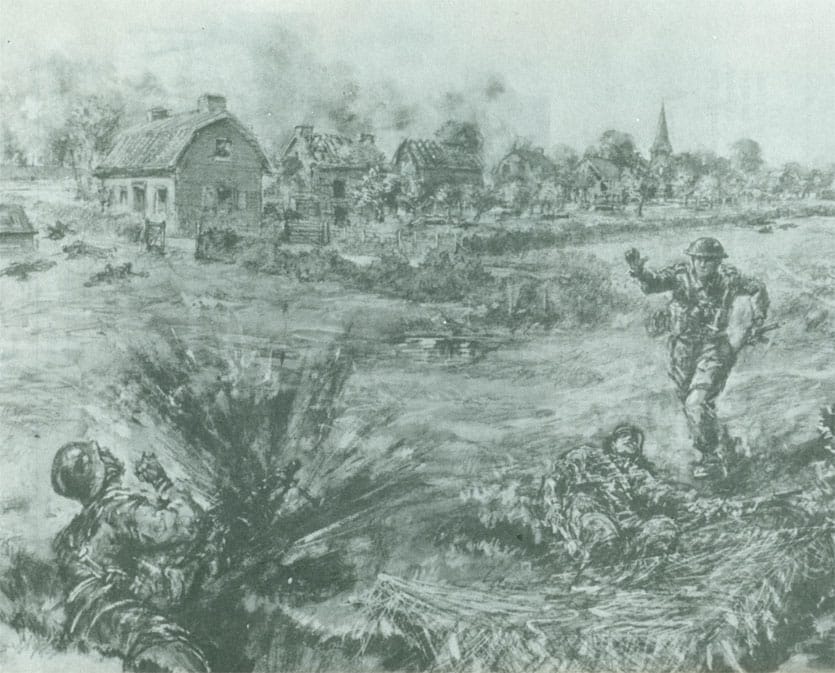
It was on this day that Robert Milton was killed. He was hit by shrapnel after a patrol. His comrades and Major Urwin Thornburn laid him to rest in a quiet corner at Loonseweg 8 in the small village of Holthees, where the battle had taken place, and held a funeral service at the grave.

On 3 June 1947, Bobby was reburied in grave IV.E.10 at Overloon War Cemetery.

During the attack on 15 and 16 October 1944, several of Bobby’s comrades were killed. Also buried at Overloon War Cemetery are:

Pte Frederick Harrington, Pte Ronald Keel, Pte Bernard Oakley, L/Cpl Patrick Sweeney
On Mierlo War Cemetery: Pte Savage A. and Pte Scott S.W.  
On Venray War Cemetery Pte Neary A. 
Pte Chilton W. is still missing (MIA)

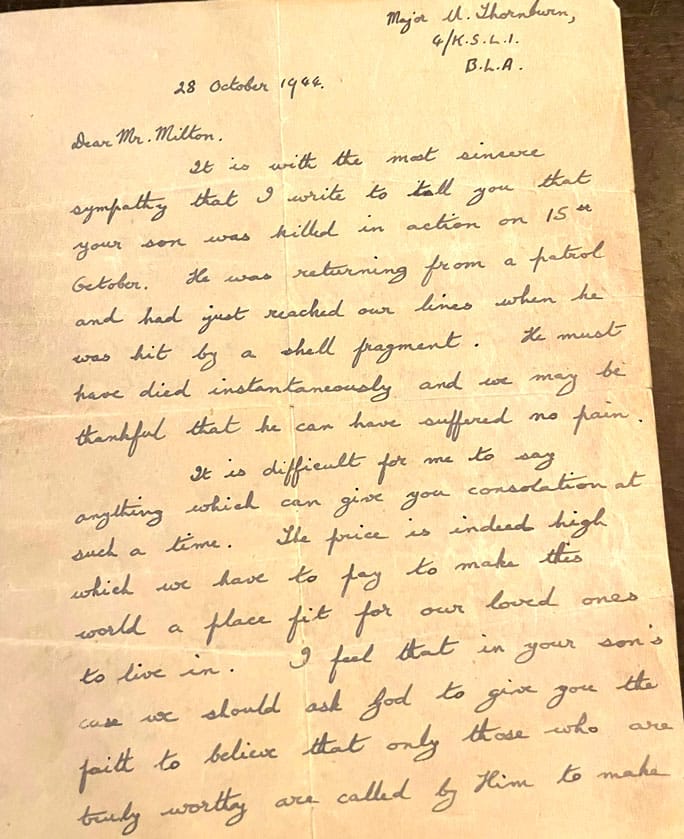
In early November, the family receives a letter of condolence from Major Urwin Thornburn:

Letter of condolence Major Urwin Thornburn

Majoor Urwin Thornburn – 4/K.S.L.I

28 October 1944

Dear Mrs Milton
It is with the most sincere sympathy that I write to tell you that your son was killed in action on 15th October. He was returning from a patrol and had just reached our lines when he was hit by a shell fragment. He must have died instantaneously and we may be thankful that he can have suffered no pain.
It is difficult for me to say anything which can give you consolation at such a time. The price is indeed high which we have to pay to make this world a place fit for our loved ones to live in.
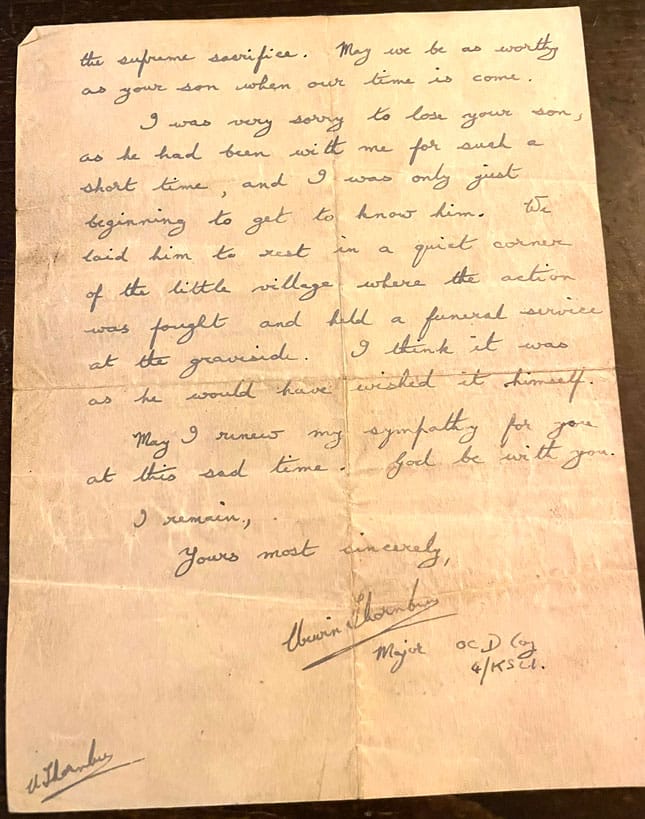
I feel that in your sons case we should ask god to give you the faith to believe that only those who are truly worthy are called by him to make the supreme sacrifice. May we be as worthy as your son when our time comes.
I was very sorry to lose your son, as he had been with me for such a short time, and I was only just beginning to get to know him.
We laid him down to rest in a quiet corner of the little village where the action was fought and held a funeral service at the graveside. I think it was as he would have wished it himself.
May renew my sympathy for you  at this sad time. God be with you at the sad time, God be with you.
I remain yours most sincerely
Urwin Thornburn Major 4/K.S.L.I

Sgt George Harold Eardley

It is also worth mentioning in this biography that Sgt George Harold Eardley, a comrade from A Company, was later awarded the Victoria Cross for his actions on that day. Sergeant Eardley took out three machine gun nests under heavy fire, enabling the platoon to continue the attack and ultimately reach its objective after heavy fighting and suffering heavy losses.

Photo’s and documents

  • Illustration Schaartven October 15 1944 by Bryan de Grineau from the book After Antwerp

    Illustration Schaartven October 15 1944 by Bryan de Grineau from the book After Antwerp

    Illustration Schaartven October 15 1944 by Bryan de Grineau from the book After Antwerp written by Ned Thornburn

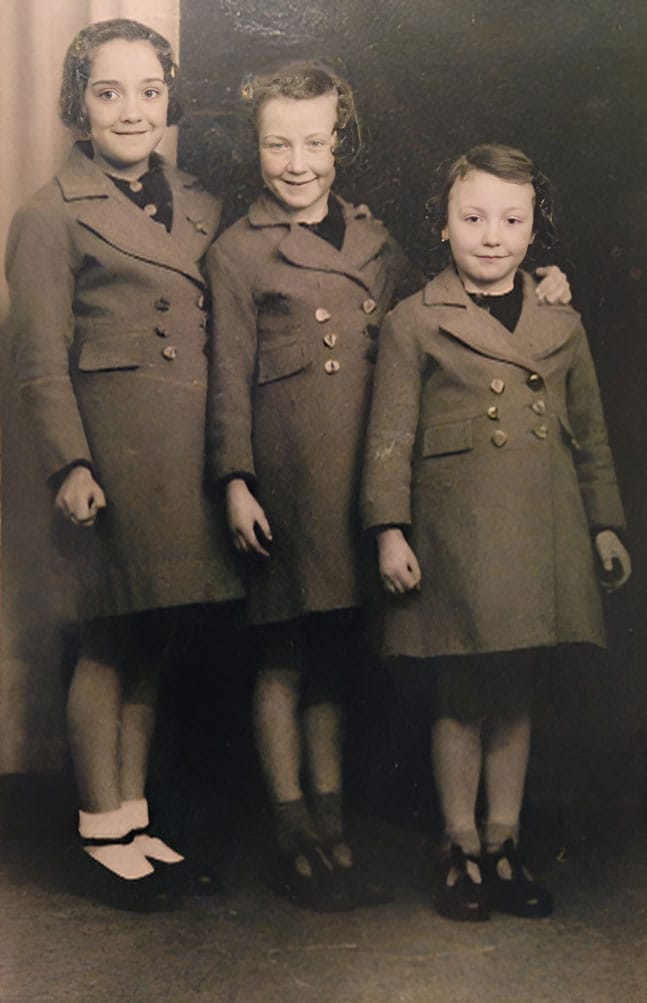
  • Iris Rose en Edna Milton

    Iris Rose en Edna Milton

    Iris Rose and Edna Milton

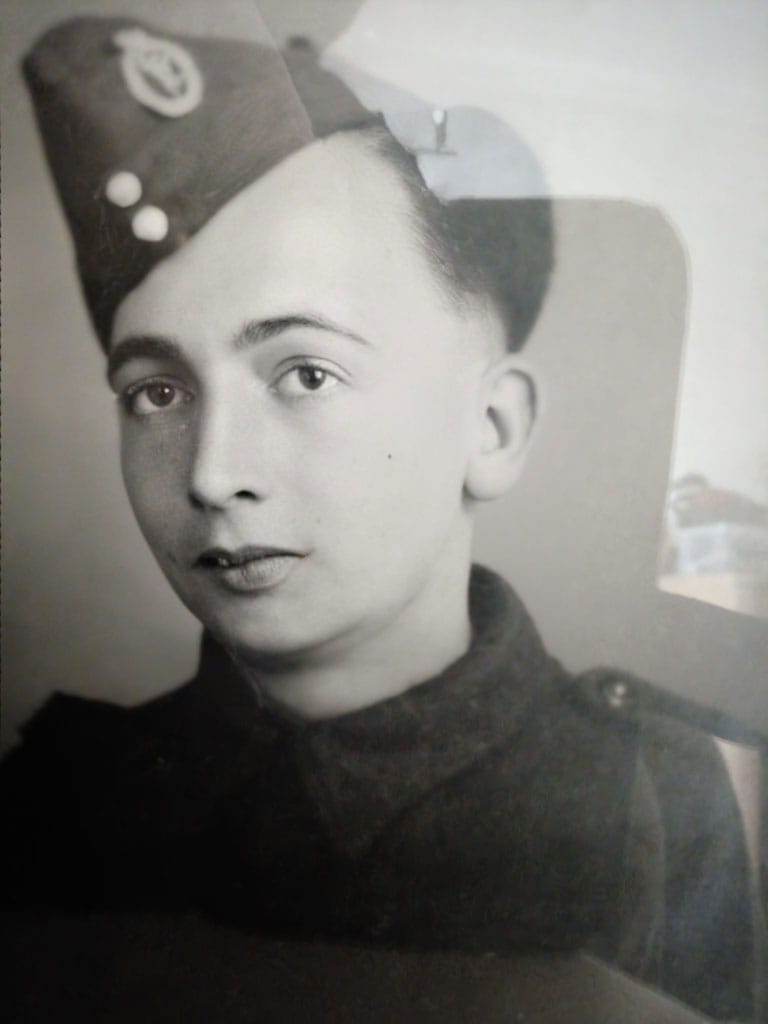
  • Henry (Harry) Milton

    Henry (Harry) Milton

    Henry (Harry) Milton

  • Letter from Major Urwin Thornburn to the family

    Letter from Major Urwin Thornburn to the family

    Letter from Major Urwin Thornburn to the family

  • Letter from Major Urwin Thornburn to the family

    Letter from Major Urwin Thornburn to the family

    Letter from Major Urwin Thornburn to the family

  • Harry Milton POW

    Harry Milton POW

    Harry Milton POW

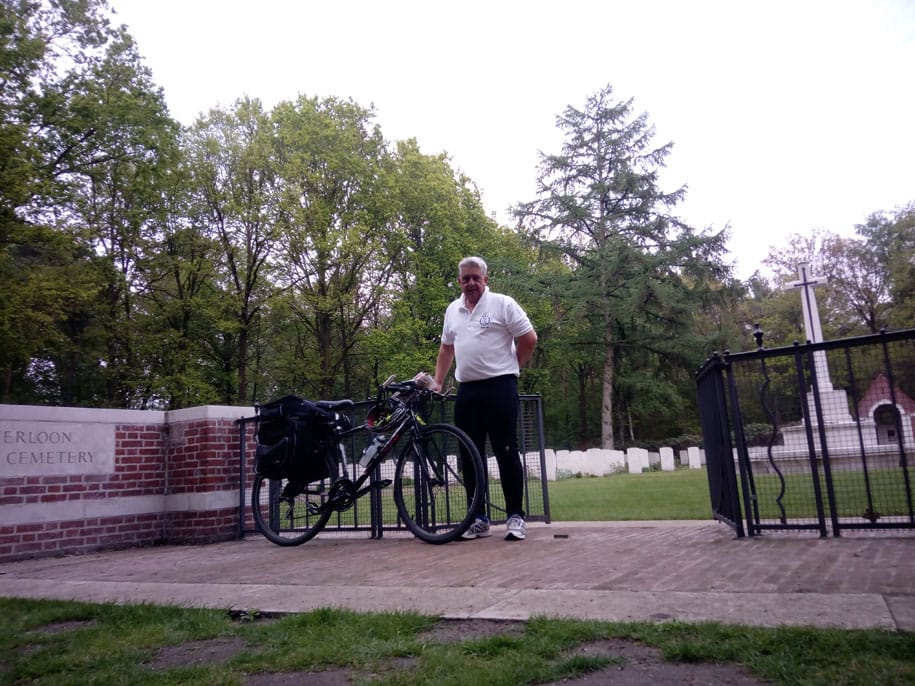
  • Ken Milton (Harry's zoon) 2019 fietstocht van Duinkerken naar Overloon

    Ken Milton (Harry’s zoon) 2019 fietstocht van Duinkerken naar Overloon

    Ken Milton (Harry’s son) 2019 bike-ride from Dunkirk to Overloon

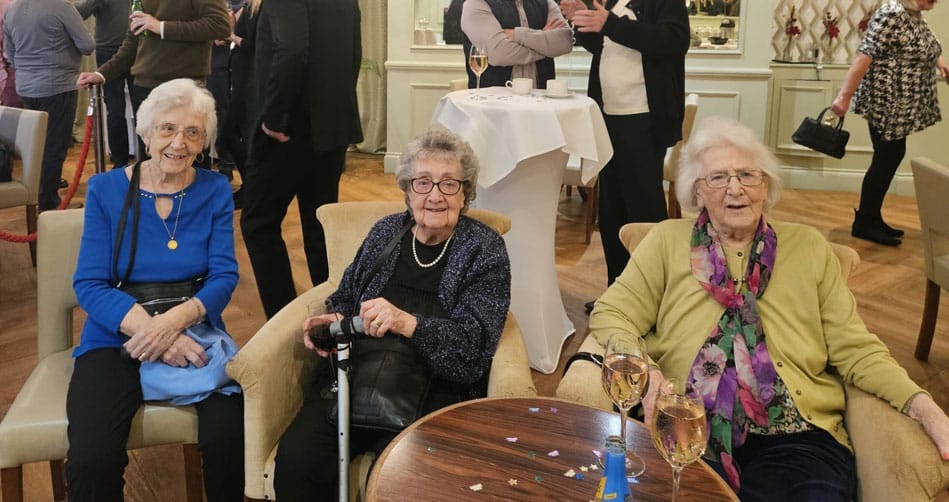
  • Rose Edna Iris Januari 2025

    Rose Edna Iris Januari 2025

    Rose Edna Iris January 2025
Family visit October 2025

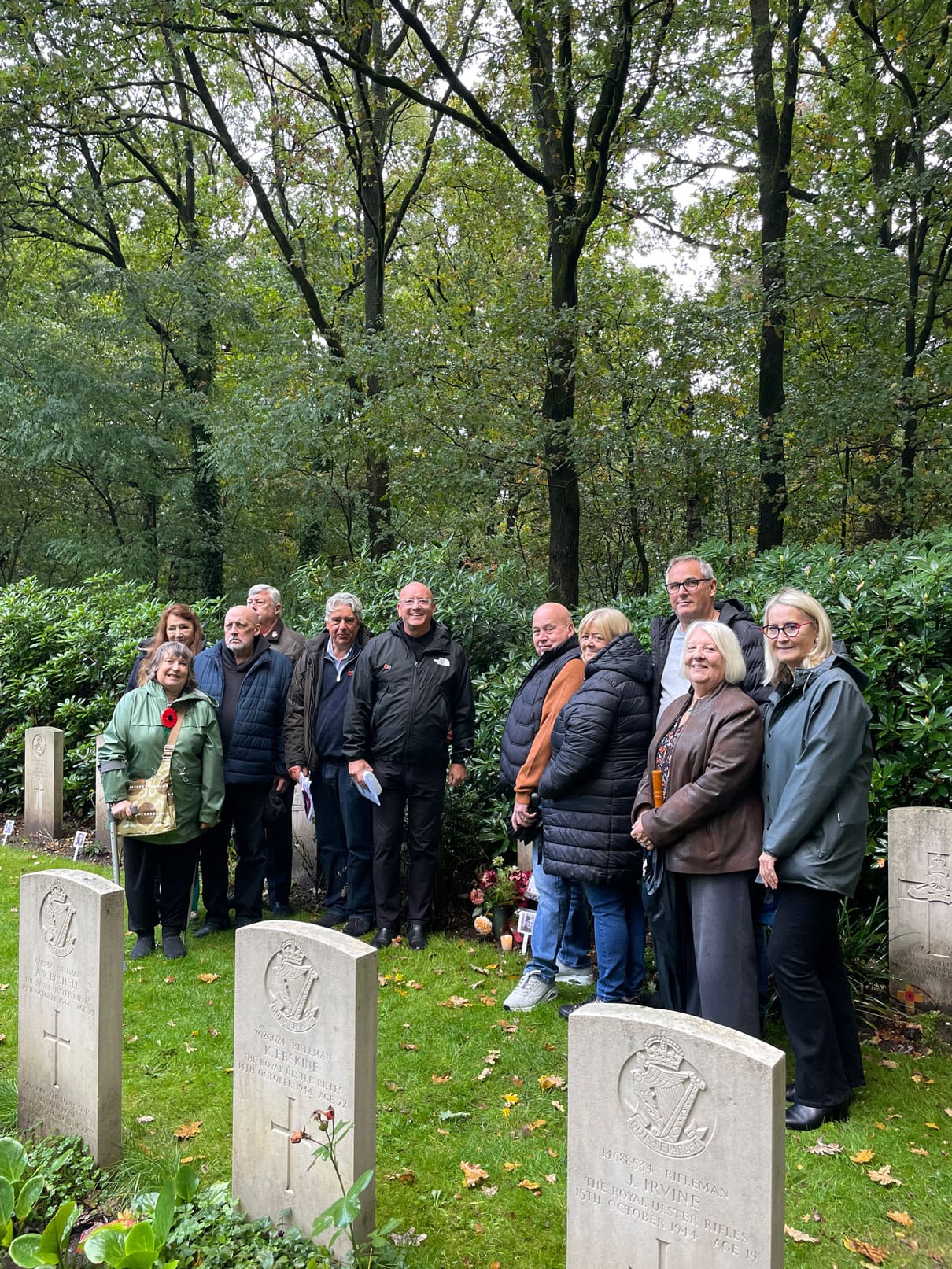
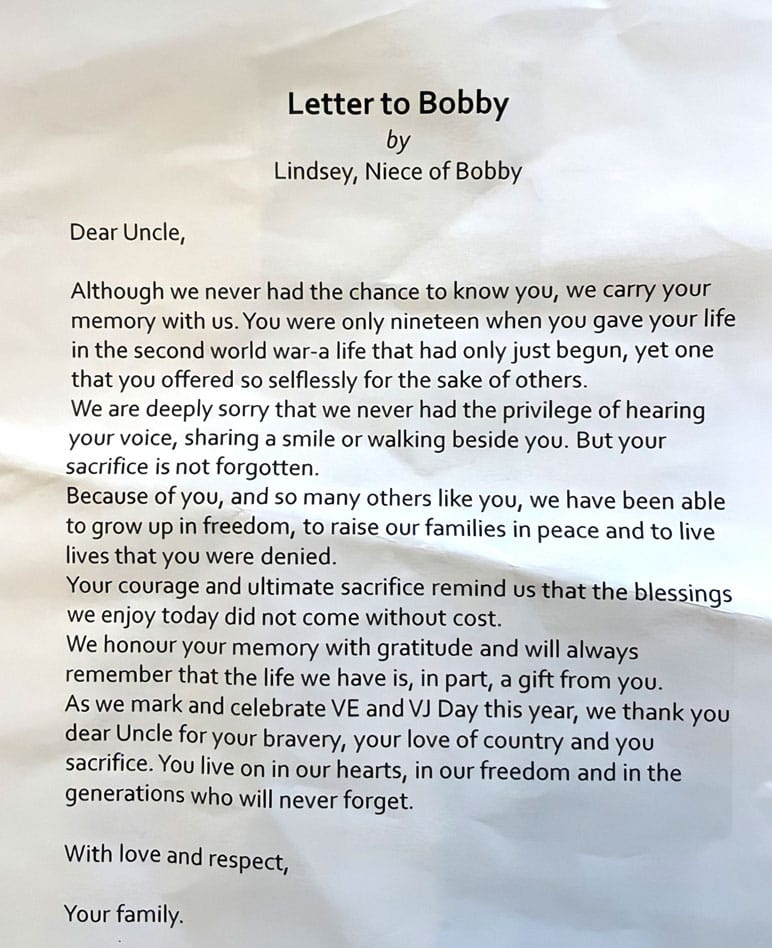
During the weekend of 3-5 October a large group of Bobby Milton’s cousins and nieces visited Overloon. We organized a battlefield tour for them in the Overloon area and took them to the fields in Het Schaartven where Bobby was killed and where he was temporarily buried in a field grave. We also attended an emotional and very beautiful memorial ceremony where the family commemorated their uncle Bobby with beautiful words and music and thanked him for what he meant to freedom but also to his family.

For us as a Foundation, it was yet another confirmation of how important our work is in finding families, telling their stories, and bringing them together at the graves of the military at the war cemetery in Overloon.

  • Battlefield and Field Grave Location Robert Milton

    Battlefield and Field Grave Location Robert Milton

    Battlefield and Field Grave Location Robert Milton

  • Bobby's family at his grave in Overloon on 4 October 2025

    Bobby’s family at his grave in Overloon on 4 October 2025

    Bobby’s family at his grave in Overloon on 4 October 2025

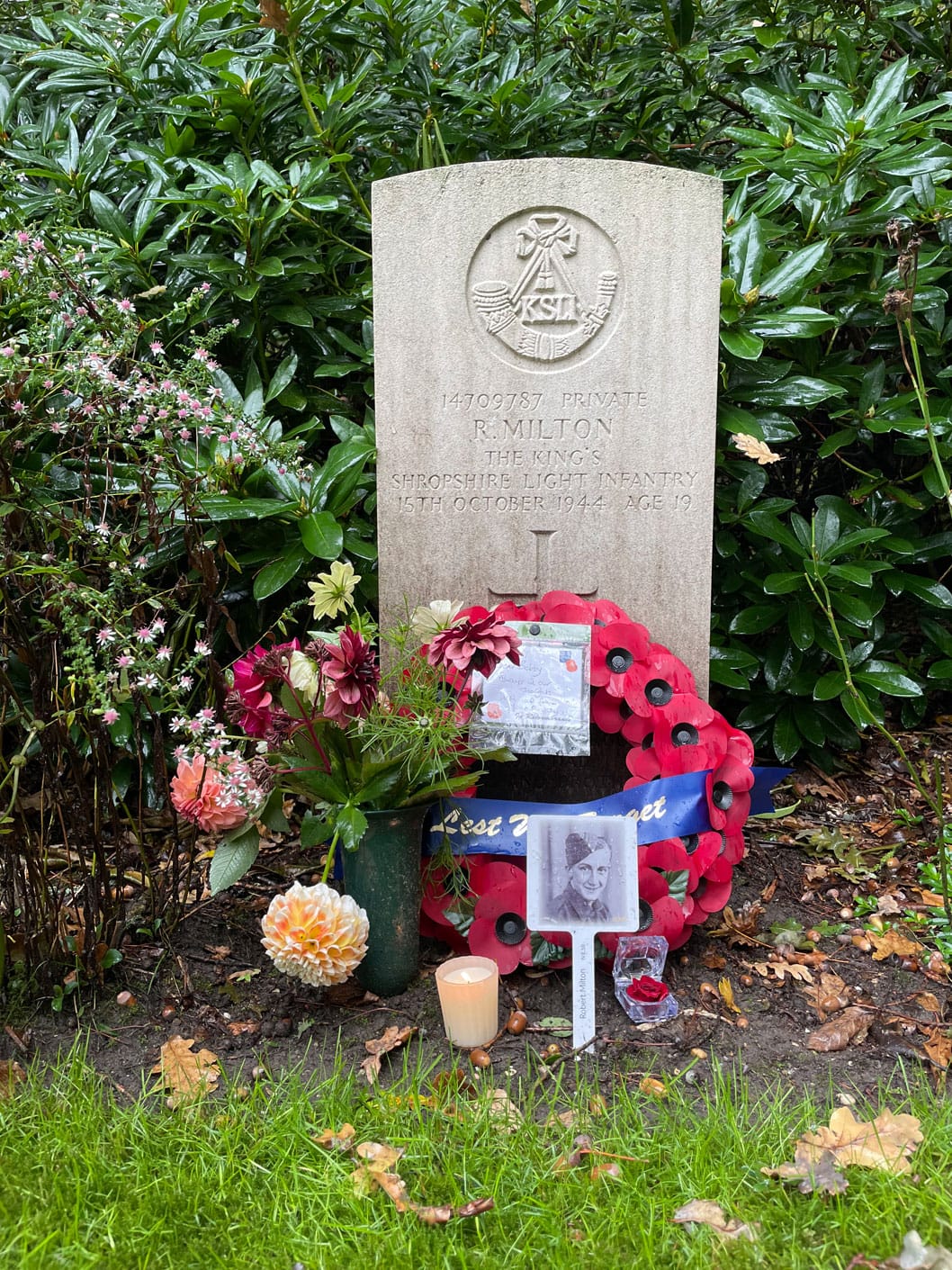
  • Bobby Milton's grave during the memorial service on 4 October 2025

    Bobby Milton’s grave during the memorial service on 4 October 2025

    Bobby Milton’s grave during the memorial service on 4 October 2025

  • Letter to Bobby from his family 4 October 2025

    Letter to Bobby from his family 4 October 2025

    Letter to Bobby from his family 4 October 2025

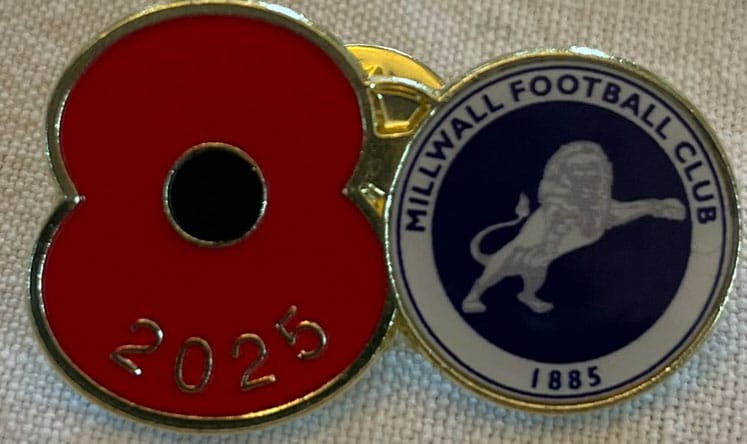
  • Millwall Football Club and Poppy

    Millwall Football Club and Poppy

    Bobby’s Millwall Football Club and Poppy

Sources and credits

Ancestry family trees and other information sources
Wikipedia: King’s Own Shropshire Light Infantry
King’s Own Shropshire Light Infantry War Diary from website Traces of War
After Antwerp – Major Ned Thornburn
Information and photo’s Ken Milton, nephew of Bobby Milton
This biography has been compiled by our foundation based on our own research and stories from other soldiers who served in the same regiment or participated in the same battle. Part of the collective work within the foundation has been used for this purpose.

Research Anny Huberts
Continue reading

Perks James

Perks | James

  • First names

    James

  • Age

    33

  • Date of birth

    04-10-1911

  • Date of death

    14-10-1944

  • Service number

    5120722

  • Rank

    Lance Corporal

  • Regiment

    Royal Warwickshire Regiment, 2nd Bn.

  • Grave number

    III. D. 11.

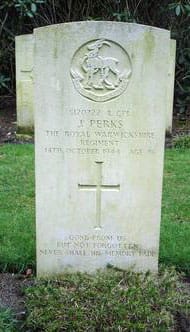
  • James Perks

    James Perks

    James Perks

  • Grave James Perks

    Grave James Perks

    Grave James Perks

Biography

James Perks (Service No. 5120722) was killed in action on 14 October, 1944. He was a Lance Corporal in the 2ndBattalion of the Royal Warwickshire Regiment. He was initially buried at the Maria Regina Monastery at Stevensbeek and subsequently re-interred on 22 May 1947 in grave III. D. 11 at the Overloon Commonwealth War Graves Cemetery. The inscription on his grave reads “Gone from us but not forgotten never shall his memory fade.”

Family Background

James Perks was the son of James Perks and Mary Thomas (who was known as Polly) who had married in 1906 in Leominster, Herefordshire. James was born on 4/10/1911 at 5 George Street, Blaenavon and baptised on 25/10/1911 at the Parish Church in Blaenavon.

James Perks (Snr) had been born in Leominster in Herefordshire in 1872 to George and Elizabeth Perks. He was the eldest of seven children all of whom were born in Leominster. By 1901, James was living as a boarder at Three Elms Cottages, Huntington, Hereford in the household of George and Eliza Thomas. James was working as a Builder’s Labourer. George Thomas had been born in 1849 in Preston on Wye in Herefordshire and was a General Workman on a Farm. Eliza had been born in 1851 in Mansel Gamage, Herefordshire and was a Laundress.

Polly Thomas had been born in 1883 in Weobley, Herefordshire and was the daughter of Alice Thomas. Polly was one of six children, all born in Herefordshire. One of Polly’s uncles was the George Thomas with whom James Perks was boarding in 1901, which is probably how he and Polly met.

The locations named in Herefordshire are all northwest of Hereford and between it and the Welsh border.

Not only did James Perks marry Polly Thomas in 1906 in Leominster, his brother, Ernest Perks, who was born in 1879, married Polly’s sister Priscilla, who was born in 1888. This marriage took place in 1911 in the Abergavenny district of Monmouthshire in Wales which includes Blaenavon. This is in the Welsh valleys, known historically as a major centre for coal mining.

In 1911 James and Polly Perks were living at 5 George Street, Blaenavon. Ernest and Priscilla Perks were living with them. Also present was Polly’s youngest brother, George Thomas, who was born in 1890. James and Ernest were both working as Bricklayer’s Labourers while George was working as a Collier Filler. Priscilla was working as a domestic cook. Two girls who were described as James’ nieces were also living with them. These were Alice Maud Thomas born in 1907 in Treorchy, Glamorganshire and Dorthy Thomas, born in 1910 in Blaenavon. It isn’t certain whose children these were. However, on 12/2/1912, Alice Maud Perks, who had been born on 7/7/1907, was baptised with the father’s name given as James and mother as Mary. James was described as a Plasterer. It seems that James and Polly had taken Alice as their own. Similarly, by 1921, Dorothy was shown as the eldest child of Ernest and Priscilla.

As has been seen, James Perks (Jnr) was born to James and Polly on 4/10/1911 in Blaenavon. His sister, Lizzie, was born on 14/4/1914, also in Blaenavon.

James Perks (Jnr) attended the Boys’ Endowed School in Blaenavon. His School Report from March 1921 shows that he scored highly in his final terminal examination that year for Reading, Writing, English Composition, Arithmetic and Drawing. His conduct and punctuality were regarded as excellent. It was stated that he was fit for promotion to Standard 3 when the school reassembled on 4/4/1921.

In June 1921, James and Polly were still living at 5 George Street with Alice, James and Lizzie. James (Snr) was working as a Grave Digger for Blaenavon Urban District Council. Also living with them were two male lodgers aged 42 and 58. Meanwhile, Ernest and Priscilla were living at 27, Llanover Road, Blaenavon with Dorothy and had four more children.

However, James Perks (Snr) died in 1932 in the Abergavenny district.

James and Polly’s daughter, Alice Maud Perks, had married Thomas Wathen in Abergavenny district in 1928. He had been born on 25/11/1904. They had two girls there in 1929 and 1933. Their other daughter, Lizzie Perks, married John Henry Jones in the same district in 1934. John was born on 17/3/1909. They had one daughter there in 1934 and later had three more between 1938 and 1948 in Coventry.

Polly, James (Jnr) and at least one of her married daughters and family all left Wales for Coventry in the mid 1930’s. This was the time of the Great Depression when many moved elsewhere to find work. Polly remarried in Coventry in early 1936. Her husband was William Ernest Perks who was born on 26/11/1901. He was the son of her first husband’s brother.

James Perks  married Frances Doreen Jones a few months later in 1936 in Coventry. She had been born on 26/3/1915 in Blaenavon to Thomas Jones and Elizabeth Ruth Jenkins who had married there in 1906. Her parents had both been born in Blaenavon, Thomas in 1880 and Elizabeth in 1882. She had two brothers, Idris born in 1907 and John in 1909. The family were living in Blaenavon in both 1911 and 1921. Thomas was a Stationary Engine Driver, but in 1921 was out of work, as were many men at that time. He had been working for the Blaenavon Iron and Steel Company. It is possible that it might have been Frances’ brother John who had married James’ sister Lizzie in 1934. 

James and Frances had a child, Ruth H Perks, early in 1939. In September that year, the three of them were living at 117 Station Avenue, Coventry. James was working as a Mechanic but it is not clear in which industry.

They were one of three related households all living at that same address. James’ mother, Polly, was living there with her second husband and her married daughter, Alice Wathen. Polly’s husband was working as a Packer at a Motor Works while Alice was working as a daily help at the King’s Head Hotel. Alice’s husband, Thomas Wathen, was still living in Blaenavon at the Ivor Castle Inn, Ivor Street with his parents William and Sarah Wathen and his two daughters. It is understood that Alice’s presence in Coventry was temporary as she and her family lived in Wales for most of their lives. The third household living at 117 Station Avenue was that of John Henry Jones and his wife Betty. Betty was Polly’s other married daughter. They had their two eldest children with them. John was working at an Aluminium Foundry Furnace. Polly therefore had her three children Alice, James and Betty all living close to her at this time in 1939.

Military career

James Perks enlisted with the 2nd Battalion of the Royal Warwickshire Regiment on 26/6/1940. James would not therefore have been involved in the Battle of France or the evacuation from Dunkirk in June 1940.

After Dunkirk, the battalion moved to Somerset to counter a potential German invasion but in early December it was transferred to London and was not, unlike most of the rest of the Army, committed to beach defence duties. In September 1942, it was transferred to 185 Infantry Brigade which was then incorporated in the 3rd Infantry Division.

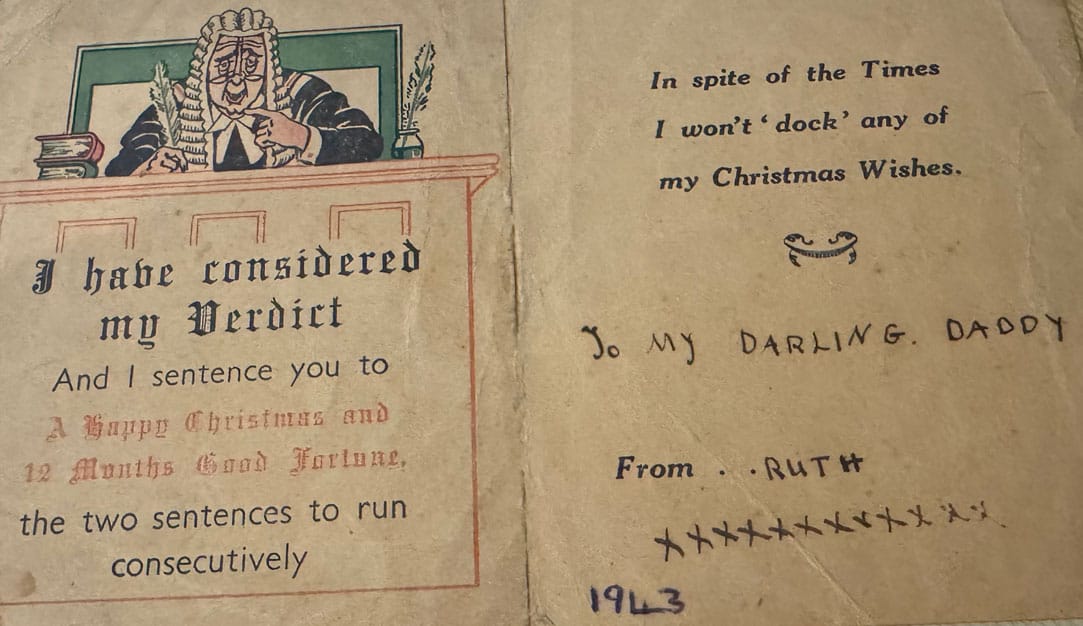
James received his last Christmas Card from Ruth at Christmas 1943, which she still keeps.

The 3rd Infantry Division landed on D-Day on 6 June 1944 with the first assault on the Normandy beaches.

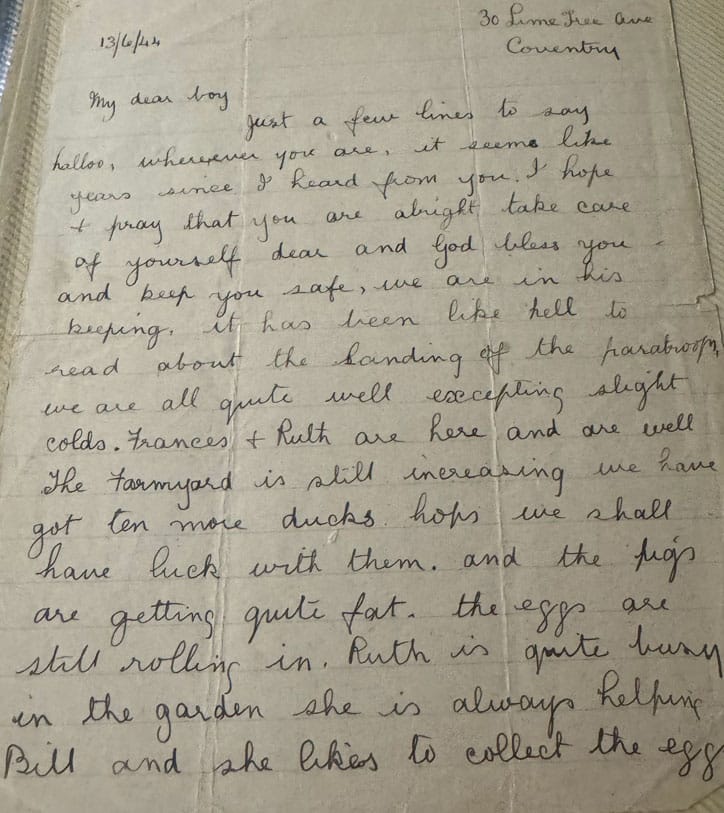
His mother, clearly concerned at hearing that the assault had started, wrote the following to him on 13/6/1944 from 30 Lime Tree Avenue, Coventry:

“My dear boy,
 
Just a few lines to say hello wherever you are, it seems like years since I heard from you. I hope and pray that you are alright take care of yourself dear and God bless you and keep you safe, we are in his keeping. It has been like hell to read about the landings of the paratroops. We are all quite well excepting slight colds. Frances and Ruth are here and are well. The farmyard is still increasing. We have got 10 more ducks hope we shall have luck with them. And the pigs are getting quite fat. The eggs are still rolling in. Ruth is quite busy in the garden, she is always helping Bill. And she likes to collect the eggs.”
 
The Battalion fought through the Battle for Caen and the break out from Normandy then pushed on through Belgium, entering the Netherlands at Asten on 22 September, 1944. This is to the east of Eindhoven.

Following the failure to take the bridge at Arnhem in Operation Market Garden in late September 1944, the Allied Forces were left in a very precarious narrow salient through the Netherlands.

On 1 October, in drenching rain, the Battalion moved north east to Malden which is between Nijmegen and the River Maas. It was now the aim of Operation Aintree to widen the salient by heading south from Nijmegen to take Overloon and then Venray before finally eliminating a German bridgehead on the River Maas near Venlo. Initially, the US 7thArmoured Division was to undertake this task while British forces, including the 3rd Division, would move eastward, across the German frontier, and capture the forest area known as the Reichswald, from which the Germans had been launching counter attacks.

However, by 9 October, the plan changed. An attempt by the US 7th Armoured Division to take Overloon and Venray had lost many men and tanks without making much headway. Field Marshal Montgomery decided that he must postpone the Reichswald attack. He needed to clear the Scheldt estuary to open the badly needed port facilities of Antwerp and the lesser, but also essential, task of eliminating the German forces west of the Maas. The latter objective was entrusted to 8 Corps, including the 3rd Division. The 3rd Division was to attack south east to Venray, in the hope of drawing off enemy forces while three other divisions prepared to advance eastward to Venlo.

The Battalion therefore turned southwards and by 12 October they had moved to near Wanroy, a village south of the Maas and just north of Overloon. They took over from 8 Infantry Brigade which succeeded in capturing Overloon that day but were unable to make progress through the woods south of it.

Sgt. George W A Davis later gave a vivid description of the conditions which were to come:

“The last good, long, sleep we had was about the 10th or 11th of October. Our clothes were filthy, we were near exhaustion, due to lack of food and sleep. It was very cold and rain and sleet all the time, so we were all wet. There were shells, mortar bombs, machine gunning, Moaning Minnies, rockets and German snipers all over the place.”

The following day the Battalion moved to a position just 500 yds north west of Overloon with the aim, along with the 2ndBattalion of the King’s Shropshire Light Infantry, of clearing these woods and then allowing the 1 Norfolk Battalion to pass through and advance on Venray. The Battalion achieved its objective, but they had come under heavy fire from enemy mortars, artillery and small arms fire as well as two tanks when they reached the open ground south of the wood and it had taken longer than expected to clear the woods. By the time the objective was reached it was so late that it was decided not to put the 1 Norfolk Battalion through until the next day. The Warwickshires dug in on the southern edge of the woods.

On 14 October, the 1 Norfolks continued the advance at first light, moving through the Warwickshire battalion astride the main road, while 9 Infantry Brigade attacked the woods to the west. They met very heavy opposition during the day and had to cope with swampy ground but by 1800 hours the 1 Norfolks had secured the high ground north of the Molenbeek which was a wide ditch and a major obstacle between Overloon and Venray.  9 Infantry were established in the north part of the woods. The 2 Warwickshires were then ordered to advance and secure the ground between the 1 Norfolks and 9 Brigade. B and D Companies performed this task and by dark were dug in to the right of the Norfolks overlooking the Molenbeek while A and C companies and battalion headquarters remained in their original positions. Even this limited move cost the Battalion 20 casualties with 15 men wounded and 5 killed, one of whom was Lance Corporal James Perks. The others were Privates NH Almey, J Hopson and RA Peen and Lance Corporal C Bailey who are also buried nearby at Overloon.

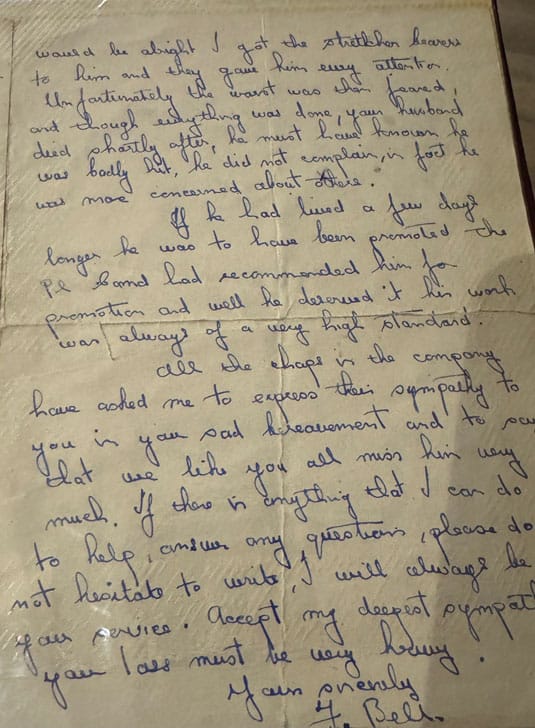
James had been in D Company. Major F. Bell who was in charge of D Company later wrote the following to James’ wife:
 
“Dear Mrs Perks,
 
I commanded this company in which your husband served. I thought that you would like to know how your husband met his death. That is in a little more detail than the War Office give. It grieves me to have to write a letter of this kind to you, I would far rather it could have been for some happy event instead of this. Your husband was an exceedingly good company man and very well liked. In this Pl he was quite a character and all men swore by he was very brave.
 
In the action in which he fell, we were advancing when the Germans started to shell heavily it was during this that your husband got hit with shrapnel. I was near at the time, but did not actually see it happen. I spoke to him asked him how he was and quite cheerfully he said he had been hit, but not to worry as he would be alright. I got the stretcher bearer to him and they gave him every attention. Unfortunately the worst was then feared, and though everything was done, your husband died shortly after, he must have known he was badly hit, he did not complain, in fact he was more concerned about others.
 
If he had lived a few days longer he was to have been promoted the Pl Comd. had recommended him for promotion, and well he deserved it his work was always of a very high standard.
 
All the chaps in the company have asked me to express their sympathy to you in your sad bereavement and to say that we like you all miss him very much. If there is anything I can do to help, answer any questions, please do not hesitate to write, I will always be at your service. Accept my deepest sympathy. Your loss must be very heavy.
 
Yours sincerely,
F. Bell.”
 
From D-Day until the end of the war the 2nd Battalion of the Royal Warwickshire Regiment lost 286 officers and men killed in action, with nearly another 1,000 all ranks wounded, missing or suffering from exhaustion.

Aftermath

After James’ death, Frances and Ruth moved back to Blaenavon to live with Frances’ family. This family support enabled Frances to work in a munitions factory for a time after the war.

Frances and Ruth moved back to Coventry around 1951. Again, Frances had to work, helped by James’ family in the area. However, in 1953 she married John James Credland in Coventry (known as Jim). They had no children of their own.

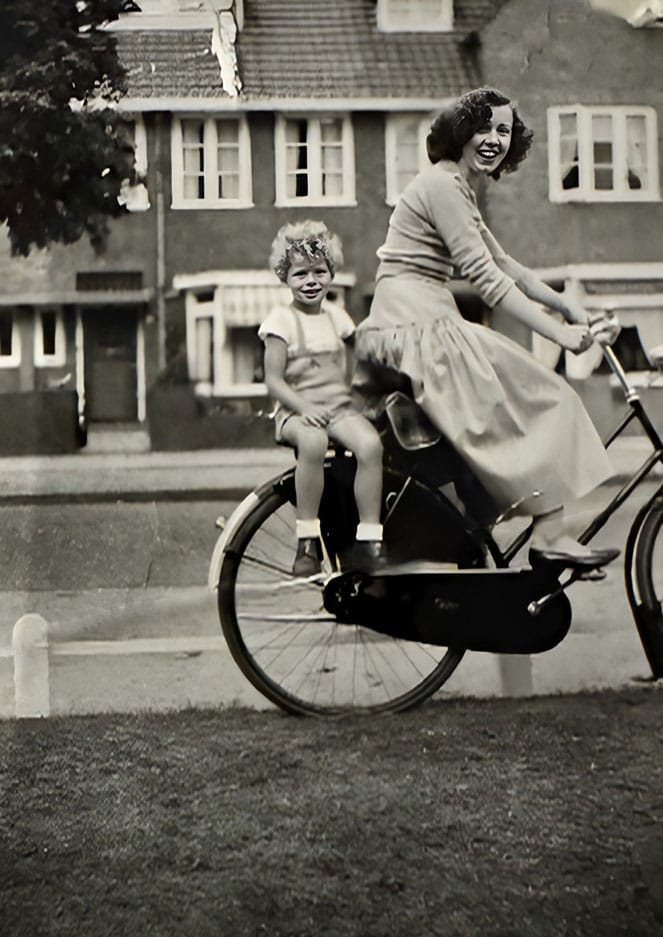
In 1955, the Royal British Legion organised a trip to Overloon for the children of the men buried there. KLM provided the flights for free. Ruth, who was then aged 16, stayed with a Dutch family in Nijmegen and visited the grave. Ruth was presented with a book featuring photographs of war cemeteries which included a message from Queen Elizabeth II before this trip.

Ruth married Ronald Kilford in Coventry in 1961.

James’ mother, Polly’s, second husband, William Ernest Perks of 30 Lime Tree Avenue, Coventry, died on 1/12/1966. She herself died in Coventry in 1969.

James’ wife, Frances, had a stroke in the 1960s and was not expected to live for more than 6 months. Both she and her husband moved in with Ruth in 1967. Sadly, Jim Credland died in 1970, aged just 58. Thankfully, Frances’ prognosis was wrong. She lived for many more years than expected, dying in Coventry in 2004. It is believed that she had been affected more than was generally realised by James’ death and was greatly helped by the support of her daughter. Both Frances and Ruth, who took on the responsibility of caring for her mother, were therefore also casualties of the war.

Ruth and Ronald had a daughter, Lorraine, in 1973 in Coventry. Ruth’s husband, Ronald, died in 1994.

Ruth continues to display a collection of memorabilia about her father at her Church on every Remembrance Day.

James is also commemorated on the Blaenavon Clock Tower Memorial.

Family photo’s and documents

  • School photo with James Perks

    School photo with James Perks

    School photo with James Perks

  • School report from 1921

    School report from 1921

    School report from 1921

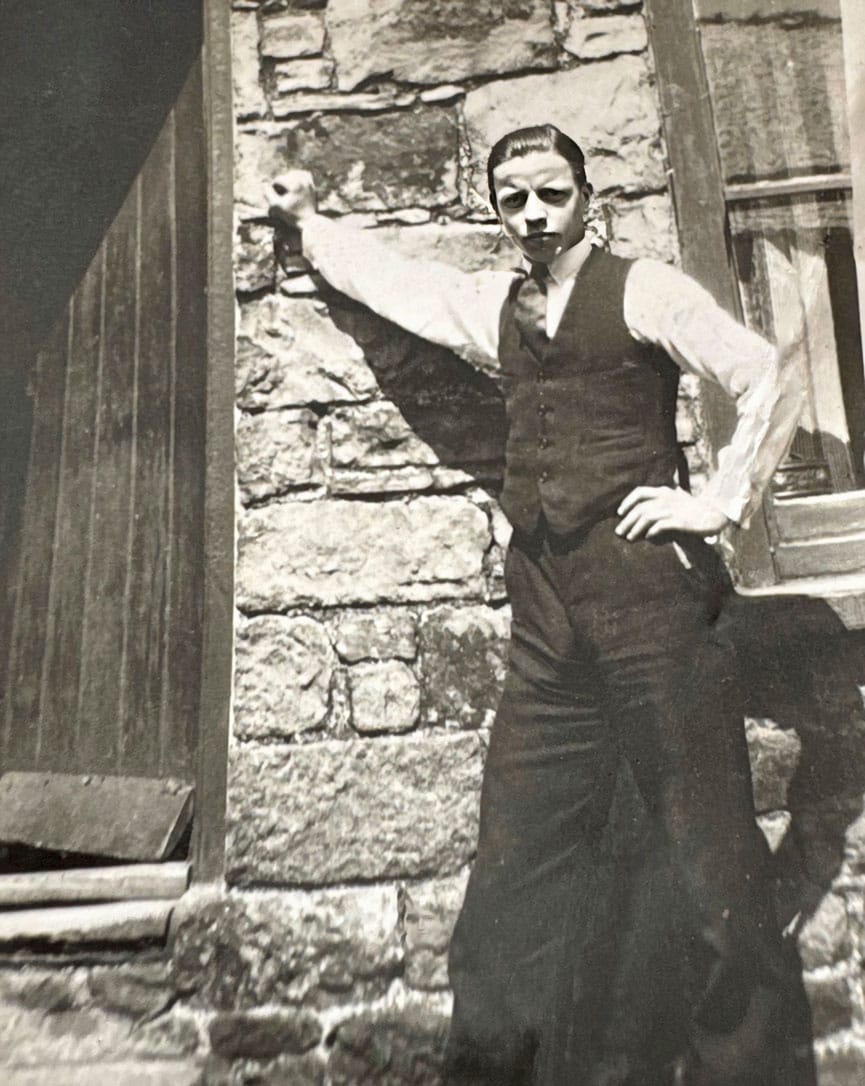
  • James Perks

    James Perks

    James Perks

  • Christmas card from Ruth to James

    Christmas card from Ruth to James

    Christmas card from Ruth to James

  • Letter from his mother

    Letter from his mother

    Letter from his mother

  • Letter from Major Bell

    Letter from Major Bell

    Letter from Major Bell

  • Letter from Major Bell

    Letter from Major Bell

    Letter from Major Bell

  • Family members visiting the Netherlands in 1955

    Family members visiting the Netherlands in 1955

    Family members visiting the Netherlands in 1955

  • Ruth Perks visiting her fathers grave in 1955

    Ruth Perks visiting her fathers grave in 1955

    Ruth Perks visiting her fathers grave in 1955

  • Ruth riding a bike in the Netherlands, probably in Nijmegen

    Ruth riding a bike in the Netherlands, probably in Nijmegen

    Ruth riding a bike in the Netherlands, probably in Nijmegen

Sources and credits

From FindMyPast website: Civil and Parish Birth, Marriage and Death Records; England Census and 1939 Register Records; Electoral Rolls; Military Records
Traces of War Website for Royal Warwickshire Regiment War Diaries
History of the Royal Warwickshire Regiment 1919-1955 by Marcus Cunliffe
Account of Sgt George W A Davis of the Royal Warwickshires                                  
Wikipedia for information on the Royal Warwickshire Regiment
Coventry Evening Telegraph 10 September 1997
With assistance, photos and letters from Ruth Kilford and Lorraine Regan, James’ daughter and granddaughter

Research Leo Janssen, Elaine Gathercole


Continue reading

Elliott George

Elliott | George

  • First names

    George Rose

  • Age

    27

  • Date of birth

    15-03-1917

  • Date of death

    12-10-1944

  • Service number

    4399223

  • Rank

    Private

  • Regiment

    East Yorkshire Regiment, 2nd Bn.

  • Grave number

    I. A. 10.

  • George Elliott

    George Elliott

    George Elliott

  • Grave George Elliott

    Grave George Elliott

    Grave George Elliott

Biography

George Rose Elliott (Service No. 4399223) was killed in action on 12 October 1944 aged just 27. At the time of his death he was a Private in the 2nd Battalion, East Yorkshire Regiment. He was initially buried at the Cemetery De Kleffen, Overloon and subsequently on 30th January 1946  in grave I. A. 10 at the Overloon Commonwealth War Cemetery. The inscription on his grave reads “Deep in our hearts a memory kept of the one we loved and shall never forget.”

Family Background

George Rose Elliot was the son of Henry Elliott and Margaret Ann Rose who had married in the Tynemouth District in Northumberland in 1911. Henry had been born on 30 May 1890 in Earsdon in Northumberland. Margaret Ann Rose had been born on 8 October 1889 in Annitsford, Longbenton in Northumberland. Earsdon and Annitsford are both to the north east of Newcastle upon Tyne, between Whitley Bay and what is now the 1960s new town of Cramlington.
 
Henry and Margaret had six children as follows, all in Earsdon: Lilian 1913, Edwin 1915, George Rose 15 March 1917, Henry 3 December 1922, Dorothy P 1926 and Ethel Rose 11 March 1930. They also adopted another daughter called Maureen.
 
In 1921 Henry and Margaret were living at Second Square, Earsdon with their first three children, which included George. Henry was working as a Horsekeeper underground at East Holywell Colliery.
 
In September 1939, Henry and Margaret were living at School House, Church Way, Earsdon. With them were their three youngest children. Henry was now working as a builder’s labourer and Margaret herself was working as a School Cleaner. Henry (Jnr) was an apprentice bricklayer.
 
George had married Jane Leck Wood a few months earlier on 10 June 1939 in Newcastle.
 
Jane was born on 29 April 1917 to Robert Wood and Barbara Wallace who had married in 1902 in Lanchester, County Durham. Robert had been born in Hookergate on 24 April 1874 and Barbara on 11 March 1880 in Byers Green. Hookergate is between Consett and Gateshead while Byers Green is near Spennymoor, both in County Durham. Jane was one of 14 children born to Robert and Barbara between 1904 and 1926, though one died as an infant in 1906 and another at birth in 1926.  It is thought that the children were born in Thornley, near Blaydon and Winlaton, just south of the Tyne and west of Gateshead in County Durham.
 
In 1911 Robert and Barbara had been living as boarders at Leather Burne House, 4 Hugar Road, High Spen, Chopwell, Durham in the household of William and Janet Bell and family. Four of their first five surviving children were with them. Their remaining daughter, Margaret, was with her grandparents, John and Mary Ann Wood, at High Thornley, Blaydon, Winlaton. Robert was a Miner Hewer.
 
By 1921, Robert and Margaret were themselves living at High Thornley, Winlaton, County Durham with all their surviving children, including Jane. Robert was a Coal Miner / Shifter for the Consett Iron Company. In September 1939, Robert and Barbara were still at High Thornley which was now described as being in Rowlands Gill, but only their two youngest children were with them. Another child, William E Wood, born on 8 December 1936 was also present, but unlikely to be their child. He may have been a grandchild. Robert was still a Shifter in a coal mine and his 19 year old son was a Coke Works Labourer.
 
As has been seen, George Rose Elliott married Jane Leck Wood on 10 June 1939. By September that year they were living at 16 Waverley Avenue, Whitley Bay. George was working as a bricklayer.
 
They had a child, Valerie Elliott, on 16 August 1940 in the Durham North Western district.

Military Career

George initially enlisted in the Green Howards on 4 December 1941. He stated that he was born on 15 March 1917. He gave his address as 11 High Thornley, Rowland’s Gill, Co. Durham. He gave his wife as his next of kin at the same address. It seems that they had moved back to be close to Jane’s parents. He was described as being 5ft 6 ¼ in tall and weighed 148 lbs. He had blue eyes and brown hair. His occupation was given as a bricklayer. He was declared A1 medically fit.

Apparently, his younger brother Henry also tried to join up but was not accepted, perhaps on health grounds.

He was posted on the day he enlisted to No. 5 Infantry Training Centre which was based at Richmond in North Yorkshire. He was posted to the 10th Battalion of the Green Howards on 29 March 1942. This Battalion had been formed by the conversion of the 2nd East Riding Yeomanry in 1940.

A photo of him in his uniform was taken on 9 December 1942.

The 10th Battalion of the Green Howards then became the 12th (Yorkshire) Parachute Battalion attached to the 5th Parachute Brigade in May 1943. On 16 July 1943, George was transferred as a Private to the 11th Battalion of the Durham Light Infantry. At some point he qualified as a Driver i/c.

At the beginning of June 1944 the 11th Battalion of the Durham Light Infantry was based at Thetford in Norfolk. On 12 June, 6 days after D-Day, they landed at King Beach near La Riviere – with some having to wade ashore.

By 17th June, they were based at Ducy St Marguerite and had yet to take part in their first major action. On that day, George wrote the following letter to his parents, full of all his thoughts and concerns about them:
 
“Dear Ma & Pop & Family
 
Just a few more lines to let you all know I am still OK hoping you all at home are the same at present, well Ma I’m writing to you from Somewhere in France but don’t take it up the wrong way as I am still happy and still healthy.
 
Well I wrote you a day or two back but I only got it posted yesterday so you will know when you get it the reason of it been later than you think, but I may not be able to write every Day so try to write to me if you ever have the chance as it is Good to have a letter from home.
 
Well Ma I have not had anymore letters from Fred yet but I may get some that I should have had when I was in England but they will all follow me. I got two from Jennie yesterday which were wrote on the 2nd & 4th June so you see for yourself.
 
Well how are you going on these Days I hope you are still able to get about as I have never heard how you got over your illness whether you are improving or not how is Pop and the rest of the Family are they still alright how is the Greenhouse going you will not be long before you are having some Tomatoes but I will just have to think I have had my share have you got the Son home yet you know who I mean Dorothy’s Husband as you said you were expecting him home out of hospital on June 11th so I guess he may be home now.
 
Well Ma let Mary Wood know that everything is still alright as I was just talking to Billie this morning after breakfast and asked me to remember you to leave word next Door when I wrote to you so do that please so I will draw to a close now as I have not much more news till I here from you but I tell you what don’t send me any money but if wish to send me anything send Cigs please but you can’t register them but they will get here alright so will say Cheerie oh to you all at home with heaps of Love for Ever and don’t forget be Good to tell them all behind and also my two (Love Birds) at home Jennie and Valerie.
 
From Your Ever
Loving Son & Brother
xxxxxxxGeorgexxxxxxx
Sails with Love and Kisses
To You (Ma)”
 
The Battalion played a major part in an attack on Rauray towards the end of June. This was to the east of Caen. On 22/23 July there is a reference to rain and mud hampering preparations for a move the following day to Demouville which is just west of Caen.
 
It may have been around then that George wrote another letter to his family which has been preserved:
 
“Dear Darling Mother & family
 
Just a line or two in answer to your letter and two Snaps, one of the family and one of Pop, but as it turned out to be a good one of Pop, he had to Spoil it with this Usual Carry on of his.
 
Well Ma I am honestly Proud of the family Group as everyone has taken such a Good Photograph especially all the Children not forgetting the Pianist and the Working Man.
 
Well Ma the weather is not to good down here today of course it has had to turn to Rain, but it does not matter as now we are getting used to it now we take it as it comes. ………………………… letter from Fred yesterday and he was telling me about Dorothy been down beside him so it will be a change for him.
 
Well hope you still get all your Company yet I bet there was a right houseful when all that crowd was there together, especially Dolly fancy hearing about her arriving up at Newcastle for a Holiday she would when I was not there but I will write to her if you send me her address and how is Annie going on she does not look any different according to the Snap you sent me she is still the same old face.
 
Well I was talking to Mr Wood yesterday and he is still OK and happy but he is not so Browned off as I am, he is just sick so would you let his Mrs know he is happy  and thinking of all he knows also he is asking kindly after you and Pop and all the family.
 
Well Ma I have a bit more work to do so I will come to a close for now, with heaps of love to you Both and all the family from
Your loving son
And Brother
xxxxxxxGeorge xxxxxxx
Somewhere in France”
 
The Battalion moved to Thury Harcourt on 21 August. This was south east of Caen. It had been decided that the Battalion was to be disbanded and the men would be transferred to other regiments. D Company, to which George belonged, were transferred to the 2nd Battalion of the East Yorkshire Regiment. This took place on 26 August while still at Thury Harcourt.
 
The Commanding Officer, Lt. Colonel C.D. Hamilton, issued a farewell message that day as follows:
 
“General Montgomery’s news that the end of the War is in sight has softened the blow which suddenly hit the 11th this week. We are suffering, for the sake of the War, the fate so many Battalions have had in the past year. Good reinforcements are wanted quickly and we, who had been raised for this emergency, were the ones who would provide them.
 
In the midst of our sadness I would say this. For five years we trained a team to beat the Hun. Our success at Rauray and since will be a Regimental Battle Honour – our overwhelming defeat of the German counter-attack has had a vital effect on the campaign. We have been allowed to prove ourselves – and we were found good.
 
I admire the spirit with which you have already taken the news. Luckily our new postings mean that most friends can be kept together.
 
You have been ‘Faithful Durhams’.
 
That has brought you success in the past. Those standards will bring you through to the future.
 
GOOD LUCK TO YOU ALL”.
 
The 2nd Battalion of the East Yorkshire Regiment had taken part in the D-Day landings in June 1944 and lost many men as a consequence. A substantial number of reinforcements joined the Battalion in late July when it had returned across the Orne to Beuville, near Caen. It played a part in action to secure a road junction at Vire in mid August. It was shortly after this that George together with the rest of D Company of the 11 Durham Light Infantry joined them. However, they played no further part in the Battle of Normandy.
 
In September they were in Belgium and successfully crossed the Escaut canal as part of the ill-fated Market Garden operation, arriving in Gemert in Holland on 26th September where they received a tremendous welcome. October saw the 2nd Battalion involved in some of the heaviest fighting since the end of June, amid continual rain and mud. At noon on 12 October the order was given for the Battalion to start the attack on Overloon from the north alongside the 1stBattalion of the Suffolk Regiment. Their task involved clearing woods of the enemy, but they faced considerable shell and mortar fire and also mines. The Battalion achieved its objective, but George Rose Elliott was one of the casualties that day. The battalion continued to play its part in capturing Overloon on 12 to 15 October, suffering 49 casualties.

George had served for 2 years and 314 days of which 127 days were in Europe.

The Newcastle Evening Chronicle of 31 October 1944 reported that five Durham Men had been killed in action and included their photos. This included “Pte J.R. Elliott, East Yorks, husband of Mrs J Elliott, of 11 High Thornley, Rowlands Gill.” Unfortunately, this misreported his name which should have been Pte. G.R. Elliott.
 
On 3 November 1944 the following item appeared in the Newcastle Journal
 
“Roll of Honour
Elliott (11, High Thornley, Rowlands Gill), Pte. George R., aged 27 years dearly loved husband of Jennie (nee Wood), and darling daddy of Valerie and son of Mr and Mrs H Elliott of Hazelrigg, killed in action Oct 1944. ‘At the going down of the sun and in the morning We shall remember.’ Service in St Barnabas’, Rowlands Gill, Sunday Nov 12 1944, 6.30 p.m. Deeply mourned by his loving wife and daughter, relatives and friends.”

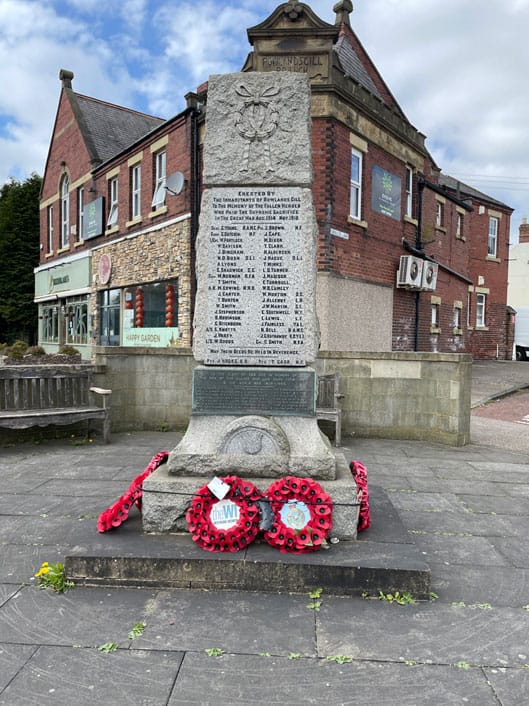
George is commemorated on the war memorial in Rowlands Gill

He was awarded medals as follows: 1939/45 Star, France & Germany Star and War Medal 1939/45. His wife was awarded a pension of £1/12/6 a week and an allowance of 11s a week for their child, both to be paid from 21 January 1945. 

On 1 March 1945, a very brief memo was sent to his wife at 11 High Thornley, Rowland’s Gill, Co. Durham enclosing his personal effects which consisted of a handkerchief, a leather wallet, a cigarette case, a broken cigarette lighter and 14 photographs.

Aftermath

After George’s death, Jane Elliott went on to marry John Johnson in 1949 in the Durham North Western District.
 
George’s mother, Margaret A Elliott, died in 1957 in the Northumberland South district and his father, Henry Elliott, in 1959 in Newcastle upon Tyne.
 
George’s daughter, Valerie, married David Tinnion in 1961 in the Durham North Western district. They moved at some point to Buckinghamshire and had children there as follows: Paul in 1964 and Karen in 1965. However, Valerie died aged just 42  in Maidenhead, Berkshire in 1982.
 
George’s wife, Jane Johnson, died in 1992 in Maidenhead.
 
George is survived by his grandchildren and great grandchildren.

Family photo’s

  • George with siblings

    George with siblings

    George with siblings

  • George Elliott in 1937

    George Elliott in 1937

    George Elliott in 1937

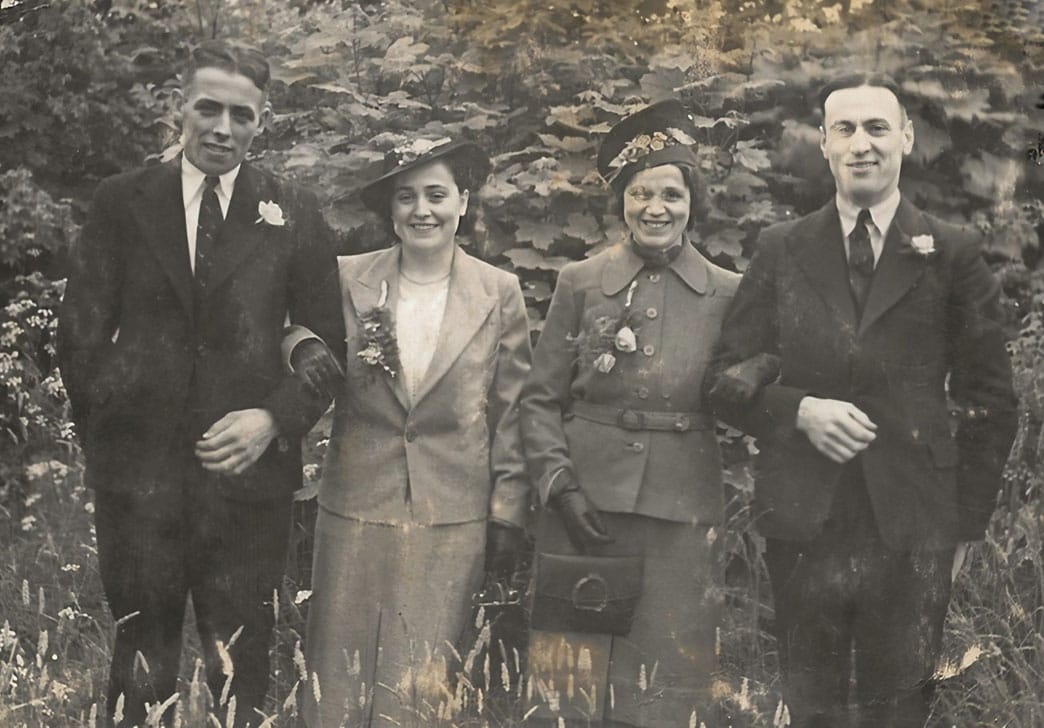
  • George and Jennie possibly on their wedding day

    George and Jennie possibly on their wedding day

    George and Jennie possibly on their wedding day

  • Daughter Valerie with her granddad

    Daughter Valerie with her granddad

    Daughter Valerie with her granddad

  • War Medals George Elliott

    War Medals George Elliott

    War Medals George Elliott

  • War Memorial Rowlands Gill

    War Memorial Rowlands Gill

    War Memorial Rowlands Gill

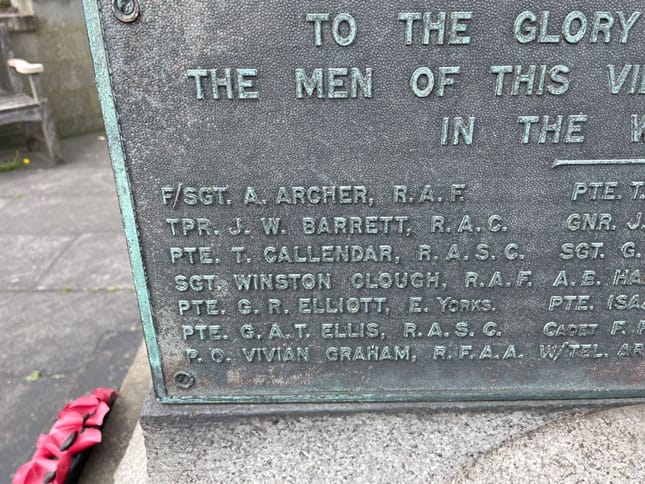
  • War Memorial Rowlands Gill

    War Memorial Rowlands Gill

    War Memorial Rowlands Gill

Sources and credits

From FindMyPast website: Civil and Parish Birth, Marriage and Death Records; England Census and 1939 Register Records; Electoral Rolls; Military Records
Military records from ForcesWarRecords website
Service Record for GR Elliott from the National Archives ref WO 423/658096
Wikipedia: Green Howards and 12th Yorkshire) Parachute Battalion
11th Battalion Durham Light Infantry War Diary and other information from North East War Memorials Project  – 70th Infantry Brigade 1939-44 https://70brigade.newmp.org.uk/wiki/Main_Page
East Yorkshire War Diary from Traces of War Website
Information on the East Yorkshire Regiment from a thesis written by Tracey Cragg for her PhD with the Department of History, University of Sheffield 2007 “An `Unspectacular’ War? Reconstructing the history of the 2nd Battalion East Yorkshire Regiment during the Second World War”.
Newcastle Evening Chronicle Oct 31 1944
Newcastle Journal 3 Nov 1944
Photos, Letters and information from Kevin Corby (George’s nephew), Karen Medhurst (George’s granddaughter) and Maureen Scoines who is George’s adopted sister.

Research Tracey van Oeffelen, Elaine Gathercole


Continue reading

McCarthy Jimmy

McCarthy | James

  • First names

    James Joseph

  • Age

    24

  • Date of birth

    05-03-1920

  • Date of death

    16-10-1944

  • Service number

    3189300

  • Rank

    Private

  • Regiment

    King’s Own Scottish Borderers, 1st Bn.

  • Grave number

    IV. E. 3.

  • James Joseph McCarthy

    James Joseph McCarthy

    James Joseph McCarthy

  • Grave James McCarthy

    Grave James McCarthy

    Grave James McCarthy

Biography

James Joseph McCarthy (Service No. 3189300) was killed in action on 16/10/1944 aged 24. He was a Private in the 1stBattalion of the King’s Own Scottish Borderers. He was initially buried at the Cemetery J. Weijmans, Holtheseweg, Overloon and subsequently re-interred in grave IV. E. J at the Overloon Commonwealth War Graves Cemetery on 2/6/1947.  The inscription on his grave says “God took you from us one sad day and for you always we will pray. R.I.P.”

Family Background

James Joseph McCarthy (who was known in the family as Jimmy) was the son of James and Margaret Welsh who had married in Sligo, Ireland on 9/6/1919.

James McCarthy (Snr) was born on 27/6/1894 in Sligo. He was baptised as James Peter McCarthy. His parents were John McCarthy and Bridget McCarthy (nee Langan). John was born in 1851/3 and Bridget in 1861/3, both in Sligo. They had children as follows: Patrick 5/5/1881, Thomas 6/3/1883, Mary Ellen 22/5/1886, James 26/6/1894, Richard 21/4/1891, John 1/1/1897 and Jane 9/10/1900. However, Richard died in 1895.

In 1911, they were living at Middleton’s Row, Sligo with Thomas, James, John and Jane.

It seems that both James and his brother John were both found guilty on 6/3/1915 of being absent without leave from the 4th Battalion of the Connaught Rangers – James from D Company and John from C Company. Their father was given as John McCarthy and their address was Middleton’s Row, Sligo. James was described as a butcher and soldier while John was described as a soldier. They were to go back to their regiments with a military escort on 10/3/1915.

Margaret Welsh was born in 1897, probably in Ireland. She was the daughter of Richard and Mary Welsh. Mary’s maiden name was Fallon.

After their marriage in 1919 in Sligo, James and Maggie McCarthy seem to have moved to Glasgow. Jimmy  was born in 1920 in the Maternity Hospital in Glasgow on 5/3/1920. The family were living at 71 Balfour Street, Glasgow at the time. His father was working as a Railway Brakesman.

In June 1921, James and Maggie McCarthy were living with young Jimmy at 45 Muse Lane in the Cowcaddens area of Glasgow. They went on to have two more children in the Kelvin district of Glasgow: Mary 16/5/1924 and Eileen Mary in 1930.

Sadly, Maggie McCarthy died in 1931 in Glasgow leaving James with three young children.

James McCarthy (Snr) married a widow, Sarah Taylor, on 30/12/1933 at St Peter’s Roman Catholic Church in Partick, Glasgow. At this time, James was a Cable Layer’s Labourer.

Sarah had been born in 1900 in Glasgow. She had previously married James W Cullen in 1919 in Glasgow. They had children as follows: William 1919, Sarah 1920, James 1922 (died 1923), Bridget 1923 (died 1925) and Marion Catherine 1924. William was born in Hillhead and the others in Partick. James W Cullen died in Glasgow in 1930.

After their marriage, James and Sarah McCarthy had children of their own as follows: Janet 1935 (Glasgow), possibly John 1935, Emily 1937 – both Hillhead.

Sarah Taylor died in 1942 at 10 Dunaskin Street Glasgow. She had been working as a Munitions Factory worker.

It is understood that James McCarthy spent a lot of time before the war in Sligo with his father’s sister, Jane, who had married Michael McHugh in 1924 and went on to have six children in the 1920s and 30s. He returned to Scotland to enlist during WW2.

Emily McCarthy can remember Jimmy from when she was a little girl and recalls that he was lovely and friendly.

Military Career

It isn’t known when Jimmy enlisted but he was on leave from his regiment in Acton, London in January 1942 and had fallen in love with a Miss Kelly, aged 19 of 3 Quick Road, Chiswick. Jimmy was then 22. However, his girlfriend had decided she wanted nothing more to do with him. Jimmy seems to have taken this badly and had visited her house where only her sister Annie was present. She asked him to leave, but he refused so she called the police. Unfortunately, he still refused to leave and became violent when the two policemen attempted to remove him. Jimmy got such a firm grip on the bannisters that he pulled them out of their sockets. When charged at Acton Police Court he was asked why he didn’t leave when asked to do so. He said “I love her and that’s that”. There was a concern that if released he would return to Miss Kelly’s house. However, he avoided custody by agreeing to return to Glasgow until his leave ended. He was bound over for twelve months to be of good behaviour and ordered to pay 10s towards the cost of the damaged bannisters.

His half sister recalls that she had seen Army photos showing him engaged in boxing training, so the policemen may have got rather more than they bargained for!

With the allied invasion of Europe in 1944, the 1st battalion KOSB was there at the forefront, landing at ‘Queen’ Beach on D-Day, 6th June. They fought through Normandy and around Caen until the town capitulated, and then advanced north through Belgium. They entered the Netherlands from Belgium on 21 September at Budel, where the troops were given a great welcome by the inhabitants. They moved on to Liessel on 24 September where they undertook patrols of the area east of the Deurne Canal. On 28 September the Battalion took up positions further north covering a cross roads at Milheeze, then on 1 October they moved further north again to St Hubert where they were again very well received by the inhabitants. They remained here until 12 October carrying out patrols but also undergoing training and having time to relax a little. A football match was arranged against the Regiment’s 6th Battalion on St Hubert’s football field. They lost 4 – 1 and the Pipe Band played at half time and at the end of the match. They also had two film shows on the 10th and 11th. The diary notes that they left St Hubert on 12 October after a pleasant stay of 10 days.

On 12 October they moved to an area just west of St Anthonis. On this day the 8th Brigade attacked towards Overloon and by 1700 hours the 1st Suffolks had captured the village and had taken up a position just to the South of it.

The following day, the 1st KOSB attacked the wood to the south west of Overloon and reached the south of the wood, though coming under fire as they reached it. They remained there the following day while the Royal Ulster Regiment and Lincolns attacked the wood further east. On the 15th they moved a little further south and on the 16th continued south, expecting to remain there that night. Instead, they were ordered to take over from the 4th Battalion King’s Shropshire Light Infantry east of Overloon in the area near Smakt, with the companies lining up north to south on the west of the railway. They only took over the position at 1930 hours in very heavy rain with the reconnaissance parties hardly able to see their positions before dark. During the take over the Nebelwerfers were busy and one man was killed and 3 were wounded. It was on this day that Jimmy was killed.

Aftermath

James McCarthy (Snr) died on 9/10/1950 in Glasgow. He had still been living at Dunaskin Street, Glasgow and had been working as a Shipyard Labourer.

Sources and credits

From Scotland’s People: Scottish Civil Birth, Marriage and Death Records; Scottish Census
From FindMyPast website: Civil Birth, Marriage, Death Records; Irish Census, Military Records, Electoral Rolls
From Ancestry: Family Trees created by “grannieannie144”, Gino O’Boyle. Christine Carter
1st Battalion KOSB War Diary
Acton Gazette 9/1/1942
Assistance and photo from Mairead O’Boyle, Margaret Walker

Research Elaine Gathercole

Continue reading

McLachlan George

McLachlan | George Smith

  • First names

    George Smith

  • Age

    21

  • Date of birth

    16-12-1922

  • Date of death

    16-10-1944

  • Service number

    1147690

  • Rank

    Gunner

  • Regiment

    Royal Artillery, 75 Anti-Tank Regt.

  • Grave number

    IV. E. 14.

  • George Smith McLachlan

    George Smith McLachlan

    George Smith McLachlan

  • Grave George Smith McLachlan

    Grave George Smith McLachlan

    Grave George Smith McLachlan

Biography

  
George Smith McLachlan was killed in action on 16/10/1944, aged 21. He was a Gunner in the Royal Artillery, 75 Anti Tank Regiment (Service No. 1147690). He was initially buried on Janssen’s property in Loobeek east of Overloon, then re-interred on 2 June 1947 in Grave IV. E. 14. at the CWGC Cemetery in Overloon. His grave is inscribed “Brave he must have been and kind to leave so fragrant a memory behind.”
 
The photo above is believed by both family and Overloon War Chronicles Foundation to be that of George Smith McLachlan, although it is not certain. The logic supporting this belief is made clear in the story below. If anyone knows otherwise or has another photo of George please contact the Foundation.

Military career

George may, at some point, have been in the  Royal Artillery 51 (West Highland) Anti Tank Regiment which was disbanded in July 1940. There is a reference to this Regiment on a Royal Artillery Attestation record for him with a date of 30/4/1942 – though this was after it was disbanded. At some point he must have joined the 75 Anti Tank regiment. It had been formed in November 1940. It was based in the UK until June 1944. It was part of 11 Armoured Division.
 
The Regiment had a poor start when it attempted to land in Normandy after D-Day. The majority of the Regiment embarked at Southend on 14 June but their vessel ran aground on the Goodwin Sands overnight on 15/16 June and had to return to Southend. By 18 June, the whole Regiment was in Normandy where they supported other Regiments through the rest of June, July and into August. On 21 August, when they were to the south of Falaise in France, it was recorded in the war diary that “ Normandy ‘Sack’  closed last night – disaster for the Germans”.
 
By 31 August, the Regiment had reached Amiens and it was recorded that there was: “a tremendous and very moving welcome given to troops in Amiens and, in fact in all villages passed through since crossing the Seine.”
 
The Regiment advanced on into Belgium, entering Antwerp on 4 September. Again, there was a report that “since crossing the frontier we have passed through Tournai, Renaix and numerous villages and have encountered scenes of extraordinary enthusiasm everywhere”. They remained in Antwerp until 9 September when they continued the advance, reaching Peer and Wychmael on the 11 and 12 September where they had a brief rest.
 
On 17 September it was recorded that Operations Market and Garden had commenced and that 8 Corps was to provide right flank protection to 30 Corps. The Regiment began to enter the Netherlands on 20 September. By 25 September, 119 and 338 Batteries had reached St Anthonis. On 26 September, 119 Battery was at Oploo while 338 and 118 were in the vicinity of St Anthonis, with the former providing anti-tank protection for the village. 117 Battery was in Mortel.
 
On 29 September, 11 Armoured Division was relieved by the 7 US Armoured Division and the Regimental HQ moved to Gemert with Battalions being there and in Mortel where they had a rest and maintenance period until 7 October.
 
On 7 October, 11 Armoured Division relieved the 7 US Armoured Division in the area south of St Anthonis facing Overloon. At this time, 118 and 338 Batteries were deployed in and around St Anthonis while 119 Battery was in the De Rips area and 117 Battery was in reserve at Mortel. This situation remained the same for the next few days, with the war diary reporting on 10 October that it was “a quiet day. 119 Bty reported shooting impossible owing to pouring rain and bad visibility.”  117 Battery also moved up to St Anthonis on 11 October.
 
On 12 October it was reported that Operation Constellation had started, with 3 British Division passing through 11 Armoured Division to attack Overloon. The Regiment’s Batteries were still deployed as before. On 14 October the Regiment seems to have been deployed well to the north of Overloon and east of St Anthonis with the role of protecting the eastern flank of the advancing troops – with a similar role on 15th, clearing the enemy east of the British 3rd Division. A note in the War Diary that day says “Country most unsuitable for A.tk. guns”.
 
On 16 October it was recorded that Sgt. Taylor’s SP (117 Bty) had been knocked out. This took place just 500m north west of Smakt. It records the event as follows: “Believed hit by enemy tank or SP gun from SW direction. Nothing seen of enemy gun. Three killed, Sgt Taylor, Bde Franklin and Gnr McLachlan G.S. Two wounded  D/Mech Hoare and D/Op Day. Gun was well camouflaged and position may have been given away when the gun went in at 1730 hrs the previous evening, or by tanks of F & F Yeo which were firing nearby at the time and may have attracted close study and return fire. Sgt Brettle attempted to get Sgt Taylor out of the K.O’d SP while ammunition was still exploding, succeeded but Sgt Taylor was almost dead. Sgt Brettle badly burned on hands but did not report fact.”

Family background

The CWGC indicates that George was the son of Margaret and Lachlan McLachlan and another military record indicates that he was born in Pollockshields, Glasgow. Pollockshields lies south of Glasgow City centre and south of the River Clyde.
 
George Smith McLachlan was called George Smith at birth. He was born on 16/12/1922 at 20 Stevenson Drive, Glasgow to Margaret Smith. No father’s name was given on his birth certificate. Margaret was a Domestic Servant and her place of residence when the birth was registered was given as 32 John Street, Larkhall. The birth was initially registered in Glasgow on 26/12/1922 and later transcribed into the Larkhall Register on 27/12/1922. There is a note of a clerical error as the Parish of Birth should have been given as Cathcart in Glasgow. Cathcart is to the south of Pollockshields. Larkhall is on the main road heading south east out of Glasgow through the Scottish Borders.
 
Margaret was the daughter of James Smith and Jane Hamilton Lawson who had married on 23/2/1883 at Bellfield, in Lesmahagow, Lanarkshire after banns according to the Church of Scotland. James had been born in Hamilton, Lanarkshire while Jane had been born in Lasmahagow. Lesmahagow is further south than Larkhall, on the same road. At the time of the marriage, James was a coalminer aged 23 who was living at Larkhall. His father was Robert Smith (deceased) who had been a coalminer and his mother was Betsy Smith (nee Barr). Jane was a Domestic Servant aged 20 living at Bellfield, Lesmahagow. Her father was John Lawson, a Limestone Miner, and her mother was Elizabeth Lawson (nee Twaddle). The witnesses were Alexander Smith and Betsy Lawson.
 
They had eight children as follows, all in Larkhall: Robert 1883, Elizabeth Twaddle 1885, Jeanie 1887, John Lawson 1890, Margaret 1892, Marion or Minnie 1885, James 1897, Janet Lawson 1900, Isabella 1903.
 
In 1891 they were living at 2, Hamilton Street, Dalserf, Larkhall with their first four children. James was still working as a coalminer. In 1901 they were living at Spaldings Buildings, Wellgate Street, Larkhall, Dalserf. All their first eight children except Elizabeth were with them. This included Margaret, shown as Maggie. James was still a coalminer and son Robert was a Slater and daughter Jeanie was a domestic servant. They were still in Larkhall in both 1911 and 1921. In 1911 only the six youngest children were present, except Margaret who seemed to have left home by then. By 1921, only the youngest two children were at home. It isn’t known where Margaret was in 1911 or 1921.
 
Margaret Smith married Lachlan McLachlan on 8/12/1925 at 12 Osborne Place, Govan, Glasgow after banns according to the Free Church of Scotland. Lachlan was aged 57 and a widower whereas Margart Smith was  just 33 and a spinster. Govan is on the south bank of the Clyde, east of Glasgow City Centre.
 
Lachlan McLachlan had been born in 1867 in Tarbert in Argyll. He was the son of Donald McLachlan, a fisherman, and Mary McLachlan (nee McArthur). He married Barbara McAlpine in 1895 in Govan. Barbara Smith McAlpine had been born in 1877 in Govan and was the daughter of Peter McAlpine and Eliza Carmichael who had married in Govan in 1876. Lachlan and Barbara had a son, Peter McAlpine McLachlan, in 1896 in Cambuslang. In 1901 they were living with Peter at Aitchison’s Land, Kilcalmonell, Tarbert, Argyllshire. Lachlan was working as a Vanman. All three were living in Govan by 1911. In June 1921, Lachlan and Barbara were living at 635 Govan Road, Glasgow. With them was a niece, Margaret Carter aged 6, who was born in Glasgow. Lachlan was working as a Motor Driver for the Fairfield Shipbuilding Coy Ltd. By this time their son, Peter, was working as a Ship’s Steward so was probably at sea at the time of the census. Peter married Mary Currie in 1923 and had two children, Ian McAlpine McLachan in 1923 and Peter McAlpine McLachlan in 1925.
 
 Barbara Smith McLachlan, aged 47, died in 1924 in Cathcart (Mother’s maiden name Carmichael).
 
At the time of his marriage to Margaret Smith, Lachlan McLachlan was working as an “Engineer’s Slinger” and living at 8 Mathieson Street, Govan, Glasgow. Margaret Smith was working as a domestic servant and living at 60 St Bride’s Road, Newlands, Glasgow. This is near Pollockshields. The witnesses were Donald Carmichael of 338 Duke Street, Dennistoun and Isabella M Fraser of 12 Osborne Place, Govan. The marriage was conducted by William Fraser, Minister of St Columba’s Free Church, Govan.
 
It is assumed that, after her marriage, George Smith took the name George Smith McLachlan. Sadly, he died on 16/10/1944 near Overloon.
 
Lachlan McLachlan died in 1948 in Govan aged 80 and Margaret McLachlan died in 1977 in Glasgow aged 84.
 
A photo of what is thought to be George Smith McLachlan has been provided by the granddaughter of Peter McAlpine McLachlan, son of Lachlan McLachlan by his first marriage. It was found in a box of photos belonging to her parents. It is not named, but she does not know of any other relatives who served in the Army and it does not look like any of her relatives. Her uncle Peter served in the RAF at the end of the war and her father worked in a reserved occupation at Govan shipyard. Her grandfather, Peter, was a steward on the White Star Line and her other grandfather was a baker so also in a reserved occupation. Overloon War Chronicles Foundation supports the logic of this argument, that it most probably is of George Smith McLachlan.

Sources and credits

From FindMyPast: Scottish Census; Electoral Rolls; Military Records
From Scotland’s People: Civil and Parish Birth, Marriage and Death Records; Scottish Census
RA 39-45 Website
War Diaries from Normandy War Guide website
Thanks to Sheila Phillips for assistance and the probable photo of George.

Research Elaine Gathercole


Continue reading

Nicholson John

Nicholson | John

  • First names

    John

  • Age

    28

  • Date of birth

    1918

  • Date of death

    27-10-1944

  • Service number

    3858979

  • Rank

    Bombardier

  • Regiment

    Royal Artillery

  • Grave number

    II. E. 12.

  • John Nicholson

    John Nicholson

    John Nicholson

  • Grave John Nicholson

    Grave John Nicholson

    Grave John Nicholson

Biography

John Nicholson (Service No. 3858979) was killed in action on 27 October, 1944. He was aged 26 and a Bombardier with the Royal Artillery. He was initially buried at Maria Regina Monestry, Stevenbeek and subsequently re-interred on 22 May 1947 in grave II. E. 12 at the Overloon Commonwealth War Graves Cemetery in Overloon. His inscription reads “Worthy of Everlasting Remembrance.”

Military Career

The initial casualty record which recorded the death of John Nicholson stated that he was in the R.A. 92nd Lt A.A.R. This was the Royal Artillery 92nd (Loyals) Light Anti-Aircraft Regiment. However, this was subsequently corrected to indicating that he was in a Royal Artillery Field Regiment but doesn’t specify which one – and a Casualty Card indicated that he was in the Royal Artillery (3 Infantry Division Counter Mortars). However, a book by Tom McCarthy entitled “True Loyals – A History of 7th Battalion, The Loyal Regiment (North Lancashire) / 92nd (Loyals) Light Anti-Aircraft Regiment, Royal Artillery, 1940-1946” seems to indicate that he was in a Counter Mortar unit working with the 92nd Loyals at the time of his death.
 
It isn’t known when he joined up, though it is likely to have been early in the war. It may well be that, as he came from Lancashire, he was initially in the 7th Battalion of the Loyal Regiment (North Lancashire). It had been formed on 17 July 1940 with a core of experienced officers from the Loyal Regiment, some of whom had just returned from Dunkirk, and a draft of new conscripts largely from Liverpool and Birkenhead. In November 1941 this battalion was converted into the 92nd Loyals Light Anti-Aircraft Regiment. It was a mobile air defence unit of the Royal Artillery. On 24/3/1942 it became part of the 3rd Army Division with which it served until the end of the war. Prior to D-Day, it spent time training in the UK and also in anti-aircraft activity when required.
 
On D-Day, one troop of the 92nd (Loyals) landed on Sword Beach to deploy around bridges at Benouville while the others landed in the following days and weeks. Benouville proved to be a hot spot for anti-aircraft activity, sometimes with as many as 50 aircraft attacking the Allied positions. By 2 July the whole regiment had arrived and were deployed around Hermanville-sur-Mer to protect gun and vehicle concentrations and on Perrier Ridge. Three troops advanced with 3rd Division in an attack on Caen (Operation Charnwood), but the advance stalled. It then participated in Operation Goodwood, setting up observation posts to spot enemy mortar positions and call down divisional artillery or Royal Air Force fighter-bombers to counter them. The regiment was deployed east of the Orne for three weeks after Goodwood and suffered a number of casualties from night bombers.
 
3rd Division moved back west of the Orne on 31 July to participate in Operation Bluecoat. By this time, the Allied air forces had complete superiority over the Normandy beachhead and the need for AA defence was reduced. 92nd LAA Regiment was reduced by three Bofors Troops and three 20 mm Troops, leaving each battery with two Troops, one each of towed and SP Bofors. From now on the Bofors regiments were often used for direct and indirect ground shoots. 92nd LAA Rgt also retained responsibility for 3rd Division’s counter-mortar teams.
 
A key part of the Royal Artillery was the need for intelligence in order to direct artillery fire. However, it entered  World War 2 with much the same artillery intelligence and counter-battery equipment as it ended World War 1. Also, the use of mortars had largely been ignored in the inter war period and little or no attention had been given to the need to locate mortars or to the arrangements for countering them. The main methods in use for counter battery operations were sound ranging and flash spotting, but each had to be improved during WW2 and methods developed for dealing with counter mortar activity. Sound ranging involved the use of several microphones triangulating to detect the source of the incoming fire and flash spotting involved several observers using very narrow field of view telescopes to fix the location of a hostile battery.
 
It was estimated that 70% of UK casualties in Normandy were from mortars with new sound ranging equipment only reaching Normandy by early July, after which three counter-mortar batteries were formed to use the new equipment. In Tom McCarthy’s book “True Loyals”, Jack Prior recalled how the counter-mortar system, though seemingly makeshift, worked remarkably well right from the beginning, especially because of the radio link-up. “It had, of course, to be practised before it worked every time. But within a few hours, the German mortar crews suddenly found themselves being bombed or strafed by our Typhoons or Spitfires. Naturally, the mortar crews speeded up their delivery and then tried to hide in nearby woods, but the RAF pilots were not easily fooled and it was very rewarding for us when we sent in a target and saw within seconds that the enemy was under severe attack from the air as a result of our efforts.”
 
When the 92nd (Loyals) were reduced in strength at the start of August 1944, each of the remaining batteries retained a mobile counter-mortar observation team consisting of a sergeant, a bombardier and four gunners, equipped with a wireless, Jeep and a 15cwt truck. The divisional anti-tank regiment furnished the plotting centre and an armoured observation post and 92 LAA provided HQ. John Nicholson would have been the Bombardier in such a unit.
 
At the end of August, the 21st Army Group broke out of the Normandy beachhead, and 3rd Division was given a period for rest and training. It then moved up into Belgium and forced the Meuse-Escaut Canal on 19 September, with 92nd LAA following up to protect the canal bridge at Lille St Hubert. It then crossed the Dutch border and moved on to protect the bridges over the s’Hertogenbosch Canal.
 
In early October the regiment suffered the heaviest period of air attack since Normandy. Then, on 12 October, 92 LAA added its firepower to the massive artillery barrage in support of 3rd Division troops who were battling to capture Overloon in Operation Aintree. Following this, it moved into what was left of Overloon. Jim Holder-Vale who was the radio operator for six of the regiment’s guns describes in “True Loyals” what they found: “It was an absolute shambles, littered with vast amounts of unexploded artillery shells and anti-personnel bombs. There were also a number of shell-shocked chickens which were rounded up and eaten. My wireless was set up in a small cellar and the remains of a building which contained the corpses of two pigs. This didn’t bother us, as it was a safe haven from the shelling and rocket mortars – nebelwerfers, or moaning minnies. It rained a lot and was very cold. There was a poor horse wandering around which was eventually killed during the shelling. As the corpse lay near our HQ, we were detailed to bury it. Fortunately, the ground was very soft – like black sand – so we just piled it up over the body, leaving the four hooves exposed. After a while, the hooves fell off.”
 
Four days later, amid very bad weather, the Bofors of 92 LAA again opened up to help the attack continue on to Venray. By this time, after the failure of Market Garden, enemy resistance had hardened. Montgomery decided not to attempt a crossing of the Rhine that autumn, but to concentrate on clearing the port of Antwerp, so 3rd Division was withdrawn across the Maas. On October 15, the 92nd established its RHQ at Oploo, where the regiment was destined to remain for the next four months. However, risks still remained, and it was on 27 October that Bombardier John Nicholson of the counter-mortar unit was killed by a shell.

Family Background

John Nicholson was the son of John William Nicholson and Eliza Burns who had married in 1917 in the Bolton district of Lancashire. They only seem to have had one child, John Nicholson, born in 1918 in the Bolton District. John (Snr) was born on 18/7/1891 in Little Hulton and Eliza 1/9/1891 (or possibly 31st) in Bolton. Little Hulton is just south of Bolton and north west of Manchester.
 
In June 1921 John, Eliza and young John were living at 12, St James Street, Farnworth, Lancashire. John was working as a Coal Miner (Hewer) at the Earl of Ellesmere’s Colliery. Farnworth is just to the north east of Little Hulton.
 
By September 1939, John and Eliza, together with their son, John, were living at 265 Manchester Road West in Little Hulton. John (Snr) was working as a Colliery Fireman while John (Jnr) was working as a Power Loom Overlooker, presumably in the local cotton industry.
 

John Nicholson married Ada Berry in 1941 in the Barton District of Lancashire. Two years prior to her marriage, Ada was living with her parents, Robert and Nellie Berry, at 7 Walkdene Drive, Little Hulton. Robert Berry was born on 26/10/1889 and was a Colliery Contractor. Nellie was born on 14/4/1891. Ada was born on 6/2/1921 and was a Textile Operative – Weaver. Two of her brothers were present – William born 1/10/1918 who was working as a warehouse Ledger Clerk and Robert born 26/10/1925 who was at school. It may be that John met Ada when they were both working in the cotton industry.
 
Ada heard of John’s death before she received any official notification. She received a letter from the Padre of the Regiment on returning home one day in late 1944 from her work in the mill. She was encouraged by her family to put this behind her as best as she could and get on with her life.
 
Ada went on to marry Alexander Maclarty in 1950 in Barton District. They had one child, Melvyn P Maclarty, in 1951 in Farnworth. Alexander Maclarty died in 1984. Ada never told her son that she had been married previously until he discovered it almost by accident in 2000, just 2 years before she died in 2002.
 
John’s mother died on 27/5/1964 in Bolton, his father having died prior to then.

Wedding photo John Nicholson and Ada Berry

On the back of the wedding photo

Sources and credits

From FindMyPast website: Civil and Parish Birth, Marriage and Death Records; England Census and 1939 Register Records; Electoral Rolls; Military Records; British Newspaper Archive
Notes from https://www.britishartillery.co.uk/p_artyintcb3945.htm#INTRODUCTION
Wikipedia 92nd (Loyals) Light Anti-Aircraft Regiment, Royal Artillery
TRUE LOYALS (2nd Edition) A History of 7th Battalion, The Loyal Regiment (North Lancashire) / 92nd (Loyals) Light Anti-Aircraft Regiment, Royal Artillery, 1940-1946 by Tom McCarthy
Assistance from Melvyn Maclarty

Research Elaine Gathercole


Continue reading

Follow us

e-mail: overloonwarchronicles@gmail.com
address:
Holthesedijk 2 a, 5825JG Overloon

Chamber of Commerce: 83346422
Bank: NL04 RBRB 8835 3869 69
Stichting Overloon War Chronicles
BIC / SWIFT code RBRBNL21

©2021 Overloon War Chronicles