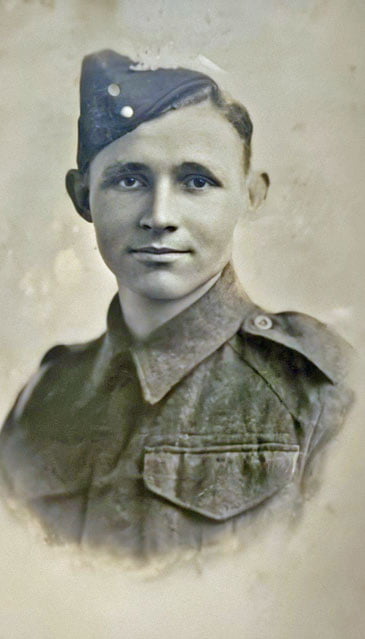
West Samuel
West | Samuel George
First names
Samuel George
Age
33
Date of birth
17-09-1911
Date of death
12-10-1944
Service number
999470
Rank
Lance Bombardier
Regiment
Royal Artillery, 77 (The Duke of Lancaster’s Own Yeomanry) Medium Regt.
Grave number
IV. C. 11.

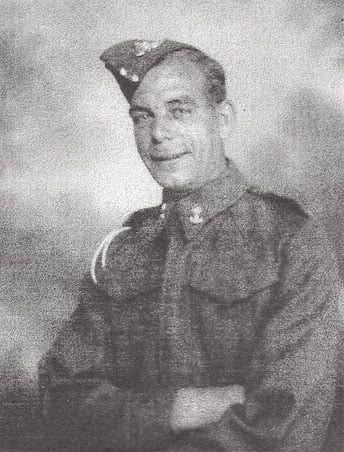
Samuel George West
Samuel George West

Grave Samuel George West
Grave Samuel George West

Biography
Samuel George West (who preferred to be known as Jack) was killed at Overloon on 12 October 1944. He was a Lance Bombardier in the 77th (The Duke of Lancaster’s Own Yeomanry) Medium Regiment of the Royal Artillery (Service No. 999470). He was aged 33. He was buried initially on the Oploo to Overloon road near Duivenbos but later re-interred in the Overloon Commonwealth War Graves Cemetery on 28 May, 1947. His grave has the inscription “Dearest brother you are not forgotten, in our hearts you are always near.”
Samuel joined his regiment on 15/8/1940 and remained in that regiment until his death.
The 77th (Duke of Lancaster’s Own Yeomanry) Medium Regiment
The 77th (Duke of Lancaster’s Own Yeomanry) Medium Regiment was a Royal Artillery unit which was created out of a Yeomanry Cavalry regiment recruited in Lancashire. It landed in Normandy shortly after D Day and served through many of the largest battles of the campaign in North West Europe until VE Day.
By the end of 1940 the 77th Medium Regiment was attached to the 53rd (Welsh) Division in Northern Ireland and remained there for over two years. When the 21st Army Group was formed in early 1943 for the planned Allied invasion of Normandy (Operation Overlord), 77th (DLOY) Medium Regiment was assigned to the 8th Army Group Royal Artillery, which was formed in Essex on 1 May 1943. An Army Group Royal Artillery (AGRA) was a powerful artillery brigade, usually comprising three or four medium regiments and one heavy regiment, which could be rapidly moved about the battlefield, and had the punch to destroy enemy artillery with counter-battery fire. AGRAs were provided to field armies at a scale of about one per Army corps. By this time, medium regiments consisted of two batteries, each of two 4-gun troops, a total of 16 x 5.5-inch guns.
During the first phase of the campaign in Normandy from 6 June until the great breakthrough which ended in the German defeat in the Falaise “Bag”, a tremendous weight of high explosives was hurled against the enemy by British guns. The 77th played a major part in this attack. The regiment disembarked on a beach in Normandy on 15 June, just a few days after D-Day. On the following day its guns were deployed and ready for action at Lantheuil in the Caen sector. In the weeks that followed, the place names which appear in the regimental record are associated with battles which were then in the news: St Croix, Grand Tonne, Mauvieu, Granville, Calvary Hill, Gruchy, Mondeville. During those days of the July battles in the Caen sector the Regiment fired thousands of rounds from its five fives. Each shell weighing 100 pounds.
The 77th, with other medium regiments, helped to break up the powerful counter attack launched by the German 10thSS Panzer Division in the Burcy region of the Vire-Vassy sector. The frustration of that German counter attack was one of the decisive engagements of the war in Normandy; it was the German’s last big throw before they tried to pull out through the Falaise Gap.
On 10 August the 77th were ordered back for refit and rest after 46 days of continuous firing. This continued until 17September, though later in that period they were also involved in providing transport and fuel to the 21st Army Group’s pursuit force in Belgium.
On 17 September the 77th were on the march and entered Belgium the next day to a tumultuous welcome. They entered the Netherlands on 20 September. A narrative of their journey states that “The Dutch gave us a frenzied welcome and turned out to greet us in their best clothes almost before the tide of fighting had passed over them. The women and girls wore orange dresses and the men orange rosettes and caps. Soon, our vehicles, too, were bedecked with rosettes and ribbons.”
They helped secure a bridgehead at Asten on 22 September and by 25 September were at Oploo and St Anthonis. The Narrative continues for the dates of 27 September to 9 October:
“The regiment was now in action around a large pine forest which was used as waggon lines. All round us stretched the flat Dutch countryside with nothing but woods and villages to obscure us from enemy observation. In spite of this, no hostile fire was brought down on the position, though we fired frequently by night, and our flashes must have been clearly visible to the enemy.
Our main forward position was in St Anthonis, though by day our patrols operated along 3 miles of road running to Boxmeer on the banks of the Maas. At nightfall our patrols withdrew and by night German patrols were known to cross the river.
Each day we moved a troop forward under the protection of the patrols and established an O[bservation] P[ost] in Boxmeer Church. This O.P. had excellent observation and greatly discouraged the Germans on the opposite bank who were preparing defensive positions. They soon gave up trying to work by day.
It was several weeks before Boxmeer was evacuated of civilians. For some time they continued to go about their normal business, undeterred by the occasional shellfire, and one Sunday the O.P. officer found himself locked out of the O.P. because a church service was in progress. South of Boxmeer, the enemy still held the western bank of the Maas strongly. His obvious intention was to sell the ground as dearly as possible, withdrawing through Venlo if pressure became too great. His resistance was by no means passive, and movement in forward areas by night was highly dangerous. Several vehicles were lost to his patrols, and one occasion Dutch collaborators guided a fighting patrol to one of our isolated field troop positions.
On 3 October, 7th US Armoured Division took over and attempted to clear up the enemy pocket. We supported their advance with concentrations together with the remainder of 11 Armoured Division artillery. On 7 October the attack was abandoned after Americans had suffered heavy losses for very small gains. It became obvious that a set piece attack with heavy artillery support would be needed to force the Germans back over the river.
We prepared a new position South of Oploo, ready for a large scale attack. This was to be carried out by 3 British Division, with Overloon and Venray as the objectives. These were the largest towns on the northern perimeter of the Venlo bridgehead which would be considerably reduced by their fall. The attack was to be supported by three divisional artilleries and the whole of 8 A.G.R.A. and was known as “Operation Constellation”.
The 77th moved to a new position at midday on 10 October which was about 1500 yards north of Overloon and just 1000 yards from the enemy front line. They lay low there all day on the 11th. The flatness of the country made concealment difficult and nothing but a straggling Pinewood screened them from enemy observation.
On the 12th they supported Operation Constellation with a series of concentrations on Overloon and the positions in front of the town. The narrative continues:
“By midday the enemy had well fixed 103 battery position, which came in for particularly heavy mortoring and shelling. One gun received a direct hit and several dumps of ammunition went up. To add to the confusion, most of the loudspeaker cables were cut, causing great difficulties in getting the orders to the guns.
All ranks rose to the emergency and by dint of much improvisation and reorganisation, the fire plan was completed. Repeated bombardment however made the position untenable and during the afternoon the battery moved back to an alternative position. Considering the extent of the bombardment, our losses were small – two Other Ranks killed and one Officer and 11 Other Ranks wounded. Miraculously no vehicles were hit, though several were parked in a small wood in the centre of the position. Two Military Crosses and one Military Medal were awarded for gallantry during the engagement.”
The War Diary confirms the following on 12 October: “At 1200 hours the gun positions of 103 Battery came under heavy mortar fire and C Sub received a direct hit. Casualties were two Other Ranks killed, 1 Officer wounded and 11 Other Ranks”.
The men named in the narrative who died that day were:
Gunner O’Brien, T J Died of Wounds 12th Oct 1944
Gunner Goldsmith, W Killed in Action 12th October 1944
L/Bdr West, S.G. Killed in Action 12th October 1944
Gunner Goldsmith was initially buried near Oploo and Gunner O’Brien near Eindhoven. Both were later re-interred at Mierlo Cemetery – so Samuel West is the only man from his Regiment buried at Overloon.
All three are among those commemorated on a Roll of Honour displayed at the Territorial Army Centre in Wigan.
Family history
Samuel was the son of Charles Frederick and Florence West of Bridgwater, Somerset. He was born on 17/9/1911. He never married.
Charles F. West married Florence Baker in Spring 1901 in Bridgwater, Somerset. Samuel was one of 10 children as follows, all born in Bridgwater: Florence Selina (1901), Caroline Elizabeth (1904), Beatrice Louisa (1907), Charles Frederick William (1909), Samuel George (1911), Doris (1914), Gertrude (1918), Francis John (1920), Joan Irene (1924) and Gwendoline Irene Ruby (1926). Francis was later known as John and Gwendoline as Ruby.
Oddly, the family could not be found in the 1911 census, but by 1921 Charles and Florence were living at 1, Moat Lane, Bridgwater. Charles was a Dock Labourer but was out of work. He was born in 1870 and Florence in 1881, both in Bridgwater. Their 8 children who were born by then were with them, though Caroline was perhaps incorrectly referred to as Christine. The two eldest daughters were in Day Service, but the younger of the two was out of work.
Charles had served as a Royal Engineer in WW1. His granddaughter, Kaye Bath, still has his medals. She believes that he was also on the Titanic as a stoker, though it hasn’t been possible to verify that. He was a timber worker but also created beautiful wrought iron work as a side line.
Samuel’s mother, Florence, fell down a fire escape when on a visit to a biscuit factory in 1934. She suffered a brain injury which led to her death aged just 52. This left Charles with several young children to bring up. He was devastated and lived with his married daughter Beatrice until they found their own house.
In 1939 Charles was therefore shown as widowed, born 13/1/1870 and working as a Timber Dock Porter. He was living at 11 Friarn Avenue, Bridgwater with five of his children who had not yet married: Samuel, Gertrude, Francis (known as John) and Joan plus one other whose identity was not shown but was probably Gwendoline who was 13 and the youngest. Samuel was working as a Commercial Printer; Gertrude as a Female Shop Assistant in a store selling paint & polish; Francis John as a Milling Machinist in Engineering and Joan as a Carpet Examiner in a factory.
The other five children had all married by this time. Caroline had married Edwin C Jacques in 1926 and in 1939 they were living at 2 Hamp Street, Bridgwater. Edwin was shown as disabled. Florence married Edward Frankcom in 1928 and in 1939 they were living on their own at 65 Winchester Road, Bristol. Edward was a Hall Porter. Beatrice Louisa married Harry W Cook in 1930. In 1939 Beatrice was living 5 Cromwell Road, Bridgwater with her first two children – but Harry was not present. Doris West married Joseph Murray in 1937. In 1939, Doris was living at 11 Friarn Avenue, Bridgwater with their first child but Joseph was not present. This was the same address as her father but was considered as a separate household. Charles FW West married Clara A Palfrey in 1938 and in 1939 they were living at 60 York Road, Bridgwater with their first and only child. Charles was working as a General Gardener.
The fact that Beatrice and Doris’ husbands were not present in 1939 suggests that Harry Cook and Joseph Murray may have signed up. This isn’t certain for Harry Cook, but it seems that Joseph Murray probably served in Burma in WW2. A man of that name who was living at 1 Fairfax Crescent, Bridgwater in 1971 had previously been awarded the Burma Star. He ws a Signalman in the 2nd British Division Royal Corps of Signalmen (Service No. 5724515).
It has been seen that Samuel George West joined up on 15 August 1940. However, his brother Charles also joined up in 1940 as a Gunner in The Royal Regiment of Artillery (Service No. 1097381).
Also in 1940, Samuel’s sister Gertrude married Ronald W N Cornell. An announcement in the Taunton Courier and Western Advertiser indicated that she was still living at 11 Friarn Avenue. She was given away by her brother Charles. Her bridesmaids were Misses Joan and Ruby West (sisters of the bride) and Yvonne & Shirley Cook and Doreen & Pat Jacques (nieces of the bride). Gertrude’s brother, John West, was the best man. By at least 1943, Ronald was in the RAF.
Samuel’s younger brother, Francis John West married Kathleen J Frost in 1943. It may have been that, in 1941, he too had signed up for the Royal Regiment of Artillery, but on 25 May 1943 he was discharged as being physically unfit for the Army, (Service No. 1128957).
Sadly, their elder brother Charles died in Italy on 20/7/1943, aged 34, and is buried at the Syracuse War Cemetery in Sicily.
It seems that this led to the decline of their father Charles. He died in on 5 March 1944. The inquest was reported in the Taunton Courier and Western Advertiser of 11 March 1944. He was still living at 11 Friarn Avenue at the time and was described as a retired general labourer aged 74. Lance Bombardier Samuel George West of the Royal Artillery gave evidence of identification. His sister, Mrs Gertrude Cornell, described as the wife of a flight Sergeant in the RAF, said that at 5am on February 23 she heard her father calling her and, on going downstairs, found him lying on the floor of the living room. He said he had lost his matches, fallen in the dark and hurt his arm. Next day, as his shoulder and arm were hurting him, Gertrude and her sister (Mrs Jaques) took him to the hospital. At Taunton Hospital it was discovered that his shoulder has dislocated. He returned home on February 25. Next day they sent for the doctor who sent him back to hospital as he had swelling and bruising of the upper arm and shoulder and severe bronchitis. He developed hypostatic pneumonia following the shock of the accident and confinement to bed and died on Sunday 5 March. Gertrude said her father had a stroke in January 1940 which left his right arm practically useless and since the previous August when they had news that one of her brothers had been killed in Sicily he had been failing terribly.
Samuel’s death later that same year must have been a further devastating blow to his family. Thankfully, Doris’ husband, Joseph Murray, survived the war, as did Beatrice’s husband Harry Cook, if indeed he was in the forces.
However, the war had an effect on yet more members of the family.
Joan Irene West married Leonard Harris Palfrey in 1946. Leonard was the brother of Clara Palfrey who had married Joan’s brother Charles who had died in Sicily. Leonard had been a bombardier in the 8th Coast Regiment of the Royal Artillery (service no. 5670567) but was reported missing in 1941 in Hong Kong. However, it transpired that he had been taken as a Prisoner of War by the Japanese. In 1945 he was in a prison camp in Tokyo and was released sometime after 15 August 1945. The treatment of Japanese POWs was notoriously bad and many died or suffered after effects in their later lives. Joan and Leonard were still living at 11 Friarn Avenue in 1946 as it was given as his address when charged with a minor cycling offence. He was described as a labourer at that time.
Gwendoline Irene Ruby West, known as Ruby, married Francis Ernest Roy Frost in 1947. Francis was the cousin of Kathleen Frost who had married Ruby’s brother, Francis John West, in 1943. Francis joined the Royal Regiment of Artillery in 1936 (Service No. 856527) when he was 18. He served in Africa and at Dunkirk. He seems to have been transferred to the reserves on 21/7/1948. Thankfully, he too survived the war.
All of Samuel’s surviving 8 siblings went on to have children with the exception of Florence. Most have descendants who are alive today. However, further tragedy struck Charles’ widow Clara as her only grandchild died in infancy in 1976. Similarly, Samuel’s brother Francis John’s only child died aged just 12 in 1957 – so none of the male line of Samuel’s family are alive today.

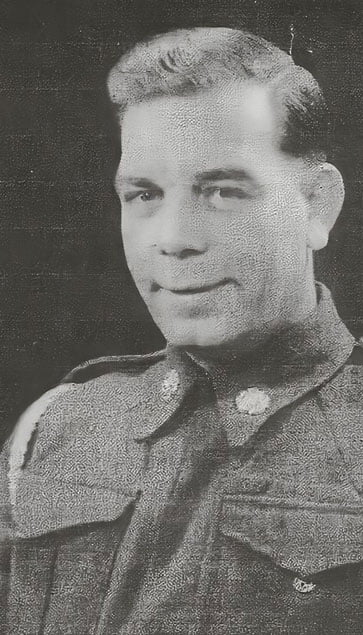
John West
John West

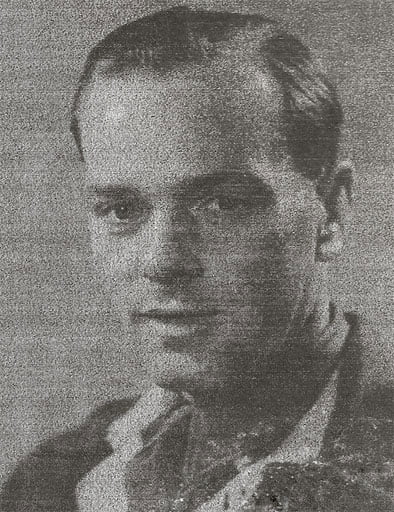
Charles West
Charles West
Sources and credits
Photos and assistance from Kaye Bath, Samuel’s niece by his youngest sister Gwendoline (Ruby) West.
From FindMyPast website: Civil and Parish Birth, Marriage and Death Records; England Census and 1939 Register Records; Military Records, Electoral Rolls
Wikipedia – Information on the 77th (Duke of Lancaster’s Own Yeomanry) Medium Regiment, Royal Artillery
Archives of the DLO Yeomanry: https://sites.google.com/site/archivesofthedloyeomanry/home
Notes from Captain Hugh Gunning Observation Officer 77th (DLOY) Med Regt RA
Booklet – The 77th (Duke of Lancaster’s Own Yeomanry) Medium Regiment R.A.
Narrative of its part in the NW Europe Campaign June 1944 to May 1945
War Diary for 77th (DOLY) Medium Regiment
Taunton Courier and Western Advertiser 11 March 1944 – Elderly Bridgwater Man’s Death
Taunton Courier and Western Advertiser 07 December 1946 – Leonard Palfrey charge
Research Elaine Gathercole