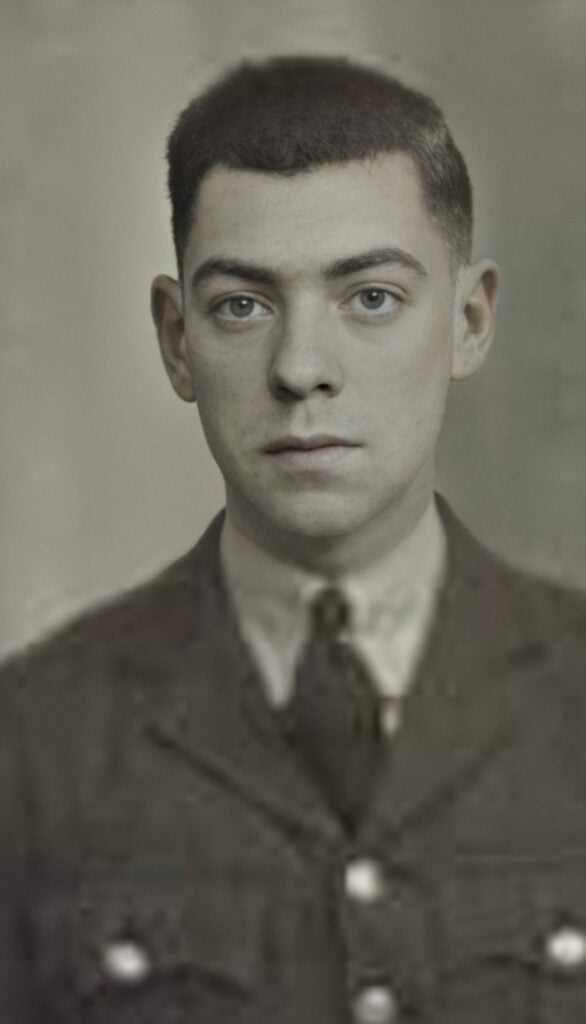
Cadman Alexander Ernest

Cadman | Alexander Ernest

  • First names

    Alexander Ernest

  • Age

    27

  • Date of birth

    13-10-1917

  • Date of death

    16-10-1944

  • Service number

    4036008

  • Rank

    Private

  • Regiment

    King’s Shropshire Light Infantry, 2nd Bn.

  • Grave number

    I. A. 5.

  • Alexander Ernest Cadman

    Alexander Ernest Cadman

    Alexander Ernest Cadman

  • Grave Alexander Ernest Cadman

    Grave Alexander Ernest Cadman

    Grave Alexander Ernest Cadman

Biography

Alexander Cadman was killed in action on 16 October 1944 near Overloon. He was 27 years old and a Private in the King’s Shropshire Light Infantry, 2nd Battalion (service no. 4036008). He was initially buried in Oploo and was transferred on 30 January 1946 to the current cemetery of the War Graves Commission in Overloon, where he is buried in plot number I.A.5.

Family background

He was born on 13 October 1917, the son of Martha Winifred Cadman and George Patrick Collins, at 48 Brook Street, Quarry Bank, West Midlands. It has not yet been confirmed that his father was indeed George Patrick Collins.
Alexander Ernest Cadman is said to have been adopted by his uncle, Charles Edwin Cadman, because he did not know his father’s name and his mother, Martha Winifred Cadman, had to raise him alone. At that time, there was a stigma attached to unmarried mothers, but there is no information about when the adoption took place. The only document that exists on this subject is Alexander’s marriage certificate, which lists Charles Cadman as the father of the groom. This was in 1940. It has always been assumed that George Patrick Collins was Alexander’s father, but that he had to be adopted because George was married to someone other than Martha.

Over time, the situation changed and George and Martha had seven more children, who took George’s surname Collins, even though their parents were never married.

His siblings were: Leslie Collins (1926-), Winifred Mathilda Collins (1928–2007), Frederick George Patrick Collins (1930–1991), Mary Ann Collins (1934–2019), Lillian Patricia Collins (1936–2018), Elsie May Collins (1938–2016) and another brother.

Alexander Cadman Minnie Barnsley marriage
Alexander Cadman and Minnie Barnsley marriage

He married Minnie Nancy Barnsley on 8 May 1940 and in 1943 became the father of a daughter, Barbara Cadman, who sadly died in 1959 due to a serious illness. He lived in Staffordshire.

Ernie, as he was known within the family, was one of eight children (four boys and four girls). At the start of the war, the boys were separated from their parents and sisters. They did not see each other again for 45 years, during which time two brothers from the family were killed in the war. All the family knew was that two brothers had died in the war.
It is only in recent years that they have learned that Alexander is buried in Overloon, and they are still searching for Alexander’s brother Leslie Collins, who also died in the war.

Military background

It is not known when Alexander enlisted with the King’s Shropshire Light Infantry, 2nd Battalion.
The 2nd Battalion of the King’s Shropshire Light Infantry began the war in Jamaica, from where it returned to England in March 1942. It may have been around this time that he joined. After a period in the east of England, the battalion moved to Yorkshire to join the 79th Armoured Division as armoured infantry.

In March 1943, the 79th Armoured Division was disbanded due to a shortage of tanks, and the battalion joined the 185th Infantry Brigade, which consisted of the 2nd Battalion, Royal Warwickshire Regiment and the 1st Battalion, Royal Norfolk Regiment. The 185th Brigade was part of the 3rd British Infantry Division. At that time, it was to participate in the attack on Sicily. The battalion began to mobilise to acquire the necessary knowledge of combined operations and prepare for warfare in the mountains. However, the Canadian government wanted their troops to participate in the invasion of Sicily, so the 3rd Division was transferred to the 1st Corps and became one of the two assault divisions for the Western Front.
From July 1943 to March 1944, the battalion was constantly on the move from one training area in Scotland to another, relocating seven times during that period. At the end of March 1944, the battalion moved to a camp near Haywards Heath, one of many camps used to concentrate troops prior to embarkation for D-Day.

The battalion took part in the D-Day landings of Operation Overlord, where they failed to capture the D-Day objective of Caen due to the presence of the 21st Panzer Division. They fought in the Normandy Campaign and Operation Market Garden and the rest of the North-West European Campaign with the British Second Army.
On 1 October 1944, the battalion departed by motorised transport from Asten in the Netherlands to a new location near Mook. The journey proceeded without incident. The enthusiasm of the local population noticeably waned as the battalion approached the German border, but there was no hostility. The route led over the bridge at Grave across the Meuse.

The battalion arrived in the new area, in Mook, which lies on the eastern bank of the Meuse, south of Nijmegen and north of Overloon. A gently sloping sandy landscape, covered with dense young pine forests. It was an area where the Luftwaffe was unusually active, flying over 300 aircraft per day.

Until 12 October, they remained in the area of Mook, Groesbeek, Heumen and Oeffelt, carrying out reconnaissance missions under very heavy enemy fire. The aim was to attack the enemy in the east, but the enemy’s strength in the Reichswald was too great, so the plan was changed to move south to capture Overloon and Venray and cross the Meuse at Venlo. The battalion therefore moved down to Oeffelt and then to Rijkevoort, where it arrived on the 12th.

On the 13th, they succeeded in an attack on the woods south of Overloon and reached the front edge of them, but with the loss of two officers and 17 other casualties. They remained there for the next two days. On the 16th, the battalion was ordered to clear and hold woods northeast of Venray. However, the attack was seriously hampered by problems crossing the Molenbeek. They had to dig in at night in open fields that had been cleared of mines. It rained heavily and they suffered casualties from heavy mortar fire and mines. Despite further heavy enemy fire, they reached their objective the next day but suffered 50 casualties. It was on this day that Alexander Cadman was killed.

On 20 October, the battalion was relieved by the Royal Ulster Rifles and rested near the farm “De Rouw” northeast of Overloon. They remained there until 26 October when they returned to Venray to relieve the East Yorkshire Regiment.

Alexander was temporarily buried in a field grave in Oploo and reburied at Overloon War Cemetery on 30 January 1946.

Sources and credits

Ancestry Civil and parish birth, marriage and death records and family trees.
Wikipedia information King’s Shropshire Light Infantry, 2nd Battalion.
War Diaries King’s Shropshire Light Infantry, 2nd Bn.
Louise Horn (granddaughter of Alexander’s sister).

This biography has been compiled by our foundation based on our own research and stories from other soldiers who served in the same regiment or participated in the same battle on that day. Part of this work is based on collective work within the foundation.

Research Anny Huberts

Continue reading

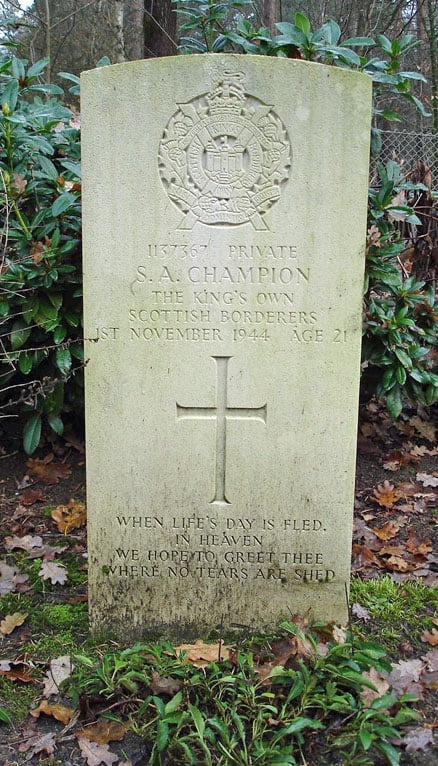
Champion Sidney Alford

Champion | Sidney Alford

  • First names

    Sidney Alford

  • Age

    21

  • Date of birth

    1923

  • Date of death

    01-11-1944

  • Service number

    1137367

  • Rank

    Private

  • Regiment

    King’s Own Scottish Borderers, 1st Bn.

  • Grave number

    IV. E. 2.

  • Sidney Alford Champion

    Sidney Alford Champion

    Sidney Alford Champion

  • Grave Sidney Alford Champion

    Grave Sidney Alford Champion

    Grave Sidney Alford Champion

Biography

Son of Sidney and Hilda Ellen Louisa Champion. He was twin brother of Frances and brother of Eric, Ernie and Roy and Doreen. 

Sidney was born in Battersea, London Borough of Wandsworth, Greater London, England. 

He served with the King’s Own Scottish Borderers, 1st Bn. and fell on 1 November 1944. Sidney was temporarily buried at Holthesedijk in Overloon along with 10 other servicemen and reburied on 2 June 1947 at Overloon War Cemetery. 

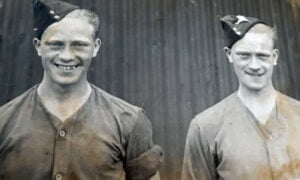
He had a twin brother Frances Thomas Champion who also died during World War II, on 3 July 1944 at Hermanville-sur-Mer, Departement du Calvados, Lower Normandy in France. Frances is buried at Hermanville War Cemetery. 

Sidney en Francis Champion
Sidney and Francis Champion

Sources and credits

Continue reading

Burmby Peter Alfred

Burmby | Peter Alfred

  • First names

    Peter Alfred

  • Age

    21

  • Date of birth

    14-10-1923

  • Date of death

    12-10-1944

  • Service number

    5835362

  • Rank

    Corporal

  • Regiment

    Suffolk Regiment, 1st Bn.

  • Grave number

    III. C. 5.

  • Peter Alfred Burmby

    Peter Alfred Burmby

    Peter Alfred Burmby

  • Grave Peter Alfred Burmby

    Grave Peter Alfred Burmby

    Grave Peter Alfred Burmby

Biography

Peter Alfred Burmby was killed in action on 12 October, 1944. He was a Corporal in the 1st Battalion of the Suffolk Regiment (Service No. 5835362). He was initially buried in the Cemetery Th.J. Janssen, Overloon and later re-interred on 19 May 1947 in Grave III.C.5 in the Overloon War Graves Cemetery. His inscription reads “Loved and remembered always by your loving Mum, Dad, and brother Dennis.”

Early Life

Peter Alfred Burmby was the son of Alfred Burmby and Esther Potter who had married at Maldon Registry Office in Essex in August 1922. Alfred was born in Tolleshunt D’Arcy in Essex on 4 June 1898. Esther was born on 26 January 1905 in Tollesbury in Essex. Tolleshunt D’Arcy and Tollesbury are about 2 miles apart, to the east of Tiptree and Maldon. Alfred and Esther both came from large families of 10 or more children and both their fathers were agricultural labourers. Before his marriage Alfred was working as a Butcher’s Assistant. By 1921 he was the manager of a butcher’s shop in Tolleshunt D’Arcy owned by Walter Goody of Tollesbury and Frank South of Tolleshunt D’Arcy, both of whom were platelayers with the railway who left the running of the shop to Alfred.
 
Alfred and Esther Burmby had two children: Peter Alfred who was born on 14 October 1923 in the Maldon district of Essex and Dennis Frederick who was born on 15 February 1926 in Braintree.
 
By September 1939, the family were living at 56 Panfield Lane, Braintree, Essex. Alfred was still a Butcher’s Manager. Peter was a Butcher’s Shop Assistant, though he was shown as born in 1924 vs 1923.

Military Career

Peter seems to have initially enlisted in the Suffolk Regiment on 21 October 1940, serving for 1 year and 132 days. However, he re-enlisted on 2 March 1942 at Ipswich. At this point he enlisted in the Regular Army for a term of 7 years in the colours and 5 in the reserves, but his previous service counted towards the 7 years. He stated that he was born on 14 October 1922 in Maldon, but in fact he had been born a year later in 1923. He was therefore 17 when he had first enlisted.  He gave his trade as a Butcher’s Roundsman. At his re-enlistment he was described as 5ft 6 ½ in tall, weighed 139 lbs and had a fresh complexion, green eyes and dark hair. He was declared fit for service. He gave his religion as Church of England. He gave father, A. E Burmby, of 56 Panfield Lane, Braintree as his next of kin.
 
On 19 September 1941, while in his earlier period of service, he was promoted to the rank of Paid Lance Corporal. However, oddly, he was recorded as a Private on his enlistment in March 1942. He was posted to the 70th Battalion of the Suffolk Regiment. On 22 May 1942 he was promoted to the rank of Unpaid then Paid Corporal and then War Substantive Corporal on 20 August 1942.
 
On 29 October 1942 he was transferred to the Army Air Corps. He was posted to the Parachute Depot and school with effect from 29 October with the rank of Corporal. On 15 December 1942 he was posted to the 4th Parachute Battalion. However, his career took a turn for the worse on 7 January 1943 when he was put under close arrest. He was court martialled and found guilty on 13 January of refusing to make a parachute descent. He was sentenced to 84 days detention and reduced to the ranks. He was sent to Fort Darland Detention Barracks on 19 January 1943. He was released on 9 March 1943 having earned 28 days remission of his sentence.
 
On 10 March 1943 he was posted to No. 3 Infantry Training Centre of the Suffolk Regiment. He was then posted to the 8th Battalion on 6 April 1943 and the 1st Battalion on 5 May 1943. He was appointed to the rank of Acting Unpaid Lance Corporal on 25 June 1943 and this was converted to a paid position on 16 November 1943.
 
He embarked for North West Europe on 3 June 1944. He was appointed as Acting Unpaid Corporal on 7 June 1944.
 
On 6 June 1944, D-Day, the Battalion landed on Sword beach and was involved in attacking and taking the Hillman Fortress on D-Day itself. They continued to progress through France, including severe battles which cost many lives at Chateau de la Londe and at Tinchebray.
 
On 20 August they arrived at Chapelle-au-Moine where they spent two weeks. Here, they had some respite from the fighting and could relax and re-train for what was to come next. They were also able to receive reinforcements to replace the men killed and wounded. On 3 September they moved 130 miles eastwards over the Seine to Farceaux where they again remained out of the action for 13 days. While here, on 5 September,  Peter was appointed War Substantive Corporal.
 
The Battalion’s advance into Belgium in mid September started with the challenge of crossing the Escaut Canal. They succeeded in the face of strong opposition, reaching Hamont on 20 September. They crossed into the Netherlands on 21 September to reach Weert. On 27 September they left Weert for De Rips. On 1 October they left De Rips to take up positions behind the village of Mook, to the south of Nijmegen.
 
The failure of Operation Market Garden had left the allies exposed in a narrow corridor through the Netherlands. The enemy still held Overloon, Venray and Venlo to the east. Initially the Americans attempted to clear this area but the strength of the enemy was underestimated and they made little progress. The British were now charged with taking on this task. The aim was to attack Overloon from the north and clear the enemy salient west of the River Maas in what was known as Operation Aintree.
 
 On 8 October, the Battalion moved from Mook to Rijkevoort with the aim of attacking Overloon on 11 October having passed through St Anthonis and Oploo. However, the attack was delayed by heavy rain and very muddy conditions until noon on 12 October. The attack was to begin at 1200 hours.
 
The plan was for the 1st Suffolk Regiment to capture the western part of Overloon and a brick factory to the south. The East Yorkshires were to advance alongside the Suffolks towards a dog shaped wood to the east of Overloon.
 
The attack began with a general bombardment by Typhoons and artillery followed by a creeping artillery barrage which moved forward by 100yds every 5 minutes. The infantry followed this barrage with “A” company in the lead. They had to advance over half a mile of desolate land to reach Overloon and were immediately met with mortar fire. A sniper inside a shattered windmill succeeded in picking off Major Ellis who was “A” Company Commander, two platoon sergeants and most of the senior NCOs by identifying their rank from their badges. The attack nearly stalled at that point. However, Company Sergeant Major Leatherland took charge and led the Company to push on to clear the enemy from their machine gun positions. Communications were poor due to the weather, but a message got through to ask for air support so Typhoons emerged from the drizzle to pound the mill. Two thirds of “A” Company were killed or wounded around the windmill. It was in this area that Peter was killed.
 
Meanwhile, B Company had steadily advanced towards the centre of Overloon which the enemy was stubbornly defending. A Panther tank looked like it might cause a problem as the anti tank platoon was unable to move forward over waterlogged ground. However, Major Martin who was leading the Company personally used a PIAT to take out the tank,
 
“A” Company were then tasked with pressing on towards the brick factory which they succeeded in doing with yet more casualties. By 1730 hrs all objectives had been reached.
 
In Mark Forsdike’s book “Fighting Through to Hitler’s Germany” he quotes Private Claude Conybeare as follows: “Went into a terrific attack with 400 artillery guns in support; enemy strongpoint had to be taken, it was real hell let loose, and one expected to get injured at any minute. But we got through OK and captured Overloon”.
 
A total of one officer and 9 men of the 1st Battalion of the Suffolk Regiment were killed and a further 2 officers and 55 men were wounded.
 
Peter had served for 2 Years and 226 days plus a further 1 year and 132 days prior to March 1942. He spent 94 days in North West Europe. He was awarded medals as follows: 1939-45 Star, France & Germany Star and the War Medal 1939/45.

Aftermath

The Chelmsford Chronicle included two articles on Peter on 4 November 1944, one with a photo. One said:
“Peter Burmby – One of the Right Breed
Joined at 16: Within a few days of his 21st birthday, Col Peter Alfred Burmby of the Suffolk Regt. Has been killed in action in North West Europe. The elder son of Mr & Mrs Alfred Burmby, “Clairefontaine” Panfield Lane, Braintree, Peter joined the Army at the age of 16 ½ years. His brother Dennis is in New York, training to become a pilot in the Fleet Air Arm.”
 
The other said “On Active Service: Burmby – Cpl Peter Alfred Burmby of the Suffolk Regt, eldest son of Mr & Mrs Alfred Burmby, Clairefontaine” Panfield Lane, Braintree, killed while on active service in North West Europe, in the month of his 21st birthday, October. Answered the call of his country at the age of sixteen and a half. He will be remembered by all who knew him for his unselfishness and cheerful smile.”
 
It is likely that Peter really enlisted when he was 17 and 1 week old and died 2 days before he was 21.
 
Peter’s brother Dennis married Anne Wolstenhulme in Ealing, London in 1954. They had a son in 1956 in Amersham, Bucks.
 
Peter’ mother died on 14 August 1973 and his father on 1 May 1974, both in Braintree. They are commemorated in Braintree Cemetery.
 
Dennis Frederick Burmby died in 2003 in Kent.

Chelmsford Chronicle November 1944

Chelmsford Chronicle November 1944

Chelmsford Chronicle November 1944

Sources and credits

From FindMyPast website: Civil and Parish Birth, Marriage and Death Records; England Census and 1939 Register Records; Military Records, Electoral Rolls
Wikipedia and Friends of the Suffolk Regiment websites for information on the regiment
“Fighting Through to Hitler’s Germany by Mark Forsdike
Essex Newsman of 16 April 1921, 12 August 1922
Chelmsford Chronicle of 30 April 1920, 4 November 1944
 
Research Elaine Gathercole, Bryan Johncock  

Continue reading

Smith Geoffrey Charles

Smith | Geoffrey Charles

  • First names

    Geoffrey Charles

  • Age

    20

  • Date of birth

    08-04-1923

  • Date of death

    04-07-1943

  • Service number

    155192

  • Rank

    Pilot Officer, air gunner

  • Regiment

    Royal Air Force Volunteer Reserve, 90 Sqdn.

  • Grave number

    III. A. 3.

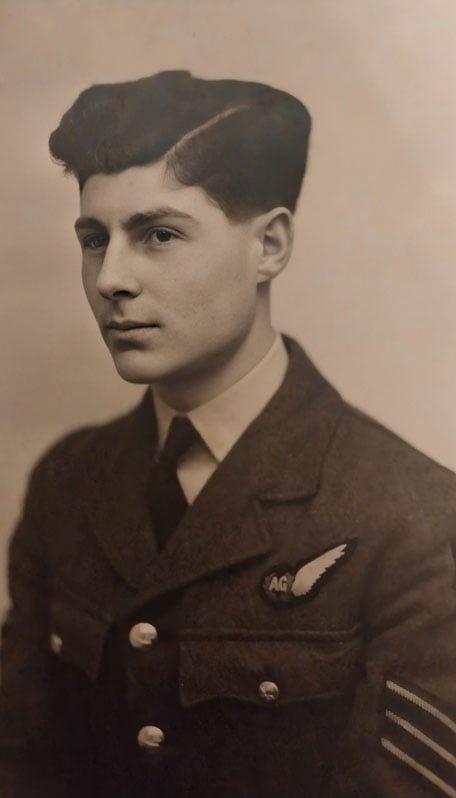
  • Geoffrey Charles Smith

    Geoffrey Charles Smith

    Geoffrey Charles Smith

  • Grave Geoffrey Charles Smith

    Grave Geoffrey Charles Smith

    Grave Geoffrey Charles Smith

Biography

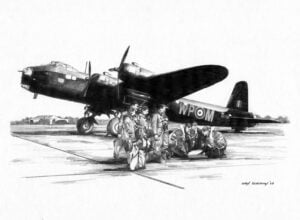
George Charles Smith, Pilot Officer, air gunner, was a member of the crew of the Stirling III BK718 which was shot down on 4th July 1943, either by Flak88 or Hayo Hermann (luftwaffepilot). They took off at 23.26 on 3rd July 1943 from West Wickham and crashed at Mehlem on the westbank of the Rhine, 10 km SSE of Bonn.
The crew is buried at Overloon War Cemetery, except Sgt I.H. Norris, who managed to leave the plane and was a Prisoner of War (POW).

Short Stirling BK718 Drawing (Ground) copyright Ivan Berryman
Short Stirling BK718 Drawing and copyright Ivan Berryman

The other crew members who died were:

Official information via findagrave.com:

Plane data: Short Stirling III
Serialnr. BK718
Call Sign: WP-M
Unit: 90 Sqdn.
Take off: 11:26 PM West Wickham airfield.
Target: Köln.
Operation: Bombing.
Shot down by FLAK.
Crashed at Bonn-Mehlem, Germany.
Buried Plot GGG-4-91 Allied cemetery Margraten, Netherlands.
Reburied 01/05/1947 Overloon War Cemetery, Netherlands.

Details of how Geoffrey came to be with this crew can be found in the extended side-story about the fate of the crew of the Stirling BK718. 

Geoffrey Charles Smith was born on 8/4/1923 in St Helen’s, Lancashire. His parents were Charles and Ellen Smith. Charles was born on 11/9/1893 and Ellen on 27/10/1895. Charles Smith married Ellen Bellis in 1918 in St Helen’s.
 
In June 1921 Charles and Ellen Smith were living at 102, Birchley Street, St Helens, with Ellen’s parents, William and Emily Bellis and their other daughter, Elsie Bellis. In 1911 Charles had been described as a Glass Cutter – now he was working as a Foreman Plate Glass Cutter at the long established Pilkington Brothers Glass Works in St Helen’s. Prior to her marriage Ellen was an Apprentice Confectioner.  Geoffrey was born two years later in 1923. They went on to have another child, William Brian Smith, on 7/5/1931.
 
By September 1939 Geoffrey C. Smith was living with his father at 16 Devonshire Gardens, Winchmore Hill which is now part of Endfield in North London. Charles was now described as a “Foreman Plate Sheet Cathedral Glass” and Geoffrey was working as an Engineering Junior Draughtsman. Geoffrey was still single. Charles was still married but neither his wife nor other son were present. Ellen Smith appears to have been living at 110 Birchley Street, St Helens at that time in the household of John E and Martha Edwards together with widow Lillian Naylor, but no child was present. She may have just been visiting them on the date of the register. No family connection with the Edwards is known – but they only lived a few houses away in Birchley Street from where Ellen and her parents lived in 1921 so they were probably friends. William may have been with other relatives.

Ellen Smith died on 3rd September 1956. She was living at 16 Devonshire Gardens in Enfield. At the time of her death Charles was shown as a Factory Foreman. Charles himself died on 15 July 1967 with his address still given as 16 Devonshire Gardens. Geoffrey’s brother, William Brian Smith, administered his estate. William was living at 24 Andrews Road, Earley, Reading at the time. He  married Valerie Gillian Clarkson in Surrey in 1956 and had a daughter Karen Amanda Smith and a son Martin Geoffrey Smith. He died in Reading in 2017 and Valerie died there in 2023.
 
Geoffrey Charles Smith is commemorated on a memorial to ten men who died in WW2 at Grange Park Methodist Church in Enfield, close to Devonshire Gardens. The Church is built in the Art Deco style and only opened in 1938. It is also known as “ The Church in the Orchard”.

Sources and credits

FindMyPast website: Civil and Parish Birth, Marriage and Death Records; England Census and 1939 Register Records; Military Records
Geoffrey Charles Smith’s Service Record from the Ministry of Defence
Various RAF related websites for information on his units
https://www.iwm.org.uk/memorials/item/memorial/84390

Photo provided by Karen A. Garrod, Geoffrey’s niece

Research by Elske van Kammen and Elaine Gathercole

Continue reading

Murray Hugh

Murray | Hugh

  • First names

    Hugh

  • Age

    25

  • Date of birth

    01-02-1918

  • Date of death

    04-07-1943

  • Service number

    632757

  • Rang

    Sergeant, flight engineer

  • Regiment

    Royal Air Force

  • Grave number

    III. A. 1.

  • Hugh Murray

    Hugh Murray

    Hugh Murray

  • Grave Hugh Murray

    Grave Hugh Murray

    Grave Hugh Murray

Biography

Hugh Murray, Sergeant, flight engineer, was a member of the crew of the Stirling III BK718 which was shot down on 4th July 1943, either by Flak88 or Hayo Hermann (luftwaffepilot). They took off at 23.26 on 3rd July 1943 from West Wickham and crashed at Mehlem on the west bank of the Rhine, 10 km SSE of Bonn.
The crew is buried at Overloon War Cemetery, except Sgt I.H. Norris, who managed to leave the plane and was a Prisoner of War (POW).
 
The other crew members who died were:

Official information via findagrave.com:

Plane data: Short Stirling III
Serialnr. BK718
Call Sign: WP-M
Unit: 90 Sqdn.
Take off: 11:26 PM West Wickham airfield.
Target: Köln.
Operation: Bombing.
Shot down by FLAK.
Crashed at Bonn-Mehlem, Germany.
Buried Plot EEE-12-282 Allied cemetery Margraten, Netherlands.
Reburied 01/05/1947 Overloon War Cemetery.

The inscription on Hugh’s grave reads “Till the day dawns and the shadows flee away”.
 
Details of how Hugh came to be with this crew can be found in the extended side-story about the fate of the crew of the Stirling BK718. 

Hugh Murray was born on 1st February, 1918, at 38a Hunter Street, Lochgelly, Fife, Scotland. He was the son of Hugh Murray who was a coal miner and Alison Nicol Erskine Murray (nee Wood) though Alison was always known as Alice. Hugh (Snr) was born in 1882 and Alice in 1890. They had married on 1st June 1907 at nearby Ballingry. 
 
Hugh and Alice had four children as follows: William born 1907, Johanna born 1910, George born 1912, Hugh born 1918. Hugh and Alice also brought up a 5th child. She was Janet Leitch (born 1923) and was the daughter of Hugh Murray (Snr’s) niece – born out of wedlock – but was brought up by Hugh and Alice as their own child. She was a few years younger than Hugh (Jnr). The family were living in Lochgelly in 1911 and 1921.
 
Before the war, Hugh worked as a mechanic in Messrs. Alexander & Sons’ bus garage in Lochgelly.
 
As a child it was understood that Hugh was a haemophiliac. His nephew, also Hugh Murray, recalls his grandmother telling him that when Hugh came home with a nose bleed she knew she needed a bucket! Both he and his sister Audrey recall being told that Hugh attended hospital for a major operation probably when he was around 20, so around 1937/8. It seems that he did not suffer from haemophilia after all, but a similar illness which was cured by the removal of the spleen. It seems that, at the time, this was a very new procedure to cure this illness and he was treated as a case study for it. It seems, however, that neither Hugh nor his family were ever told that it wasn’t actually haemophilia. Hugh did appear to be cured, though Audrey says he was left with a large scar running round his waist from front to back on one side.
 
Audrey recalls that Hugh tried to join the RAF while in Scotland but was rejected as soon as they asked what had caused his scar and he said he’d had haemophilia. Someone advised him to go to England and apply there but that, if they asked about the scar, he was to say he didn’t know why it was there. He did this and he was accepted. He signed up in January 1939, 9 months before the start of the war.
 
Some time after his death, his mother was contacted by a doctor wishing to get in touch with Hugh to follow up his progress after the surgery for a medical paper – not knowing he had died in the war. A paper was published in September 1949 by H N Robson MB MRCPE, Lecturer, Dept of Medicine University of Edinburgh, in the Edinburgh Medical Journal in which it was noted that 16 out of 19 cases treated in this was between 1932 and 1949 had been successful. No doubt, had he lived, Hugh would have been included in this study.
 
Had he actually been a haemophiliac and not had the operation, he may not have been able to join the RAF and his life may have been saved.
 
Hugh’s father died in 1940 in Lochgelly, aged 58.
 
Hugh Murray married Frances McMillan Mitchell on 13th September 1941 in Lochee which is part of Dundee.

Hugh and Frances Murray MacMillan
Marriage of Hugh Murray and Frances McMillan Mitchell

Frances McMillan Mitchell was born in 1915/16 in Forgan which is across the Tay from Dundee and near St Andrews. Her mother’s maiden name was Rae. Her father, James Mitchell, was born in 1873. Her mother, Jane Rae, was born in 1889. They probably married in Blythswood in Glasgow in 1905. They appear to have had children as follows:
David C born 1906, John R born 1908, Margaret S M C born 1910, Rachel C Mc born 1911, Frances Mc 1916
 
Hugh’s mother, Alice, lost both her parents in 1943, her father in the same month (July) as her son and her mother 5 months later. Both were in their 80s. It must have been quite devastating for her to lose her husband, son and parents in the space of only 3 years.
 
Hugh was reported missing in July 1943. It was recorded in the Fife Free Press of 17th July as follows:

“Reported missing – Sergeant Hugh Murray, Flight Engineer, RAF, youngest son of the late Mr Hugh Murray and of Mrs Murray 110 South Street, Lochgelly, is officially reported missing as a result of air operations. Hugh is 25 years of age and joined the RAF in January 1939, nine months before the outbreak of war.  Before that he worked as a mechanic at the Lochgelly garage of Messrs Alexander & son Ltd.”

According to Alice’s grandson and granddaughter she never really accepted the fact that Hugh was dead. She had received Hugh’s log book and been told he was missing, presumed dead. She believed that perhaps he had lost his memory following the crash and would return home one day. This belief was also fuelled by a mistake when an ID tag for the wrong man was delivered to her – she thought perhaps there was a case of mistaken identity with the man who had died.
 
Sometime after the war, Ivor Norris visited Hugh’s mother as well as the relatives of the other crew members who had died. Her granddaughter, who was only young at the time, can remember seeing a man in uniform visit her grandmother. She rushed to tell her father that Uncle Hugh was back because he was in uniform. Instead, it was Ivor.
Perhaps to try to convince Alice that her son was dead, Ivor told her he had been driven past the crash site when initially taken prisoner. He said that only the tail was sticking out of the ground – the rest was so badly destroyed that no-one could have survived. However, it is clear from letters sent to his family from his PoW camp soon after the crash that he did not know the fate of his fellow crew members at that time.
 
The family lost touch with Hugh’s wife, Frances, who was probably with her own family in the Dundee area whilst Hugh was serving in England. They had been married only 20 months.
 
In August 1947 she was living care of the Mitchell family at 20 Caird Avenue, Dundee. She was in touch with Mr Harrie van Daal regarding his adoption of her husband’s grave at Overloon.
 
She wrote to him as follows on 19th August 1947:

“My dear Sir, some time ago I wrote to you inquiring about the adoption of my husband who was buried in Margareten American Cemetery, and as I fully realise the extent of work your kind task imposed on you have not worried about the lapse of time.
 
However, our Air Ministry have informed us that the body has been removed to the British Military Cemetery at Overloon. I shall repeat you information you requested. 632757 Sergeant Hugh Murray RAF Plot 3 Row A Grave Number I British Military Cemetery Overloon. Our religion is Church of Scotland, but that need be no object, as I should bless anyone kind enough to occasionally lay a flower on the grave of my loved one, no matter what their religious belief.
 
May I assure you that your country’s trial at this time is being followed with deep sympathy and interest by many like myself. Our prayers go out to Holland at this time and we pray that you may know no more sorrow but that peace will reign on the kindly people who find time to care for the graves of foreigners.
 
God be with your land and people now
 
Yours most faithfully,
Mrs Francis Murray.”

Mr. van Daal was the founder of the Overloon War Museum. He started a few weeks after the war was over, so he was way ahead in thinking and taking action. He was working as a clerk at the local municipality and he kept on asking and lobbying with the mayor of that time to make a museum. He did that because he was in Ypres, Belgium before WWII and saw all the destruction there because of the Great War. That’s why he was inspired to found a museum in Overloon. He adopted Hugh’s grave.
 
Frances went on to marry for a second time in 1949. Her husband was Thomas Henry G Kisby. The marriage took place in the St Clement area of Dundee.
 
A Dorothy Kisby was born in 1950 in Huntly, but it isn’t known if she was their daughter. Another person called Jean Ellen Mitchell Kisby married Bruce Sydney Paterson in 1975 in Dundee. The following comment was left by a Jean Paterson on 8th January 2020 alongside an online memorial to Hugh: “You always picked one of your mother’s roses to give to my mother for her buttonhole, much to your mother’s annoyance. Hope you’re picking her roses in heaven. You could have been my father but for the war. May you rest in peace.” Hugh’s nephew confirmed that his grandmother was indeed very proud of the roses she grew in her front garden but was unaware of a child by either of Frances’ marriages.
 
Alison Nicol Erskine Murray died in 1962 at Lochore aged 72. Lochore is just north of Lochgelly.
 
Frances McMillan Kisby died in 1984 aged 68 in Dundee.
 
Hugh’s birth family never knew where he was buried until 1993/4 when Audrey and her husband were at an event to commemorate war dead in their village of Metheringham in Lincolnshire which is the location of an old RAF base. They found themselves talking to Dick Breedijk from the Netherlands who has written books on RAF men who crashed in the eastern Netherlands. He found out a lot of information for them including the burial and re-interment.
 
Hugh’s nephew, who is the oldest surviving male of his line, has Hugh’s log book and in 2014, following the belated introduction of the Bomber Command Clasp (bar for the 1939-45 Star), applied for and received his medals.
 
His Uncle William was in the Navy for 20 years but his wife died of TB at age 25 and they had no children. Neither did his sister Johanna.
 
Janet Leitch (effectively Hugh’s little sister by 5 years) married John McArthur in 1945 and went on to have three children; Alison, William and Ian.
 
The family still have links with the RAF. The husband of Hugh’s niece, Audrey Graham, served in the RAF for 22 years; her son was in the RAF for 24 years and her grandson has served 10 years in the RAF – currently working in Belgium for NATO.

Hugh Murray
Hugh Murray

Sources and credits

From Scotland’s People: Statutory Birth, Marriage and Death Records and Censuses
FindMyPast for Military Records
International Bomber Command Centre Losses Database
https://www.iwm.org.uk/memorials/item/memorial/84390
Fife Free Press 17th July 1943.
Findagrave website for photo and comments by Jean Paterson
Edinburgh Medical Journal – Sept 1949 – Medical Aspects of Splenectomy By H N Robson MB MRCPE P384-5
Overloon War Chronicles Foundation archive for Harry van Daal Letter
Photos and information from Hugh Murray and Audrey Graham, Hugh’s nephew and niece
Hugh Murray’s Logbook from his nephew Hugh Murray
149 Squadron Operations Record Books Dec 1942: National Archives AIR 27/1002 24
149 Squadron Operations Record Books Jan -June 1943: National Archives AIR 27/1003 2,4,6,8,10,12
Assistance from Dick Breedijk – National Archives – Operational Records for BK718
Ivor Norris’ Logbook – from his son Tony Norris
Other information on 90 squadron missions and crew collected by Ivor Norris – from Tony Norris
90 Squadron Operations Record Books Feb-Jun 1943: National Archives AIR 27/731 10, 12, 14, 16, 18
90 Squadron Operations Summary Feb-Jun 1943: National Archives AIR 27/731 9, 11, 13, 15, 17
Royal Air Force Flight Engineer & Air Engineer Association Website – https://raffeaea.com/history-2/
Various RAF related websites for information on RAF units
 
Research by Elaine Gathercole, Tracey van Oefelen and Gerard Berkers.
 

Continue reading

Platt Robert Charles

Platt | Robert Charles

  • First names

    Robert Charles

  • Age

    29

  • Date of birth

    17-08-1913

  • Date of death

    04-07-1943

  • Service number

    139424

  • Rang

    Flight Lieutenant, pilot

  • Regiment

    Royal Air Force Volunteer Reserve, 90 Sqdn.

  • Grave number

    III. A. 6.

  • Robert Charles Platt

    Robert Charles Platt

    Robert Charles Platt

  • Grave Robert Charles Platt

    Grave Robert Charles Platt

    Grave Robert Charles Platt

Biography

Robert Charles Platt was born on 17th August 1913 in Tottenham and was the son of James Francis and Amelia Louisa Minnie Platt of Teddington, Middlesex.

In June 1921 he was living with his parents and twin sisters Frances Amelia and Lily Ida at 59, Atbara Road, Teddington, Surrey. His sisters were born in May 1911 in Islington. His father, James Francis Platt, was a repairer of Cash Registers, working on his own account. He was born in April 1885 in Islington. His mother, Amelia Minnie Platt, was born in January 1989 in St Pancras.

In September 1939 Robert was still living with his parents at 7 Cambridge Crescent, Teddington. He was working as an Aeronautical Process Engineer. He was still single. His twin sisters were not living in the household, but there was a closed record suggesting the presence of a child, possibly one of his sisters’ children.

Lily Platt had married Charles M T Bertola in 1933 in Kingston, Surrey. They seem to have had one child in Brentford in 1938. Frances Platt married Lewis H J Richards in Staines in 1936. They seem to have had three children between 1938 and 1954, all in the Brentford/London area.

Robert Charles Platt, Flight Lieutenant, pilot, was a member of the crew of the Stirling III BK718 which was shot down on 4th July 1943, either by Flak88 or Hayo Hermann (luftwaffepilot). They took off at 23.26 on 3th July 1943 from West Wickham and crashed at Mehlem on the westbank of the Rhine, 10 km SSE of Bonn.
The crew is buried at Overloon War Cemetery, except Sgt I.H. Norris, who managed to leave the plane and was a Prisoner of War (POW).

Short Stirling BK718 Drawing (Ground) copyright Ivan Berryman
Short Stirling BK718 Drawing and copyright Ivan Berryman

The other crew members are:

Official information via findagrave.com:

Plane data: Short Stirling III
Serialnr. BK718
Call Sign: WP-M
Unit: 90 Sqdn.
Take off: 11:26 PM West Wickham airfield.
Target: Köln.
Operation: Bombing.
Shot down by FLAK.
Crashed at Bonn-Mehlem, Germany.
Buried Plot VII-D-13 Venray War Cemetery, Netherlands.
Reburied 01/05/1947 Overloon War Cemetery, Netherlands

Details of how Robert came to be with this crew can be found in the extended side-story about the fate of the crew of the Stirling BK718. 

Sources and credits

FindMyPast website: Civil and Parish Birth, Marriage and Death Records; England Census and 1939 Register Records; Military Records  

Research Elaine Gathercole

Continue reading

Follow us

e-mail: overloonwarchronicles@gmail.com
address:
Holthesedijk 2 a, 5825JG Overloon

Chamber of Commerce: 83346422
Bank: NL04 RBRB 8835 3869 69
Stichting Overloon War Chronicles
BIC / SWIFT code RBRBNL21

©2021 Overloon War Chronicles