Gilmour Andrew Patrick

Gilmour | Andrew Patrick

  • First names

    Andrew Patrick

  • Age

    26

  • Date of birth

    1917

  • Date of death

    04-07-1943

  • Service number

    148843

  • Rank

    Pilot Officer, navigator

  • Regiment

    Royal Air Force Volunteer Reserve, 90 Sqdn.

  • Grave number

    III. A. 5.

  • Andrew Patrick Gilmour

    Andrew Patrick Gilmour

    Andrew Patrick Gilmour

  • Grave Andrew Patrick Gilmour

    Grave Andrew Patrick Gilmour

    Grave Andrew Patrick Gilmour

Biography

Andrew Patrick Gilmour was the son of Andrew Patrick Gilmour and Annie Gilmour.

In June 1921 his parents were living at 47, St Mary Street, Woolwich, London. His father was born in 1876 in Woolwich and was a Machinist at a Manufacturer of Gun Ammunition Components at the East & West Laboratory, Royal Arsenal, Woolwich. His mother was born in 1885 in Derby. They had with them two children, young Andrew Patrick Gilmour born in 1917 and his sister Sheila Honorah Gilmour born 1919.

Andrew Gilmour married Hilda Gertrude Nayok in Woolwich in late 1942. They had a child, Margaret P Gilmour, in Woolwich in the first quarter of 1943. Andrew died just a few months later. It is thought that his wife was living in Laindon, Essex at the time of his death. She went on to marry Francis J Barker in 1949 and they had three children in Brentwood between 1950 and 1954.

His daughter, Margaret P Gilmour married Simon N Baldwin-Purry in Brentwood in 1966. They had three children between 1968 and 1973 in Brentwood, Saffron Walden and Cambridge respectively. She has since remarried.

Andrew Patrick Gilmour, pilot officer and navigator, was a member of the crew of the Stirling III BK718 which was shot down on 4th July 1943, either by Flak88 or Hayo Hermann (luftwaffepilot). They took off at 23.26 on 3th July 1943 from West Wickham and crashed at Mehlem on the westbank of the Rhine, 10 km SSE of Bonn.
The crew is buried at Overloon War Cemetery, except Sgt I.H. Norris, who managed to leave the plane and was a Prisoner of War (POW).

It is interesting to note that there is also a POW record for Andrew Patrick Gilmour – but this still shows his date of death as 4th July, 1943. It is possible that he may have still been alive after the crash and was captured but died later that same day.

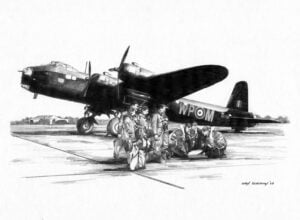
Short Stirling BK718 Drawing (Ground) copyright Ivan Berryman
Short Stirling BK718 Drawing and copyright Ivan Berryman

The other crew members are:

Official information via findagrave.com:

Plane data: Short Stirling III
Serialnr. BK718
Call Sign: WP-M
Unit: 90 Sqdn.
Take off: 11:26 PM West Wickham airfield.
Target: Köln.
Operation: Bombing.
Shot down by FLAK.
Crashed at Bonn-Mehlem, Germany.
Buried Plot VII-D-12 Venray War Cemetery Netherlands.
Reburied 01/05/1947 Overloon War Cemetery.

Details of how Andrew came to be with this crew can be found in the extended side-story about the fate of the crew of the Stirling BK718. 

Sources and credits

FindMyPast website: Civil and Parish Birth, Marriage and Death Records; England Census and 1939 Register Records; Military Records

National Archives WO 416/139/204 – Andrew Patrick Gilmour POW Card

Research Elaine Gathercole

Continue reading

Beard Oliver

Beard | Oliver

  • First names

    Oliver

  • Age

    21

  • Date of birth

    1922

  • Date of death

    04-07-1943

  • Service number

    1379617

  • Rank

    Sergeant, wireless operator

  • Regiment

    Royal Air Force Volunteer Reserve, 90 Sqdn.

  • Grave number

    III. A. 4.

  • Sergeant Oliver Beard

    Oliver Beard

    Oliver Beard

  • Grave Oliver Beard

    Grave Oliver Beard

    Grave Oliver Beard

Biography

Oliver Beard, wireless operator, was a member of the crew of the Stirling III BK718 which was shot down on 4th July 1943, either by Flak88 or Hayo Hermann (luftwaffepilot). They took off at 23.26 on 3th July 1943 from West Wickham and crashed at Mehlem on the westbank of the Rhine, 10 km SSE of Bonn.
The crew is buried at Overloon War Cemetery, except Sgt I.H. Norris, who managed to leave the plane and was a Prisoner of War (POW).

Short Stirling BK718 Drawing (Ground) copyright Ivan Berryman
Short Stirling BK718 Drawing and copyright Ivan Berryman

The other crew members who died were:

Official information via findagrave.com:

Plane data: Short Stirling III
Serialnr. BK718
Call Sign: WP-M
Unit: 90 Sqdn.
Take off: 11:26 PM West Wickham airfield.
Target: Köln.
Operation: Bombing.
Shot down by FLAK.
Crashed at Bonn-Mehlem, Germany.
Buried Plot GGG-4-92 Allied cemetery Margraten, Netherlands.
Reburied 01/05/1947 Overloon War Cemetery.

Details of how Oliver came to be with this crew can be found in the extended side-story about the fate of the crew of the Stirling BK718.

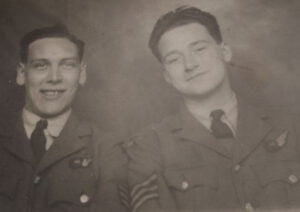
Oliver-Beard-and-friend

Oliver Beard was the son of John Oliver Beard and Margaret Beard of Rock Ferry, Cheshire. Rock Ferry is part of Birkenhead.
 
John Oliver Beard had married Margaret Wilson in 1912 in Birkenhead. However, this was his second marriage. He was born in 1853 and had originally married Annie Lewis on 16th September 1880 in Birkenhead. Together they had two boys and three girls between 1882 and 1888, though one girl died aged just 1. They were living at 47, Keightley Street, Birkenhead in 1891 and 1901 and John was shown as a Police Constable born in Tranmere or Birkenhead.
 
By 1911 John had moved with two of his unmarried adult children to 40 Aberdeen Street, Birkenhead but was shown as a widower and a Retired Police Constable from Tranmere. The following year, John went on to marry Oliver’s mother, Margaret Wilson, when he would have been around 59 and she was only about 25. She, too, was born in Birkenhead. They had three children: Olive born 1/4/1913, Christopher born 16/3/1914, then Oliver himself on 15/3/1922 – all in Birkenhead. In 1921 John was still living at 40, Aberdeen Street, Birkenhead with his new wife Margaret and their first two children. John was working as a Wirral Railway Porter.
 
John died in 1933, aged around 80, when Oliver would only have been around 11. At some point after her husband’s death, Margaret Beard suffered a breakdown and was cared for elsewhere. Olive and Christopher had to take on responsibility for bringing up their brother Oliver. In early 1939, Christopher married Bertha J Pearson and in September that year they were still living at 40 Aberdeen Street, but it was Christopher who was now the head of the household and living with them were his sister Olive and brother Oliver. Christopher was a General Labourer at an Oil and Grease Manufacturers.  Olive was a Daily Domestic Servant and Oliver was an Apprentice Painter at a Soap Works. Oliver was working for Lever Brothers (now part of Unilever) which has a famous history in that area.
 
The commencement of WW2 saw both Christopher and Oliver enter the armed forces with Christopher joining the Military Police and Oliver the Royal Airforce Volunteer Reserve which was the main pathway for aircrew into the RAF during WW2. Indeed, it was Christopher who had to agree to allow Oliver to sign up, a source of a degree of future guilt. Christopher survived the war and was mentioned twice in despatches, on one occasion rescuing someone while under fire in Italy.
 
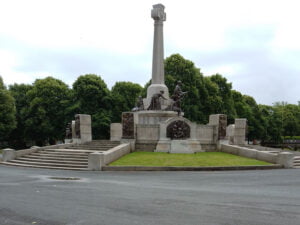
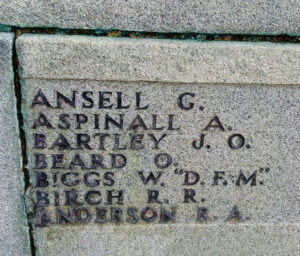
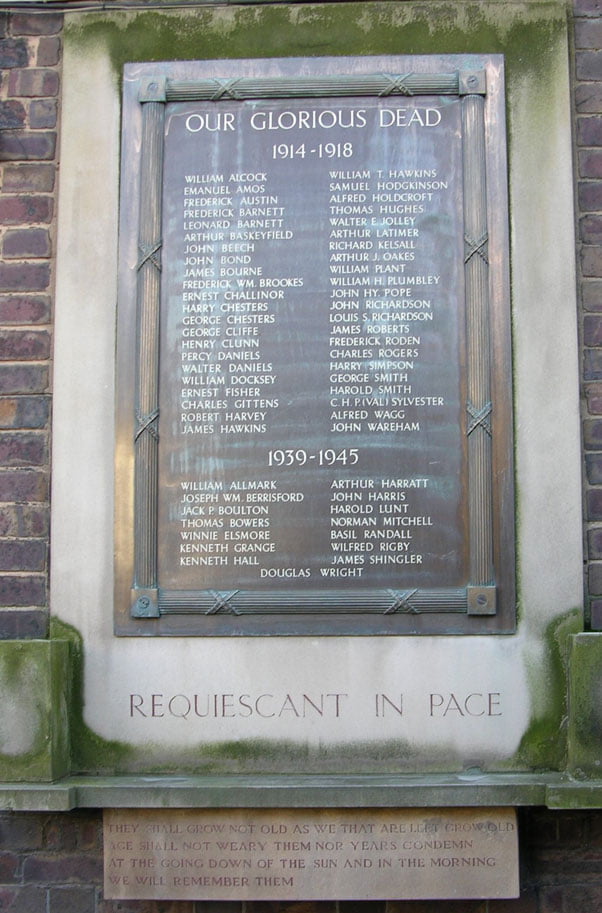
Sadly, Oliver was killed on 4th July 1943. He is commemorated on the very impressive war memorial at Port Sunlight in Birkenhead on which many other Lever Brothers employees who died in both wars are commemorated. Port Sunlight is a model village built in 1888 by Lever Brothers to accommodate its workers.

Port-Sunlight-War-Memorial

Port-Sunlight-War-Memorial-Oliver-Beard

 
By the end of the war Oliver’s Mother was sufficiently recovered that she was able to live with Christopher and his family until her death in 1969. After the war, Christopher and his wife had two children, Brian and Kenneth. Christopher died in 2004. Although Kenneth too has passed away, Brian has helped with this biography. Oliver’s sister Olive moved to Scotland, never married and she too has since passed away.

Sources and credits

FindMyPast website: Civil and Parish Birth, Marriage and Death Records; England Census and 1939 Register Records; Military Records
Photos and assistance from Brian Beard, Oliver’s nephew
Wikipedia – information on Lever Brothers and the Royal Airforce Volunteer Reserve
 
Research Elaine Gathercole  

Continue reading

Rigby Wilfred

Rigby | Wilfred

  • First names

    Wilfred

  • Age

    26

  • Date of birth

    01-11-1918

  • Date of death

    06-10-1944

  • Service number

    5051273

  • Rank

    Lance Serjeant

  • Regiment

    North Staffordshire Regiment,6th Bn., Lincolnshire Regiment, 2nd Bn.

  • Grave number

    I. D. 4.

  • Wilfred Rigby

    Wilfred Rigby

    Wilfred Rigby

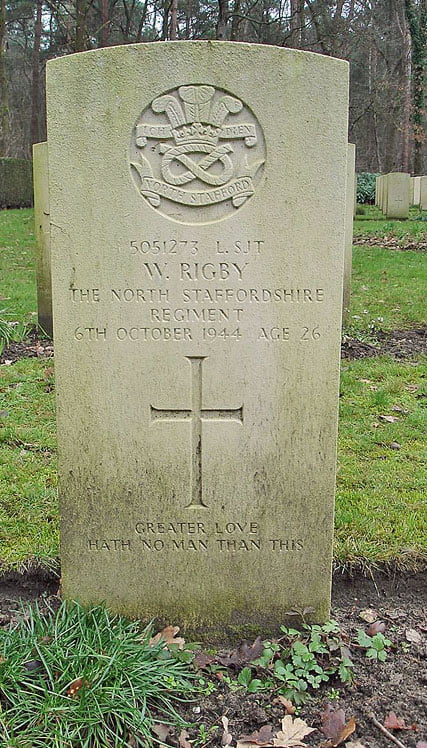
  • Grave Wilfred Rigby

    Grave Wilfred Rigby

    Grave Wilfred Rigby

Biography

Wilfred Rigby was killed in action on 6 October 1944 in the vicinity of the ferry house (Het Veerhuis) in Oeffelt. He was aged 26 at the time. He was a Lance Serjeant in the 7th North Staffordhsire Regiment and the 2nd Battalion of the Lincolnshire Regiment (Service No. 5051273). He was initially buried at the village square in Haps and re-interred on 18 July 1946 in grave I. D. 4 in the Overloon CWGC Cemetery. The inscription on his grave reads “Greater love hath no man than  like this “.

Family background

Wilfred was the son of Noah and Elizabeth Rigby, husband of Hilda Rigby and father of son Geoffrey, who was born in November 1944. 

He had two brothers, Kenneth and Douglas.

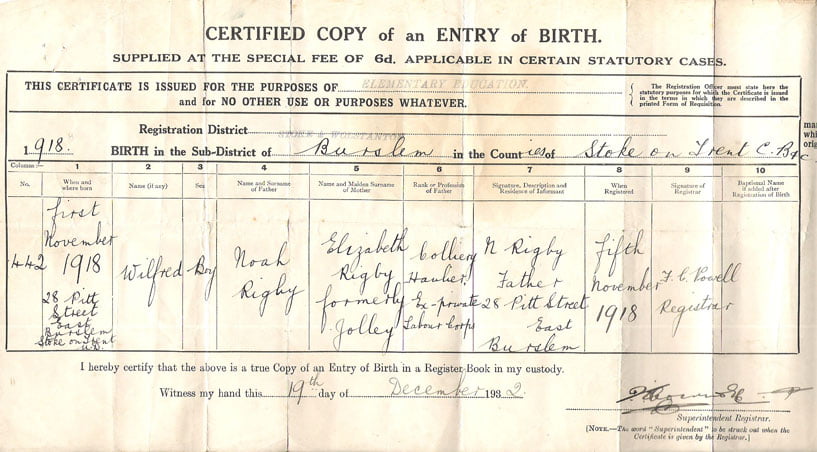
Wilfred is born at 28 Pitt Street East, Burslem, in Stoke on Trent. The family moved to 28 Collinson Road, Goldenhill, Stoke on Trent before 1928, and then to 39 Wharf Street, Middleport, Burslem, Stoke on Trent .

Wilf attended Middleport Senior school until 1932.  

He worked at the famous Henry Doulton Pottery Manufactory in Stoke on Trent, working as a Glost Placer until 1939. This work involved carrying and placing ware into the kilns that were used to fire the famous pottery. 

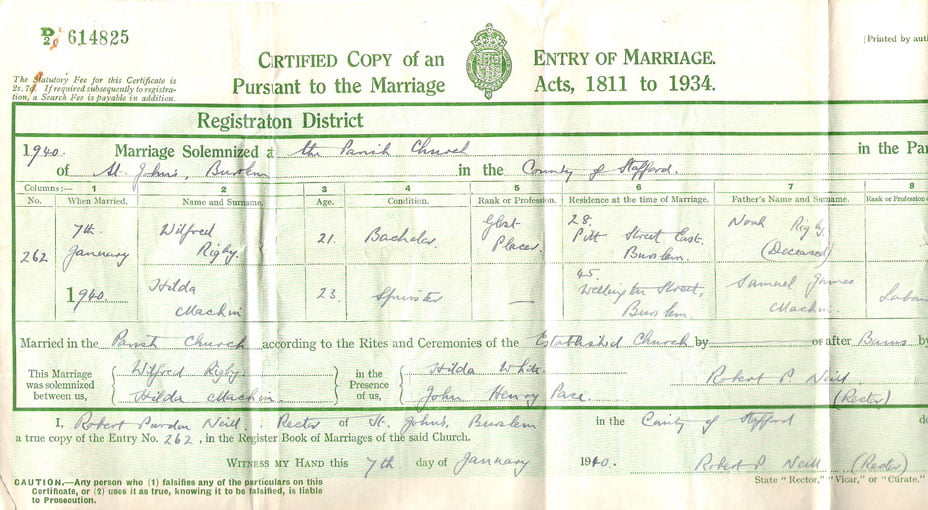
On 20th October 1939 he entered the North Staffordshire Regiment as an Infantryman. Wilf married Hilda Machin on 7th January 1940. Wilf’s only son Geoffrey was born 29th November 1944. 

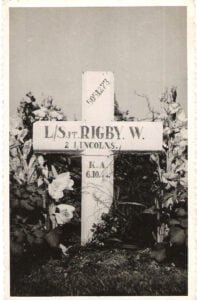
Wilfs tijdelijk graf
Wilfs temporary grave stone

Memories by his son Geoffrey

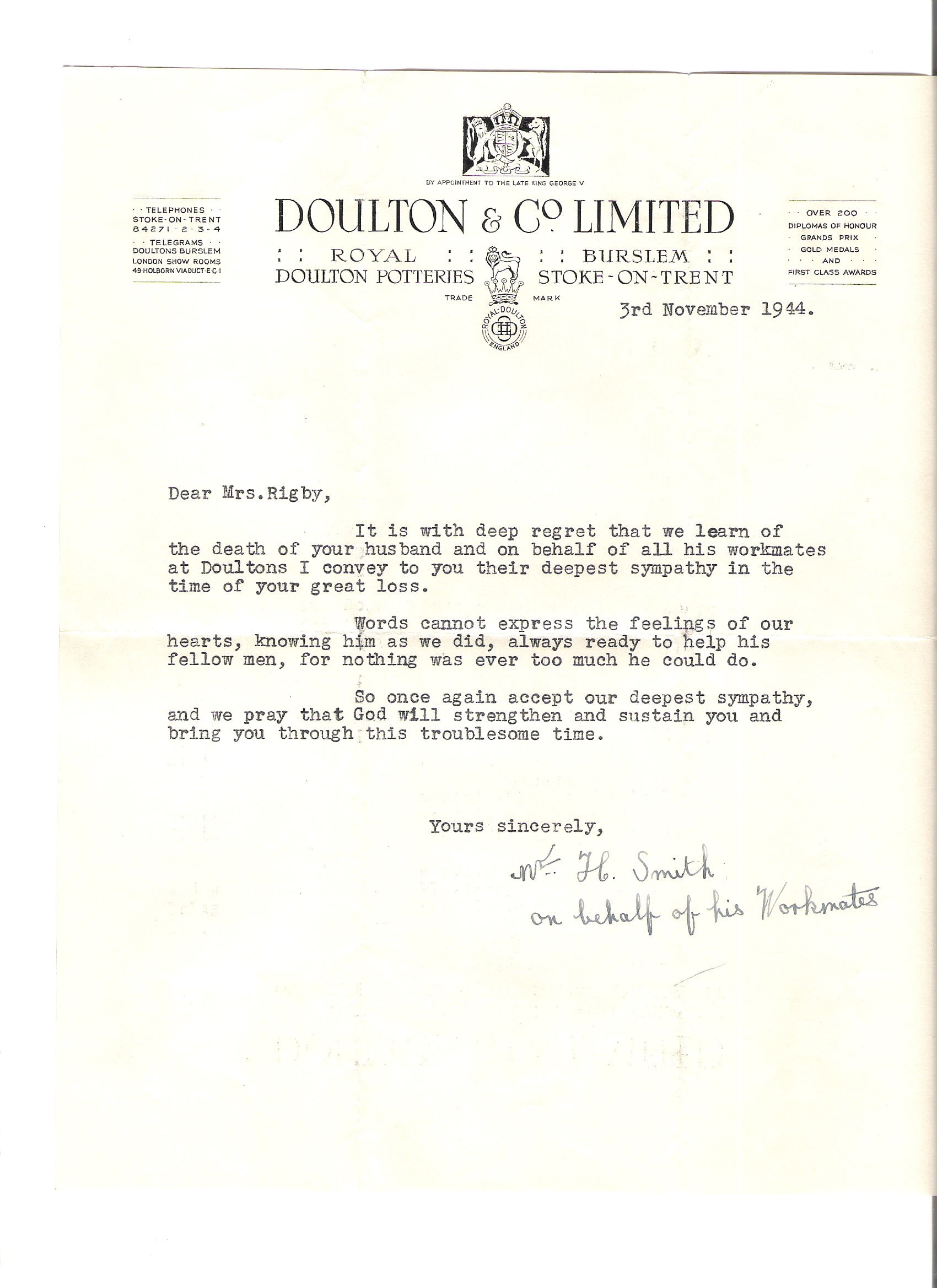
Geoffs father, Wilfred Rigby, was a Lance Sergeant in the British Army and was only 26 when he died. Wilfred’s wife, Geoffrey’s mother, received £35 8s 0d war gratuity in 1946 along with many telegrams and letters of condolence, including one from Doulton. Geoff was born a month after Wilfred died and knows little of his father’s military history. He recently brought down a box from the attic which was full of photographs, love letters and birthday cards Wilfred sent to his wife. There were also letters and documents relating to Wilfred’s death that have helped to build up a hazy picture of events at that time.

He had worked at the Doulton factory as a ‘placer’ before being conscripted to the North Staffs Regiment. His army number was 5051273 and was buried at Overloon, Holland.
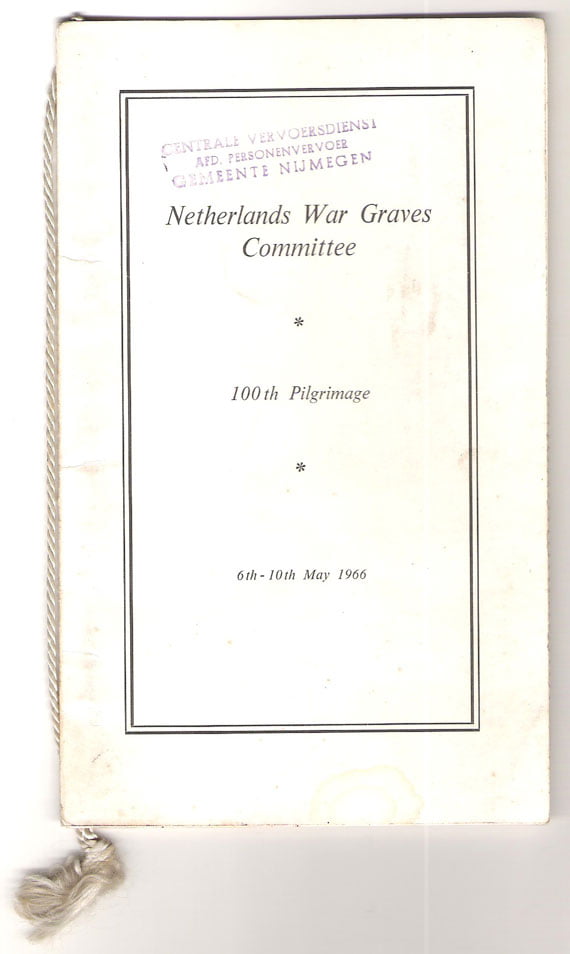
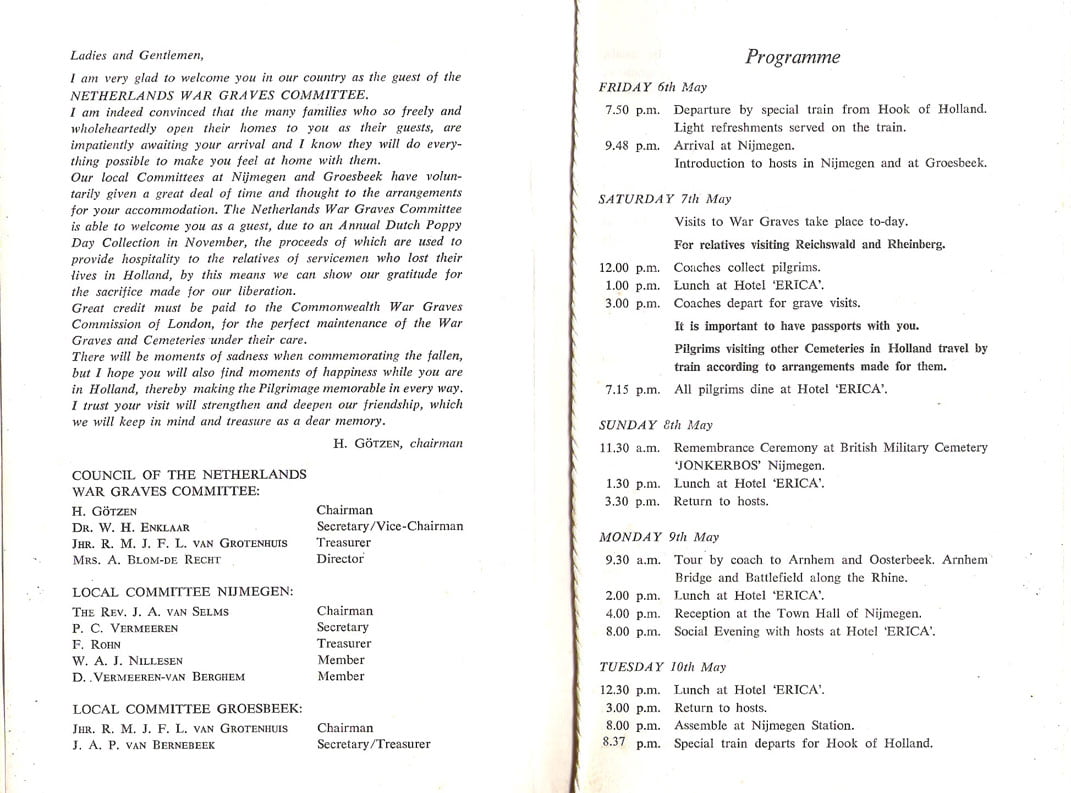
In 1966, twenty years later, Geoff’s mother came across an article in the Sentinel advertising a trip organised by the British Royal Legion to Holland to visit the war graves. It was the 100th pilgrimage organised by the Netherlands War Graves Committee. Geoff and his mother went on a four day visit to Holland and stayed with Mrs Harmsen and her family in Nijmegen at de Groenestraat 344. Geoff was able to visit his father’s final resting place and take part in a service of rememberance.
He has not been back to Overloon since, but has hopes to return in the future. Geoffrey has 2 sons and 3 grand children. 

Geoff Rigby 

  • Birth certificate Wilfred Rigby

    Birth certificate Wilfred Rigby

    Birth certificate Wilfred Rigby

  • Marriage certificate Wilfred and Hilda

    Marriage certificate Wilfred and Hilda

    Marriage certificate Wilfred and Hilda

  • Condolences letter Employer Doulton

    Condolences letter Employer Doulton

    Condolences letter Employer Doulton

  • Pilgrimage Nijmegen with Hilda Mrs Harmsen and Geoffrey

    Pilgrimage Nijmegen with Hilda Mrs Harmsen and Geoffrey

    Pilgrimage Nijmegen with Hilda Mrs Harmsen and Geoffrey

  • 100st Pilgrimage Nijmegen

    100st Pilgrimage Nijmegen

    100st Pilgrimage Nijmegen

  • Programme 100th Pilgrimage Nijmegen

    100st Pilgrimage Nijmegen

    100st Pilgrimage Nijmegen

  • Wilfred Rigby

    Wilfred Rigby

    Wilfred Rigby

Military background

In 1939 Wilfred Rigby was enlisted to the North Staffordshire Regiment 6th Bn. The North Staffordshire Regiment at that time consisted of two Regular and two Territorial battalions – the 1st and 2nd Regular and the 6th and 7th Territorials.

The two Territorial battalions formed part of 176th Infantry Brigade (which included both the 6th and 7th North Staffords and the 7th South Staffords) of 59th (Staffordshire) Infantry Division. The division trained in the United Kingdom for many years until it landed in Normandy in June 1944 as part of Operation Overlord where they fought in the Battle for Caen and gained an excellent reputation during Operation Charnwood and the Second Battle of the Odon.

However, only the 6th Battalion landed in France as the 7th Battalion had been transferred elsewhere in 1942, being replaced in the 176th Brigade by the 7th Royal Norfolks. The 6th Battalion had been in France for less than two months when, in August 1944, along with other infantry units of 59th Division, it was broken up to supply replacements to other British units, due to a severe shortage of infantry replacements throughout the Army at the time. It is likely that because of that Wilfred was assigned to the Lincolnshire Regiment 2nd bn.

This Battalion also took part in the D-Day landings in June 1944 and was then engaged throughout the Normandy Campaign, taking part in Operation Charnwood and Operation Goodwood.

They remained in Normandy until 15 September. They then took part in the push up through Belgium and the Netherlands with the aim of supporting the airborne troops engaged in Operation Market Garden which ultimately did not fully succeed following the failure to take the bridge at Arnhem in late September. 
 
On 16 and 17 September the Battalion moved into Belgium near Mons. They found that the civil population were very enthusiastic, particularly in the area of the Belgian frontier. They then joined in the effort to cross the Escaut Canal where all the bridges had been blown by the enemy. They succeeded with other regiments in this difficult task in the face of opposition and a bridge was complete by 19 September. The Battalion moved on to Achel on 20 September where all ranks were able to get a night’s sleep under cover and then Hamont the following day where they remained until 25 September while the 11 Armoured Division took Deurne in the Netherlands. The Battalion moved to Deurne that day and took over from the 11 Armoured Division with the 2nd Battalion Royal Ulster Rifles. They remained in this area, sometimes engaging with the enemy who were on the east side of a canal. On 29 September they moved north to Milheeze and then Haps on 1 October.

The base of the 2nd Lincolnshire Regiment stayed in Haps from the 1st till the 12th of October. From there, attempts were made to clear the west side of the Meuse between Cuijk and Oeffelt. This was done together with 2nd Bn Royal Ulster Rifles, the 1st Bn King’s Own Scottish Borderers and 3rd Reconnaisance Regiment (9th Brigade 3rd Infantry Division).  

On the east side of the Meuse, resistance remained strong, particularly in Middelaar, Milsbeek, and Gennep. The stone factory in Milsbeek served as the main center of opposition, as its tall chimney functioned as an observation post from which German artillery coordinated the defense. On the east side of the river, the enemy was also attacked from Plasmolen.

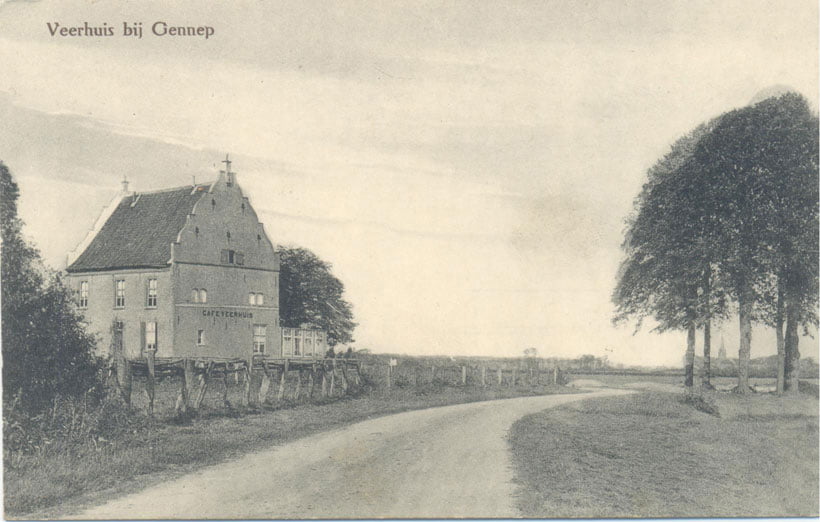
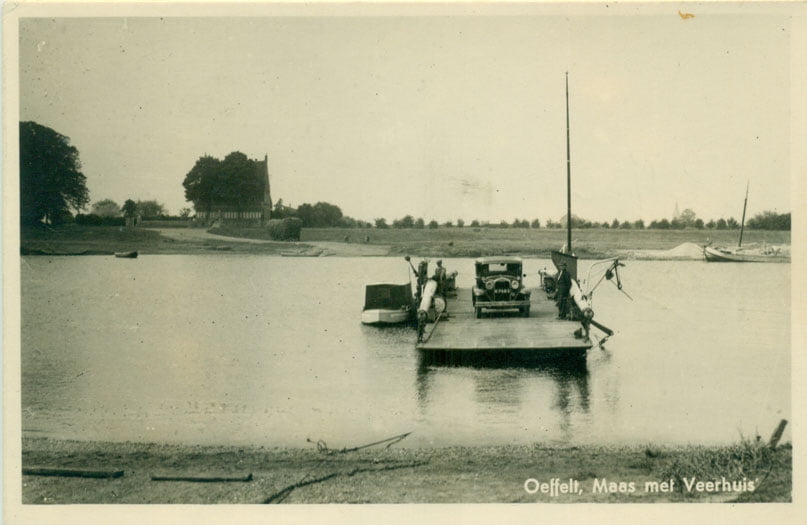
Between 1 and 7 October, the Ferry House in Oeffelt — Het Veerhuis — was repeatedly occupied by the enemy and then retaken by British forces. Patrols of the 2nd Lincolnshire Regiment discovered that the Ferry House had once again fallen into German hands. Despite heavy British artillery bombardments, German troops continued to appear around the stone factory in Milsbeek.
On 4 and 5 October, the chimney of the Milsbeek factory was finally brought down, and the church in Middelaar was reduced to rubble. On 6 October, the 2nd Lincolnshire Regiment launched another attack on the Ferry House — this time successfully. After intense shell fire, the first scouts found only an empty ruin. Despite the destruction, the remains of the building still stood firm.
It was on this day that sadly, Lance Serjeant Wilfred Rigby was killed in action.

He was buried in the village square in Haps. Three other British soldiers were also buried there in October 1944. They were comrades Francis Charles Cannings, and  Warren James Harris, both from the 2nd Bn Lincolnshire Regiment and Jack Arthur Maddock Longhurst from the 7th Hampshire Regiment. The graves of these soldiers were lovingly tended by the inhabitants of the village of Haps and flowers were regularly laid there.

All four were buried side by side at Overloon War Cemetery on 18 July 1946.

  • Ferry house - Veerhuis- Oeffelt

    Ferry house – Veerhuis- Oeffelt

    Ferry house – Veerhuis- Oeffelt

  • Oeffelt Veerhuis, ferry across the river Maas direction Gennep

    Oeffelt Veerhuis, ferry across the river Maas direction Gennep

    Oeffelt Veerhuis, ferry across the river Maas direction Gennep

  • Doulton-War-Memorial

    Doulton-War-Memorial

    Doulton War Memorial

  • Medals Wilfred Rigby

    Military medals, awarded posthumously

    Military medals, awarded posthumously

Sources and credits

Wikipedia
War Diaries 2nd Bn Lincolnshire Regiment
Piet Peters for background information
Geoff Rigby (Wilfred’s son)
Dave Rigby (Geoff’s cousin)

Research Anny Huberts

Continue reading

Longhurst Arthur Maddock

Longhurst | Jack Arthur Maddock

  • First names

    Jack Arthur Maddock

  • Age

    27

  • Date of birth

    06-05-1917

  • Date of death

    26-10-1944

  • Service number

    5500675

  • Rank

    Lance Corporal

  • Regiment

    Hampshire Regiment, 7th Bn.

  • Grave number

    I. D. 5.

Graf Jack Arthur Maddock Longhurst

Graf Jack Arthur Maddock Longhurst

Grave Jack Arthur Maddock Longhurst

Biography

Jack Arthur Maddock Longhurst died of wounds on 26 October 1944. He served with the 7th Battalion Hampshire Regiment (5500675). He was temporarily buried in Haps on the village square. On 18 July 1946, he was reburied at Overloon War Cemetery in grave I.D.5. His gravestone reads: “He laid down his life for his country”.

No photograph of Jack Longhurst has yet been found. If anyone reading this has a photograph of him or more information about him – or if you notice any errors in his biography below – please contact us.

Family background

Jack was born in London on 6 May 1917. It is currently unclear where exactly he was born and who his parents were. It is believed that he was born in the Marylebone district of London, that his father died young and that his mother was unmarried.
Jack was taken in as a foster son by the widow Mrs E. Childs Boscombe East, Bournemouth, Hampshire. In the 1921 census, he is listed as a 4-year-old boy in this family as an “adopted son”. His father is said to have died. Emma’s two daughters, Florence Kate (1920-) and May Winifred (1921-), both born in Pokesdown, are also listed here. Emma Childs was a “ laundress” who worked from home.

Emma Louisa Childs was born on 4 February 1872 in South Warnborough and died in April 1953. Her parents were Daniel Childs (1831-1908) and Catherine Dicker (1839-1921).
Emma’s siblings were Frances Charlotte Childs (1866-1926), Amy (Anne) Barbara Childs (1869-1931), Albert Charles Childs (1874-1964), Edith Childs (1877-1966), Kate Childs (1879-1957), Frank Childs (1883-), and Jessie Childs (1885-1969).

At present, not much is known about the life of this family. There is also no information about Jack Longhurst’s childhood yet. 

MILITARY CAREER

Jack enlisted in the Territorial Army on 26 April 1939 and was assigned to the Hampshire Regiment the following day, 27 April 1939, immediately participating in an annual training camp.

On 28 August 1939, he was called up for service and, after various training courses and coastal defence activities, on 19 June 1944 he began his participation in the war on the NW European front in France.

7TH BN HAMPSHIRE REGIMENT

The 7th Bn Hampshire Regiment was part of the territorial army (reserve) of the Hampshire Regiment. When war broke out in 1939, it was mobilised and assigned to the 130th Infantry Brigade of the 43rd (Wessex) Division.
The battalion spent the early years of the war in Great Britain, mainly in southern England, where it was deployed for coastal defence and intensive training in preparation for a future invasion of Europe.

NORMANDY

The battalion landed in Normandy shortly after D-Day on 22 June 1944, close to Le Hamel, with the 4th and 5th battalions of the Dorset Regiment. They were deployed in the heavy fighting around Hill 112 (Operation Jupiter) and the Battle of Caen (Operation Charnwood). These battles against German units (including SS armoured divisions) were particularly bloody.

The 43rd (Wessex) Division, including the 7th Hampshires, played a crucial role in breaking through the German lines during these operations and later in the advance towards the River Orne.

HILL 112

Hill 112 is a strategically important hill in Normandy, south of Caen, which played a crucial role during the Second World War. From its summit, the hill offered a panoramic view of the surrounding landscape, making it a key position for both Allied and German forces.
Hill 112 became the scene of a fierce, ten-week battle between the two armies. These bloody battles ultimately contributed to the liberation of Caen and the success of the broader Allied breakthrough in Normandy. British troops, including units from the 43rd Wessex Division and the 11th Armoured Division, made heavy sacrifices to capture and hold this terrain. The hill changed hands several times, and the losses were heavy: in total, around 10,000 soldiers lost their lives in the battle for Hill 112.

A monument was later built on this hill in memory of all those who fell. A replica of this monument stands in Winyards Gap, Dorset, England.

After heavy fighting in Normandy, the 43rd (Wessex) Infantry Division, including the 7th Hampshires, advanced rapidly through France and Belgium to the Netherlands in August 1944. Since the Normandy landings, the regiment had lost (including wounded) 35 officers and 450 other ranks.

OPERATION MARKET GARDEN

The aim of Operation Market Garden was to capture the bridges at Eindhoven, Nijmegen and Arnhem through a rapid advance, thereby creating a route to Germany and ending the war before Christmas 1944. Unfortunately, things turned out differently.
The task of the 7th Battalion during Operation Market Garden (17–25 September 1944) was to support the airborne operation by advancing northwards overland along the so-called “Hell’s Highway” — the narrow corridor between Eindhoven, Nijmegen and Arnhem — to reach the airborne troops. The route got its name from the fierce German resistance, which slowed down the advance and forced soldiers into dangerous battles.

After the liberation of Eindhoven (18 September) and Grave, the 43rd Division reached the area south of Nijmegen on 20–21 September. The 7th Hampshires were deployed to secure the bridge at Nijmegen after it had been captured by the 82nd U.S. Airborne Division. They were then ordered to advance north towards Arnhem via Elst, with the aim of relieving the encircled British 1st Airborne Division at Oosterbeek.

The advance to Arnhem was extremely difficult. The corridor was constantly attacked by German troops (including elements of the 10th SS Panzer Division “Frundsberg”). The 7th Hampshires fought fierce battles in and around Elst, often in open terrain under artillery fire and against tanks. They suffered heavy losses, especially in attempts to reach the village of Haalderen and the dykes near the Linge. By 25 September, it was clear that the corridor could not be held any longer; the battalion needed to withdraw. The attempt to reach Arnhem failed, and the survivors of the 1st Airborne were evacuated.

During this period, the 7th Hampshires lost more than 100 men killed, wounded and missing. Many companies were severely depleted after the battle. B and C Companies in particular suffered heavy losses in the Elst and Lent area. A monument was later erected in Driel in memory of the soldiers who died in this area.

7TH BATTALION, HAMPSHIRE REGIMENT IN THE MEUSE REGION (OCTOBER 1944)

After the failure of Operation Market Garden at the end of September 1944, the front stabilised along the major rivers: the Waal near Nijmegen and the Meuse near Mook–Cuijk. The 43rd (Wessex) Division was ordered to secure the southern bank of the Meuse and protect the corridor from Grave to Nijmegen against German counterattacks.

In early October 1944, the 7th Hampshires were moved from the area around Elst and Andelst to the Meuse front near Mook and Middelaar, directly opposite German positions at Gennep and Oeffelt on the other side of the river. The terrain along the Meuse was treacherous. It consisted of narrow dykes, low-lying meadows that were regularly flooded, limited cover for infantry, and constant exposure to German artillery from across the river.

The 7th Battalion was tasked with occupying the Meuse line and being vigilant for German infiltrations or crossings by boat, conducting patrols along the river and in the villages of Middelaar, Plasmolen and Cuijk, and securing the bridge at Grave and the Meuse crossings, which were essential for the supply of XXX Corps.

The German troops on the other side consisted mainly of units of the Fallschirmjäger (paratroopers) and remnants of Wehrmacht units that had withdrawn from the southern Netherlands. They regularly carried out small-scale artillery and mortar bombardments, but large-scale attacks did not occur.

Conditions were harsh and demoralising. The autumn rains made the dykes muddy and the trenches filled with water. The men of the 7th Hampshires spent weeks living in wet shelters with little protection. German artillery fire and snipers caused constant light casualties — often a few dead or wounded per day.

The War Diaries mention periodic night patrols across the Meuse to observe German troop movements or take prisoners. Sometimes small skirmishes were fought at Middelaar or in the floodplains near Katwijk (near Cuijk). There were no major battles, but exhaustion and constant tension took their toll. The battalion also suffered many casualties in October due to artillery fire and accidents.

On 24 October, comrade William Leonard Philipps (5958113) was killed in action. He was temporarily buried in Mook and later reburied in Groesbeek at the Canadian War Cemetery in grave VI.C.12.

On 25 October, a comrade was killed, while the rest of the group needed to retreat due to artillery fire and an attack with hand grenades. A day later, on 26 October, when they wanted to collect the body, it had disappeared. It appears that this was Ernest Charles Colyer (14572632), who is still commemorated as missing on Panel 4 at Groesbeek Memorial Canadian Cemetery.

During the evening and night of 26/27, reconnaissance patrols were carried out along the dyke road in Middelaar, with the villages of Katwijk and Cuijk on the other side of the Meuse, to scout the enemy’s position. The patrol led by a recently joined and in experienced officer Lt. Nethercliff came under fire from a house near the junction. Lt Nethercliff was badly wounded by machine gun fire, even so he returned unaided to his company to deliver a detailed patrol report. (from The War History of the 7th Battalion Hampshire Regiment 1939-46 Ian Taylor p.205).
During the evening, a planned change of company positions was completed, resulting in the companies being positioned along the front as follows: A on the left, D, C, B on the right. The location of C company was very close to the bank of the Meuse across from Cuijk.

It was on this day that Jack Arthur Maddock Longhurst was wounded and died from his injuries.
The war diary records one death, but is silent on the circumstances of how L/Cpl. Longhurst was killed. He was a Boscombe lad and one of the Battalion’s ‘originals’. (The War History of the 7th Battalion Hampshire Regiment 1939-46 Ian Taylor p.205).

It is assumed that he was transported to the village of Haps, near Cuijk, where many British soldiers were stationed. Whether he was treated there at the emergency hospital of the Red Cross, we will never know. What we do know is that he was buried in the village square in Haps. Three other British soldiers had been buried there earlier that month. They were Francis Charles Cannings, Warren James Harris and Wilfred Rigby, all three from the 2nd Bn Lincolnshire Regiment. The graves of these soldiers were lovingly tended by the inhabitants of the village of Haps and flowers were regularly laid there.

All four were buried side by side at Overloon War Cemetery on 18 July 1946.

Jack received four medals for his efforts and ultimately his life: the 1939–45 Star, the France & Germany Medal, the Defence Medal and the War Medal 1939–45.

Towards the end of October 1944, the 43rd (Wessex) Division was slowly relieved on the Meuse line by American and Polish units (including the 104th U.S. Infantry Division). The 7th Hampshires were temporarily withdrawn to Mook and Groesbeek for rest, resupply and training.

However, they remained in the area to support the defence of the Meuse front until November 1944, after which they prepared for further operations in northern Germany and on the Rhine in 1945.

Personal Belongings

The belongings of Jack which he had at the time of his death were sent by the Infantry Record Office to his foster mother Emma Louisa Childs. These consisted of three leather belts, two cap badges, pipe with silver band, two leather wallets, pouch, postcards, whistle, crucifix, religious medals, souvenirs notes, coins, personal case, mother of pearl case, photo’s and album, letters and a golden ring.

Apparently there was also a sovereign (a historical golden coin) which he was wearing around his neck when he was killed. A corporal, who was unknown to his foster mother Emma Childs told her that this sovereign was brought back to his unit when he was killed.

It seems to have been sent to her in a small leather purse, according to an army form.
With the possessions, a form was included with which she had to confirm that these belongings were received by her. In the Service Record there is a letter from Emma, not dated,  in which she writes that this sovereign was not received by her.

It is unclear if her letter was written before she received the sovereign or after she should have received it.

Sources and credits

Ancestry Civil and parish birth, marriage, and death records; English census and records from 1921 and 1939; electoral rolls; military records and family trees.
Wikipedia
Royal Hampshire Regiment Museum
Team Traces of War, Joris Nieuwint and Jeroen Koppes
War Diaries 7th Bn Hampshire Regiment
War Diaries 1st Bn Worcestershire Regiment
The War History of the 7th Battalion Hampshire Regiment 1939-46 Ian Taylor p.205.
ww2talk.com
Service Record WO 423/1112693 for Jack Longhurst from the National Archives 

Research Anny Huberts

Continue reading

Cannings Francis Charles

Cannings | Francis Charles

  • First names

    Francis Charles

  • Age

    20

  • Date of birth

    1924

  • Date of death

    05-10-1944

  • Service number

    5193748

  • Rank

    Private

  • Regiment

    Lincolnshire Regiment, 2nd Bn.

  • Grave number

    I. D. 2.

  • Frances Charles Cannings

    Frances Charles Cannings

    Frances Charles Cannings

  • Grave Frances Charles Cannings

    Grave Frances Charles Cannings

    Grave Frances Charles Cannings

Biography

Francis Charles Cannings was killed in action on 5 October 1944 in the vicinity of Overloon. He was aged 20 at the time. He was a Private in the 2nd Battalion of the Lincolnshire Regiment (Service No. 5193748). He was initially buried at Dorpsplein, Haps and re-interred on 18 July 1946 in grave I. D. 2 in the Overloon CWGC Cemetery. The inscription on his grave reads “You live always in our memory, beloved son and brother.”

2nd Battalion Lincolnshire Regiment

This Battalion took part in the D-Day landings in June 1944 and was then engaged throughout the Normandy Campaign, taking part in Operation Charnwood and Operation Goodwood.
 
They remained in Normandy until 15 September. They then took part in the push up through Belgium and the Netherlands with the aim of supporting the airborne troops engaged in Operation Market Garden which ultimately did not fully succeed following the failure to take the bridge at Arnhem in late September.
 
On 16 and 17 September the Battalion moved into Belgium near Mons. They found that the civil population were very enthusiastic, particularly in the area of the Belgian frontier. They then joined in the effort to cross the Escaut Canal where all the bridges had been blown by the enemy. They succeeded with other regiments in this difficult task in the face of opposition and a bridge was complete by 19 September. The Battalion moved on to Achel on 20 September where all ranks were able to get a night’s sleep under cover and then Hamont the following day where they remained until 25 September while the 11 Armoured Division took Deurne in the Netherlands. The Battalion moved to Deurne that day and took over from the 11 Armoured Division with the 2nd Battalion Royal Ulster Rifles. They remained in this area, sometimes engaging with the enemy who were on the east side of a canal. On 29 September they moved north to Milheeze and then Haps on 1 October. One Company moved east to Oeffelt the next day with the aim of clearing the area west of the Meuse of small parties of the enemy. The Battalion was now within 6 miles of the German frontier. Other Companies took turns in Oeffelt in the next few days. On the night of 4/5 October, patrols from the forward Companies heard motor transport movements east of river. “A” Company patrol came into contact with the enemy who had crossed the river. The enemy were engaged and two believed hit. However, the patrol suffered two casualties – 1 Ordinary Rank killed and 1 wounded. The man who was killed was presumably Francis Charles Cannings.

He was buried in the village square in Haps. Three other British soldiers were also buried there in October 1944. They were comrades Wilfred Rigby and Warren James Harris, both from the 2nd Bn Lincolnshire Regiment and Jack Arthur Maddock Longhurst from the 7th Hampshire Regiment. The graves of these soldiers were lovingly tended by the inhabitants of the village of Haps and flowers were regularly laid there.

All four were buried side by side at Overloon War Cemetery on 18 July 1946.

Francis’ Birth Family

Francis  was the son of Edward Charles and Ethel Mary Cannings of Axminster, Devon.
 
Edward Charles Cannings (known as Charles) had married Ethel Mary Critchell in Axminster in 1922. They went on to have two children: Francis Charles on 20/10/1923 and Michael E on 20/6/1926.

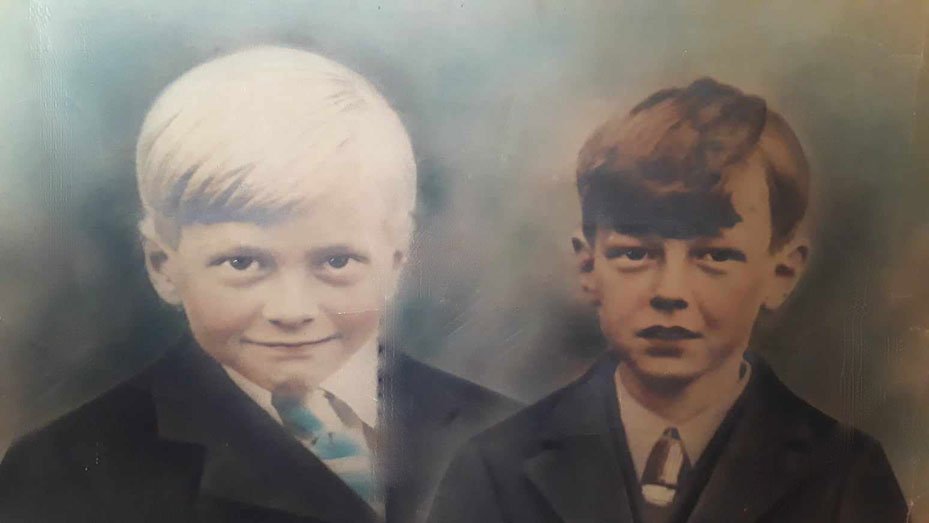
Michael and Francis Cannings 1933

In September 1939 Charles and Ethel were living at 115 Whitstone Road, Shepton Mallet, Somerset. Charles was a Railway Permanent Way Inspector. Their son Michael was there but not Frank. Ethel’s 7 year old nephew,  James Lawrie (born 13/10/1931) was also present.
 
In September 1939, Frank was living with his uncle and his wife, Herbert (known as Jack) and Nora Cannings, at 35 Third Avenue, Denville, Havant, Hampshire. Jack was a Butcher Manager & Slaughterman and Frank was working as a Butcher’s Apprentice.
 
Curiously, in 1939, Frank’s birth date was given as 20/10/1922 rather than 1923. This may have been a simple mistake – but it could also relate to a family story which says that Frank tried to join up while under age but was recognised and sent home. A Francis Charles Cannings with Service No. 1827728 did indeed try to join the Royal Artillery in 1941 but there is a reference to this being cancelled on 12/8/1941. However, it is understood that he got into the Army on his second attempt while still under age by signing up as a bugle boy. Most of the family worked for the railways so were in reserved occupations. As a butcher’s apprentice he was not protected, however, he was very determined to serve, whatever his father felt or said.
 
Sadly, he was killed in action on 5 October 1944.
 
Francis’ brother, Michael E Cannings married Joan Selway in Bristol in 1950. They had two children, Paula J Cannings in 1955 and Heather M Cannings in 1958, both born in Bristol.
 
Charles Cannings died in 1979 in Axminster and Ethel in 1983 near Bristol.
 
Michael E Cannings died in 1981 in Bristol.

Francis’ Father’s Family

Edward Charles Cannings was the son of Emanuel Edward Cannings and Anna Martin who had married in the Shaftsbury district of Dorset in 1893. Emanuel had been born on 19/10/1865 in Gillingham, near Shaftsbury in Dorset while Anna had been born on 11/7/1869 in Stour Provost in Dorset which is just to the south of Gillingham. They had eleven children as follows: Margaret Alice 1894, Gertrude Anna 1895, (Edward) Charles 21/1/1897, Elsie May 1898, George Henry 1900, Frank 1902, Reginald 1903, Dorothy Ellen 1905 (known as Nell), Herbert John 1907 (known as Jack),  Florence Mary 1910 (known as Gwen) and (Frederick) William 1911. Several  preferred to be called by their middle names as shown.
 
In 1901 Anna Cannings was living at Shaftesbury Road, King’s Court Lane, Gillingham, though Emanuel wasn’t present. With her were her first five children who were all born there and also her widowed father in law, George Cannings, aged 68. George continued to live with them until 1921 at least. Their next four children were born in Misterton  which is between Yeovil and Axminster in Somerset between 1902 and 1907, suggesting they were living there at the time. By 1911, Emanuel and Anna were living at 10 Hillhead Terrace, Axminster where they remained.
 
Emanuel was a Railway Inspector, shown in 1921 more specifically as a Permanent Way Inspector for London & South West Railways and retired by 1939. Their first two children (Margaret Alice and Gertrude Anna) appear to have left home by 1911, and both married in 1919. However, the remaining children were still with their parents until at least 1921. Edward Charles was working as a Messenger in 1911, but by 1921 he was a Labourer for the L&SW Railway. In 1921 Elsie was working as a General Domestic Servant (but out of work); Frank was described as a Soldier on Furlough; Reginald was a Porter on the L&SW Railway and John was a Book Stall Lad for Messrs W H Smith & Son at Axminster station.
 
By 1939, only Nell Cannings was still living at Hillhead Terrace with her parents. Living with them was Frederick Ellis, born 4/7/1907 and working as a Carpet Factory Creeler – managing the racks that hold the spools of yarn. He married Nell later that year and they lived there for the rest of their lives.
 
Anna Cannings died in 1948 and Emanuel E Cannings in 1953, both in Axminster.

Francis’ Mother’s Family

Ethel Mary Critchell was the daughter of Benjamin Richard Critchell and Agnes Laura Robbins who had married in Dorchester, Dorset in 1893. Benjamin had been born in 1871 in Dorchester and Agnes in 1873 in Colyton which is near Axmouth in Devon. They had two children: Edward Thomas on 29/4/1894 in Bridport, Dorset and Ethel Mary on 3/8/1896 in Fordington, Dorset. However, a prison register shows that a warrant was issued for Benjamin Richard Critchell on 16 August 1901 for neglecting his wife and children. In that year Agnes was living with her two children at 26, Alington Road, Dorchester. It was stated that her husband was an engine driver but was absent.
 
By 1911, Agnes was living at Willhayes Cottages, Axminster, Devon. She was shown as a widow. A third child was present, Lavinia Irene Hyacinth Critchell, born 1909 in Axminster who was known to the family as Irene.  Agnes had also taken in a widower as a lodger:  George William Clarke, a 44 year old cowman born in Seaton in Devon. Agnes’ son, Edward, was working as a labourer. At the time of Irene’s birth Agnes was working as a dressmaker.

Agnes married for a second time in 1917 in Axminster. Her husband was William Barrell, born 24/12/1862. By 1939 they may have been living at 71 Cadogan House, Chelsea, London. William was working as a Commercial Clerk. She died in 1948 in Wokingham, Berkshire.
 
In 1921 Ethel was living at West Street, Axminster. She was a servant in the household of William Edwin Goldsmith Potter and his wife Kathleen. He was a House Furnisher and Kathleen and their 21 year old daughter Dorothy Banks were assistants in the business of Sulby Potter, House Furnisher.
 
Edward Thomas Critchell served in the Army in WW1 from 1914 to 1920. He seems to have initially served as a Private in the Welsh Regiment (No. 38859), then a Private in the Labour Corps (No. 361735), then a Corporal in the Welsh Regiment Territorial Force (No. 3947695). However, an article in the Somerset County Herald and Taunton Courier of 08 June 1946 reported that Edward Thomas Critchell (52), a temporary postman of 17 Chandos Street, Bridgewater was fined £10 for stealing postal packets. It was stated that only his previous good character and army record had saved him from going to prison. His defence pointed out that he had served in both World Wars and was discharged in 1942 as unfit, his papers reading “very good”. He had had great domestic trouble, had been hard up and was waiting to go into hospital to undergo a severe operation. There were no previous convictions. He had lost his job and was not qualified for any trade. Edward went on to marry a widow, Hilda I Stockham, in Bridgewater in 1949. He died in 1974 in Taunton.
 
Irene Lawrie married John Elder Lawrie and had a son, James John Henry Lawrie on 13/10/1931 while living at 33 Queen Street Devonport. John Elder Lawrie was a Petty Officer Steward in the Royal Navy on board HMS Charybdis. He was born on 5/1/1904 in Leith in Scotland but died on war service on 23/10/1943. Irene Lawrie died on 30/6/1993 in Plymouth. Her address at the time was 182 Wolseley Road, North Prospect, Plymouth, Devon.

Sources and credits

From FindMyPast website: Civil and Parish Birth, Marriage and Death Records; England Census and 1939 Register Records; Electoral Rolls; Military Records; Prison Registers
Lincolnshire Regiment War Diaries via Traces of War Website
Wikipedia – information on the Lincolnshire Regiment
Somerset County Herald and Taunton Courier of 08 June 1946
Photo and assistance from Heather Rees-Williams (Frank’s niece) and assistance from Paula Cannings (also Frank’s niece), Rob Lawrie (Ethel Cannings’ great nephew) and Jonathan and Lynda Cannings (Franks’ cousin and wife) – and their daughter in law Suzy Cannings.

Research Elaine Gathercole 

Continue reading

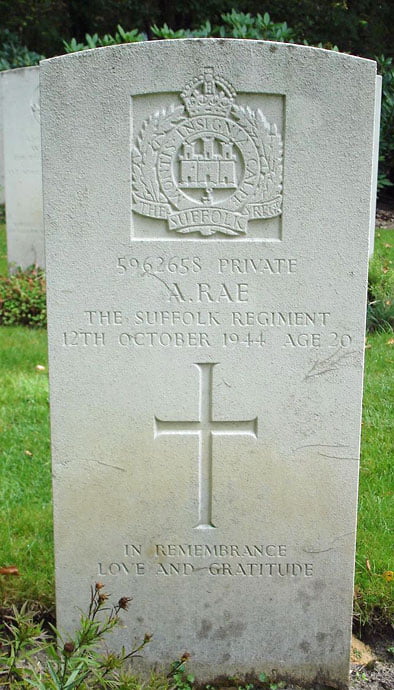
Rae Alexander

Rae | Alexander

  • First names

    Alexander

  • Age

    20

  • Date of birth

    31-03-1924

  • Date of death

    12-10-1944

  • Service number

    5962658

  • Rang

    Private

  • Regiment

    Suffolk Regiment, 1st Bn.

  • Grave number

    III. C. 6.

  • Alexander Rae

    Alexander Rae

    Alexander Rae

  • Grave  Alexander Rae

    Grave Alexander Rae

    Grave Alexander Rae

Author Carol Beeton, niece of Alexander

Biography

Alexander (known as Alec by his family) was the eldest child of Alexander and Constance Rae. He was born and lived in Rotherham, Yorkshire.

Alexander had a brother Duncan (13-05-1927) and five sisters. Pauline (25-12-1925), Shirley (29-05-1928), Alison, Viviene and Lennox (01-08-1943). Two children, a boy and a girl died as infants.

I assume that he was called up when he was eighteen years old. Initially he served with the Beds and Herts Regiment but was subsequently transferred to the Suffolks. One of my aunts told me that he worked in the ‘cookhouse’ (catering). He arrived on Sword beach, we think, on D-day. I don’t think that Alec was much of a letter writer, so I have no idea what happened to him between June 1944 and the time of his death.

When I was a child, my mother told me that Alec had originally been buried in Belgium and was subsequently moved to Overloon. My parents both served in the British Army after the war – my mother as a clerk and my father in bomb disposal. In about 1954, after their marriage they visited Alec’s grave. I don’t know where they stayed, but it was some distance from Overloon, and the Dutch police took them to the cemetery! I don’t know if this was always done for the families of the soldiers, or if they just felt sorry for my parents and wanted to help. Whatever it was, my mother to this day remains thankful for that act of kindness. It enabled my father to take photographs of the grave and surrounding area – the only sight my grandparents ever had of their son’s grave.

Sources and credits

  Carol Beeton, niece of Alexander

Continue reading

Follow us

e-mail: overloonwarchronicles@gmail.com
address:
Holthesedijk 2 a, 5825JG Overloon

Chamber of Commerce: 83346422
Bank: NL04 RBRB 8835 3869 69
Stichting Overloon War Chronicles
BIC / SWIFT code RBRBNL21

©2021 Overloon War Chronicles